If You're Curious About These Questions...
You should listen to this audiobook
- Have you ever wondered how a niche European racing circuit transformed into a multi-billion dollar global entertainment empire?
- What’s the secret to balancing extreme engineering excellence with the ruthless pressures of commercial competition?
- Did you know that the most high-stakes battles in Formula 1 often take place far away from the asphalt, in the boardrooms of the world's most powerful brands?
Listen to The Formula — Free Audiobook
Loading player...
Key Takeaways from The Formula
- Learn how post-war engineers like Colin Chapman pushed technological boundaries and exploited rulebook loopholes to pioneer the aerodynamic cars that revolutionized Formula 1.
- Discover how Bernie Ecclestone transformed F1 from a niche motorsport into a multi-billion-dollar global enterprise through shrewd commercial rights acquisitions and lucrative TV deals.
- Understand the profound impact of F1's greatest mavericks, from Enzo Ferrari's brilliant marketing to the intense rivalries and unmatched professionalism of drivers like Ayrton Senna and Michael Schumacher.
- Uncover the cutthroat politics of the 'Piranha Club,' a high-stakes environment of corporate espionage, hundred-million-dollar fines, and divide-and-conquer governance that defined team ownership.
- Find out how unconventional disruptors like Red Bull shattered the established racing order by transforming a struggling, one-pound team purchase into a dominant motorsport powerhouse.
Learning Tools
Reinforce what you learned from The Formula
Mind Map
The Formula
Origins & Early Innovation+
The Mavericks+
The Piranha Club+
The Disruptors (Red Bull)+
The Mercedes Dynasty+
The Liberty Media Era+
Abu Dhabi 2021+
Quiz — Test Your Understanding
Question 1 of 8
What was Colin Chapman's primary philosophy for making his Lotus Formula 1 cars faster during the sport's early development?
Question 2 of 8
How did Bernie Ecclestone fundamentally transform Formula 1's business model?
Question 3 of 8
What was a defining characteristic of Enzo Ferrari's approach to his racing team?
Question 4 of 8
What does the term 'Piranha Club' refer to in the context of Formula 1?
Question 5 of 8
How did Red Bull Racing disrupt the traditional Formula 1 landscape when they entered the sport?
Question 6 of 8
What regulatory change in 2014 paved the way for Mercedes' unprecedented era of dominance?
Question 7 of 8
What was a major outcome of Liberty Media's acquisition of Formula 1 in 2017?
Question 8 of 8
What underlying theme of modern Formula 1 did the controversial finish at the 2021 Abu Dhabi Grand Prix highlight?
The Formula — Full Chapter Overview
- 1Recommendation
- 2Spotting the loophole
- 3Mavericks of Formula 1
- 4The Piranha Club
- 5The game-changers
- 6The golden era of Mercedes
- 7The Liberty era in F1
- 8Abu Dhabi, 2021
The Formula Summary & Overview
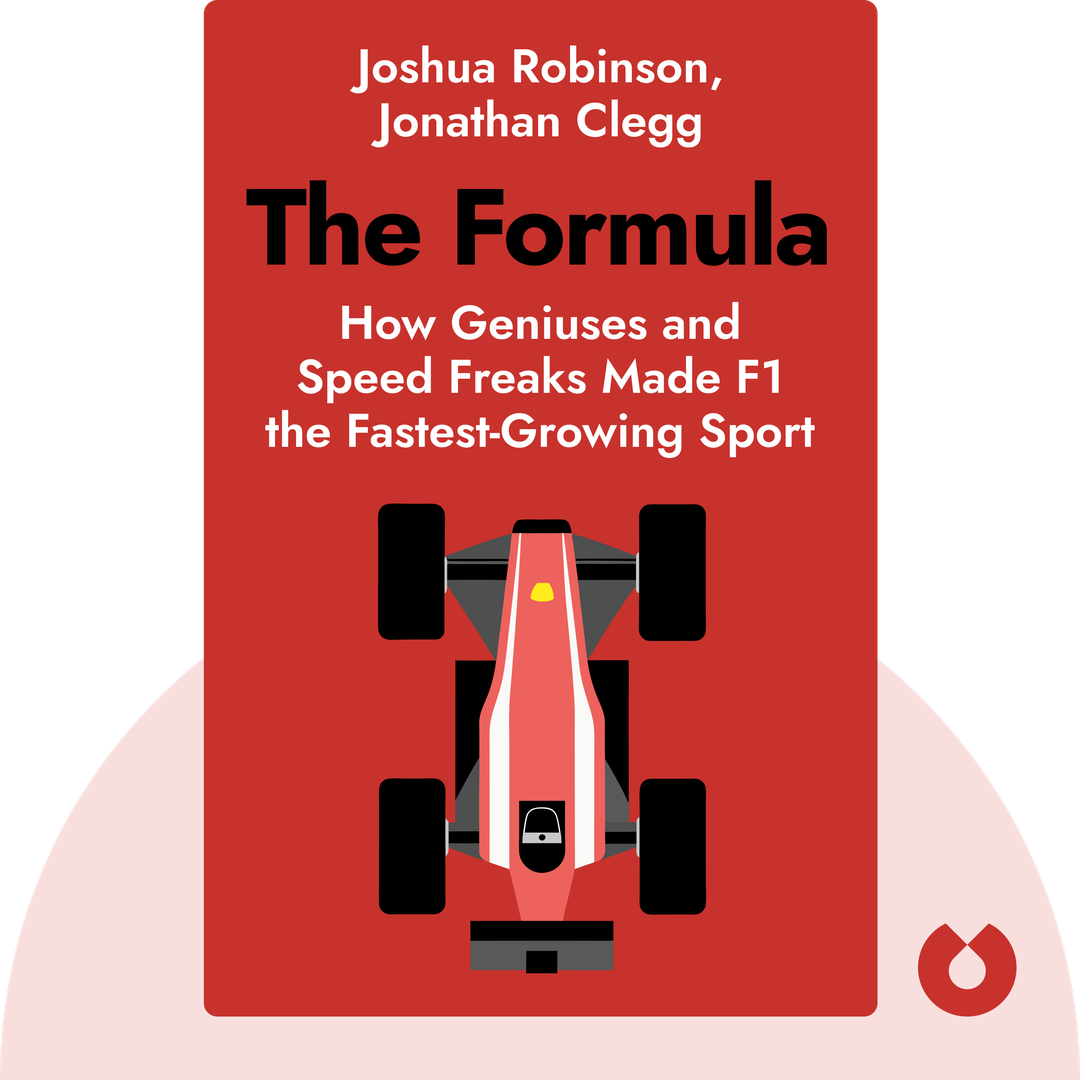
The Formula (2024) chronicles the evolution of Formula 1 from its post-World War II origins to its current status as a global entertainment powerhouse. It follows the larger-than-life personalities that have shaped the sport through technological innovations and business strategies, and their attempt to balance the pursuit of engineering excellence with the demands of commercial success.
Who Should Listen to The Formula?
- Formula 1 enthusiasts seeking deeper insights
- Sports business aficionados interested in high-stakes drama and growth strategy
- Readers captivated by stories of innovation and success
Books Similar to The Formula
Readers who enjoyed this also liked these titles.