If You're Curious About These Questions...
You should listen to this audiobook
- Have you ever wondered why the Founding Fathers were convinced that the original plan for the United States was doomed to collapse?
- What if you could step inside the minds of the architects of American democracy to discover the hidden logic behind the balance of power?
- Are you curious about the specific strategies Hamilton, Madison, and Jay used to argue that a massive, diverse republic would actually be more stable than a small one?
Listen to The Federalist Papers — Free Audiobook
Loading player...
Key Takeaways from The Federalist Papers
- Understand the foundational philosophy of American governance and why these 85 historical essays remain essential to comprehending modern democracy.
- Discover why national unity was considered absolutely vital to protect the newly independent states from foreign empires and internal rivalries.
- Learn how a robust central government acts as a coordinating backbone to manage foreign affairs and provide consistent laws without erasing state autonomy.
- Find out how separating government power into distinct branches creates a crucial system of checks and balances to prevent political tyranny.
- Recognize the unique merits of federalism and how sharing power between a national authority and individual states balances overarching interests with local needs.
Learning Tools
Reinforce what you learned from The Federalist Papers
Mind Map
The Federalist Papers
Context & Purpose+
National Unity & Central Government+
Separation of Powers+
Merits of Federalism+
Protecting Property Rights+
Independent Judiciary+
Balancing Liberty and Power+
Quiz — Test Your Understanding
Question 1 of 7
What was the primary purpose of the Federalist Papers when they were written between 1787 and 1788?
Question 2 of 7
According to Alexander Hamilton, why was a united federation essential for the young American nation?
Question 3 of 7
How did the authors of the Federalist Papers propose to prevent the new central government from devolving into tyranny?
Question 4 of 7
In the context of the Federalist Papers, what is a key benefit of federalism?
Question 5 of 7
Why did Madison and Hamilton consider the protection of property rights to be a lynchpin of a flourishing democracy?
Question 6 of 7
What is the primary role of an independent judiciary as described in the Federalist Papers?
Question 7 of 7
According to James Madison in Federalist No. 10, what is the best way to handle the division and conflict caused by factions?
The Federalist Papers — Full Chapter Overview
- 1Recommendation
- 2Unity is Vital
- 3The Role of a Powerful Central Government
- 4The Strength of Separation
- 5The Benefits of Federalism
- 6Safeguarding Property Rights
- 7Judicial Branch Independence
- 8Balancing Freedom and Power
The Federalist Papers Summary & Overview
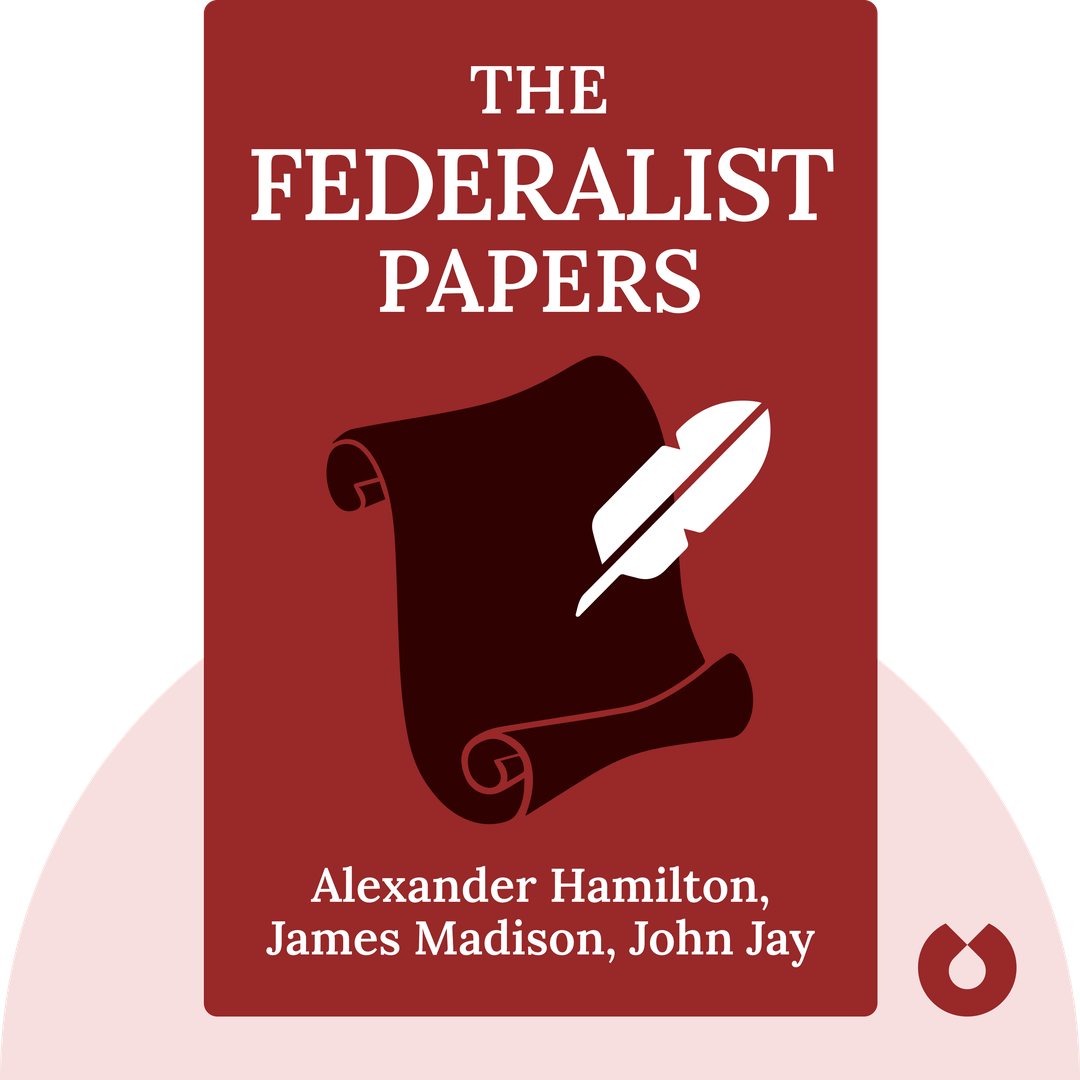
The Federalist Papers (1787) present insightful arguments for the ratification of the United States Constitution. Offering fascinating insights into the minds of the Founding Fathers, it explores the fundamental principles of American governance and legal system. It remains on the most influencial texts ever written.
Who Should Listen to The Federalist Papers?
- Constitutional law students
- American history buffs
- Aspiring politicians
Books Similar to The Federalist Papers
Readers who enjoyed this also liked these titles.