If You're Curious About These Questions...
You should listen to this audiobook
- What can the visual perception of autistic individuals teach us about the neurotypical brain's automatic 'mind-reading' capabilities?
- How does the excessive pruning of neural connections in schizophrenia potentially unlock the brain's hidden creative abilities?
- Why do modern neuroscientists classify addiction as a permanent, chronic disease of the brain's reward system rather than a simple failure of willpower?
Listen to The Disordered Mind — Free Audiobook
Loading player...
Key Takeaways from The Disordered Mind
- Studying mental disorders and abnormal brain function provides profound insights into how healthy brains process thoughts, emotions, and behaviors.
- Autism highlights the existence of a specialized 'social brain,' revealing that our ability to automatically attribute thoughts and emotions to others is a hardwired biological function.
- Schizophrenia is driven by an aggressive over-pruning of synapses during adolescence and an excess of dopamine, which alters brain structures linked to thought, memory, and creativity.
- Degenerative diseases like Alzheimer's and Parkinson's are caused by misfolded proteins that clump together and slowly erode specific neural systems governing explicit memory or motor control.
- Addiction permanently hijacks the brain's habit-forming and dopamine reward systems, fundamentally altering neurological pleasure associations and functioning as a chronic disease rather than a lack of willpower.
Learning Tools
Reinforce what you learned from The Disordered Mind
Mind Map
The Disordered Mind
Foundation of Brain Disorders+
Autism & The Social Brain+
Mood Disorders & Emotion+
Schizophrenia & Thought+
Memory Disorders+
Parkinson's & Movement+
Addiction & Reward System+
Sex & Gender Identity+
Consciousness+
Brain Health+
Quiz — Test Your Understanding
Question 1 of 10
What is the foundational premise of studying mental disorders according to the book?
Question 2 of 10
In the context of autism, what does the concept of 'theory of mind' refer to?
Question 3 of 10
Which physical brain characteristics are commonly linked to mood and anxiety disorders like PTSD and depression?
Question 4 of 10
Schizophrenia is associated with which distinct physical change in the brain during adolescence?
Question 5 of 10
What did the famous patient H.M. reveal about human memory?
Question 6 of 10
What causes the characteristic tremors and loss of movement associated with Parkinson's disease?
Question 7 of 10
Why is addiction considered a chronic illness rather than a simple lack of willpower?
Question 8 of 10
According to the book, what accounts for the variations found in human sex and gender identity?
Question 9 of 10
How does cognitive psychologist Bernard Baars's 'global workspace' theory explain consciousness?
Question 10 of 10
Based on the book's actionable advice, how does physical exercise help keep the mind sharp and boost memory?
The Disordered Mind — Full Chapter Overview
- 1Recommendation
- 2Abnormal brains can show us how normal brains function.
- 3Autism shows how profoundly social our brains really are.
- 4Mood disorders stem from chemical disruptions in our brain’s emotional circuits.
- 5Schizophrenia disrupts key brain areas for thinking, memory, and imagination.
- 6In Alzheimer’s and dementia, damaged proteins eat away at our conscious memory system.
- 7Parkinson’s disease helps us see how brain chemicals control movement.
- 8Addiction seizes the brain’s reward system – often for life.
- 9How our bodies and brains develop creates many possibilities for sex and gender.
- 10Neuroscience is starting to decode how the brain gives rise to consciousness.
The Disordered Mind Summary & Overview
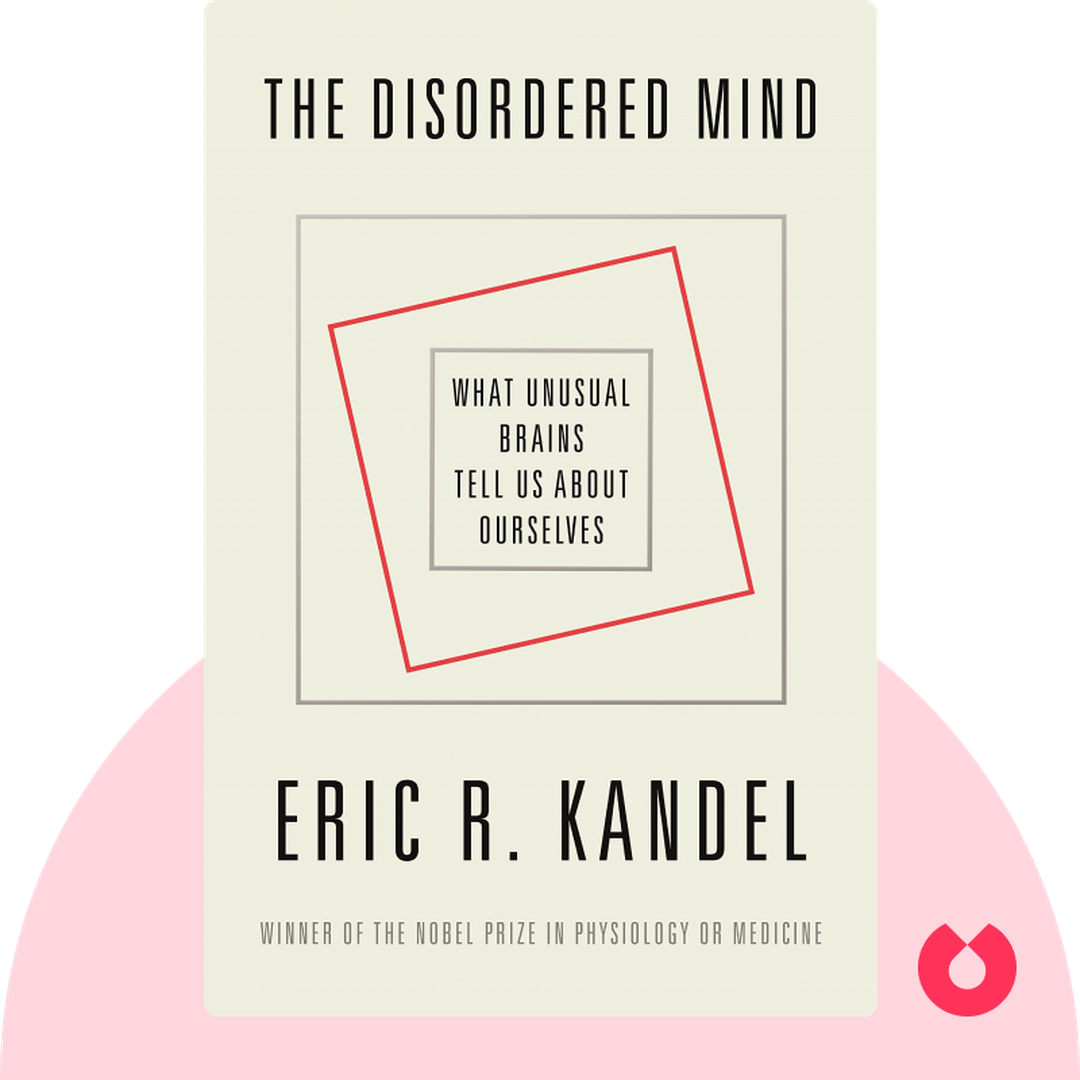
The Disordered Mind (2018) explores what disorders and diseases of the brain can tell us about the inner workings of our minds. Acclaimed neuroscientist Eric R. Kandel draws on a lifetime of research to explain what depression, schizophrenia, addiction, and more reveal about how our brains affect our thoughts, feelings, and behavior – and explains how new scientific methods could help solve the big puzzle of consciousness.
Who Should Listen to The Disordered Mind?
- Armchair philosophers, hobby psychologists, and aspiring neuroscientists
- People affected by Alzheimer’s, depression, schizophrenia, or other neurological disorders
- Anyone puzzled by the mystery of consciousness
Books Similar to The Disordered Mind
Readers who enjoyed this also liked these titles.