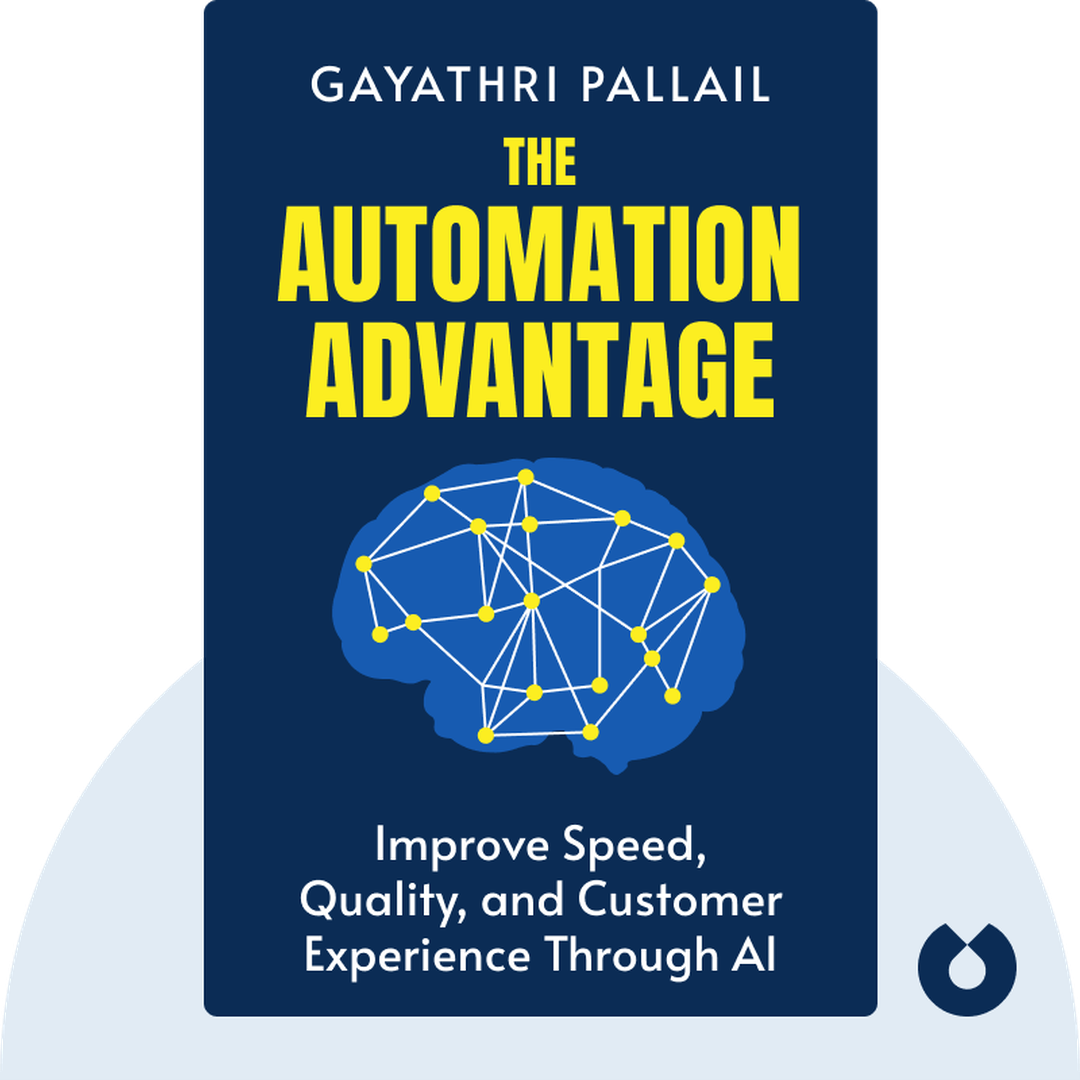
The Automation Advantage
Start ListeningDownload Try free on iPhoneScan to start in 5 seconds
Categories:
If You're Curious About These Questions...
You should listen to this audiobook
- What’s the secret to navigating the complex stages of the automation journey without leaving your workforce behind?
- Did you know there is a proven framework for turning the fear of AI into a powerful engine for business growth?
- What if you could use a specific roadmap to ensure your organization doesn't just survive the tech revolution, but leads it?
Listen to The Automation Advantage — Free Audiobook
Loading player...
Key Takeaways from The Automation Advantage
- Discover how a human-centric approach to intelligent automation empowers employees to do their best work at scale, rather than simply replacing their jobs.
- Understand why every AI and automation initiative must make clear business sense and directly align with your long-term competitive strategy to be successful.
- Learn how to prioritize automation projects by selecting those with the strongest business cases and ensuring tight collaboration between IT and business leaders.
- Find out why organizations must maintain a 'day one' startup mentality after adopting automation, as the risk of stagnation far outweighs the risk of testing new technology.
- Master the creation of a two-level automation roadmap that simultaneously tracks tangible business results and guides your organization's journey toward automation maturity.
Learning Tools
Reinforce what you learned from The Automation Advantage
Mind Map
The Automation Advantage
Strategic Alignment+
The Automation Roadmap+
Human-Centric Approach+
The Four S's Integration Model+
Constant Innovation+
Quiz — Test Your Understanding
Question 1 of 7
According to the authors, how does modern intelligent automation primarily differ from the first wave of automation?
Question 2 of 7
When deciding which automation projects to prioritize, what primary criterion should business leaders use?
Question 3 of 7
In the business results roadmap, what is the primary focus of the 'Establish' phase?
Question 4 of 7
Which stage of automation maturity involves sensing or comprehending ambiguities and performing complex functions traditionally limited to humans, such as detecting insurance fraud?
Question 5 of 7
How did managers at Shell successfully convince their miners to adopt intelligent, head-mounted displays?
Question 6 of 7
In the 'Four S’s' model for reaching automation maturity, what does the 'Seamless' step entail?
Question 7 of 7
Why do the authors advise against waiting for new automation technology to 'settle' before adopting it?
The Automation Advantage — Full Chapter Overview
- 1Recommendation
- 2Automating systems and adopting AI technologies should make business sense.
- 3Business strategy is essential to successful automation.
- 4Create your automation roadmap and set up your business for successful automation and AI integration.
- 5To implement automation, leaders must reassure and inspire their workforce.
- 6Many organizations face obstacles to automation.
- 7Successful automation and AI require constant innovation.
- 8Final summary
The Automation Advantage Summary & Overview
The Automation Advantage (2021) provides a roadmap for building automation and AI in a modern organization. From the different stages a business must go through on its automation journey to the best ways to reassure employees worried about job destruction, it shows leaders how to prosper in a future world.
Who Should Listen to The Automation Advantage?
- Business leaders looking to automate
- Employees at companies set to flirt with AI
- Anyone interested in how tech will transform the world
Books Similar to The Automation Advantage
Readers who enjoyed this also liked these titles.