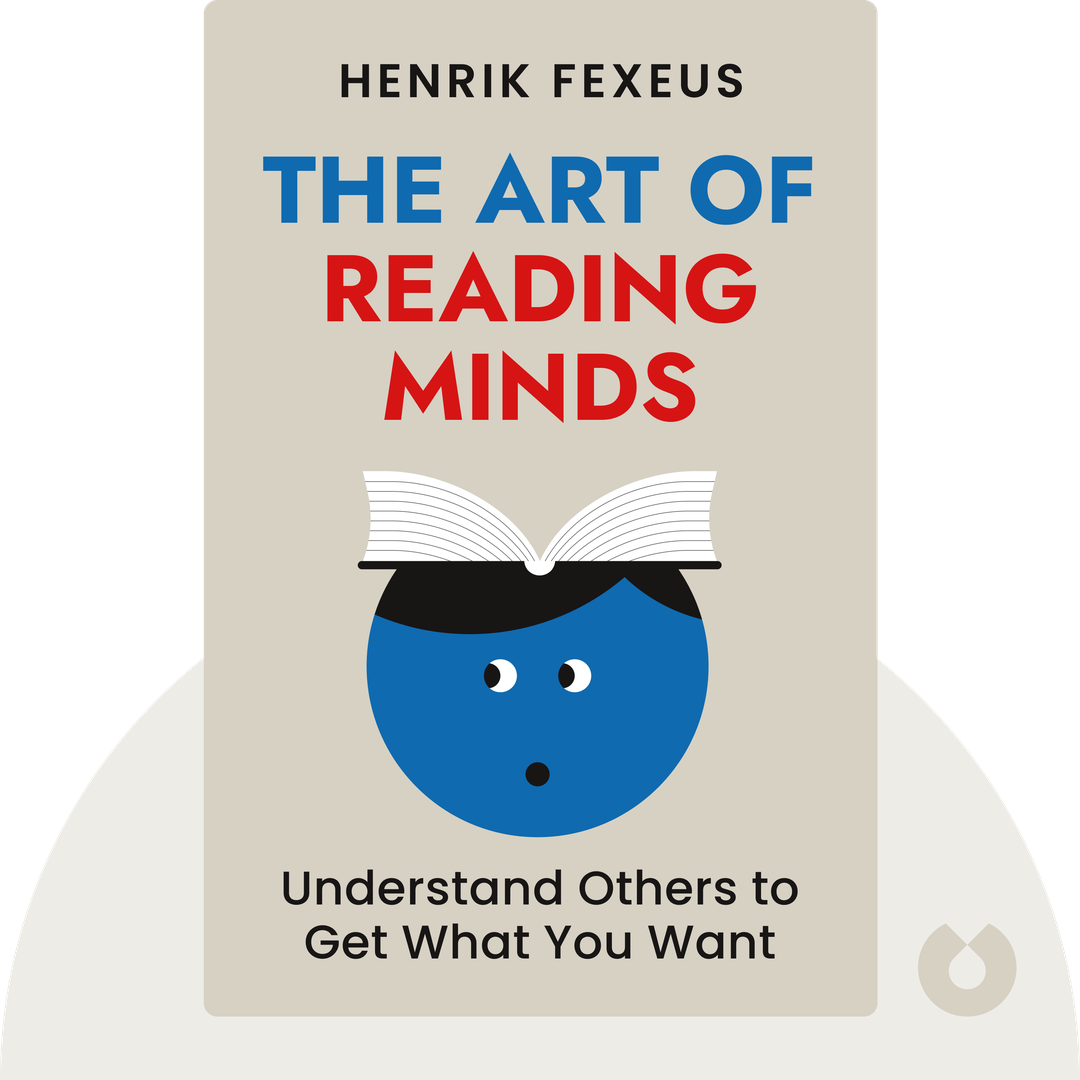
The Art of Reading Minds
Start ListeningDownload Try free on iPhoneScan to start in 5 seconds
Categories:
If You're Curious About These Questions...
You should listen to this audiobook
- Did you know that you’re constantly revealing your deepest thoughts through subtle physical cues you don’t even know you’re giving?
- What if you could use the secret psychology of mentalists to build instant rapport and influence the decisions of those around you?
- Have you ever wondered why some people can 'read' a room effortlessly, and what it would take for you to do the same?
Listen to The Art of Reading Minds — Cinematic Audio Edition
Loading player...
Key Takeaways from The Art of Reading Minds
- Understand that true mind reading isn't a psychic trick, but the practical skill of observing how every thought physically manifests in a person's body language and tone.
- Master the art of building instant rapport by subtly mimicking the body language, speech tempo, and voice tonality of the person you are speaking with.
- Discover how to decode someone's thought process simply by watching their eyes, noting that people often look left to recall a memory and right to invent a new image.
- Learn how to spot hidden lies by watching for subconscious physical gestures—like scratching the nose or tugging an earlobe—that contradict the speaker's words.
- Realize that reading minds is ultimately about empathy rather than manipulation, giving you the tools to deeply connect with anyone and improve your daily relationships.
Learning Tools
Reinforce what you learned from The Art of Reading Minds
Mind Map
The Art of Reading Minds
Building Rapport+
Decoding Emotions+
Detecting Deception+
The Art of Suggestion+
Quiz — Test Your Understanding
Question 1 of 6
What is the most effective way to use postural echo (mirroring) to build rapport without appearing obvious?
Question 2 of 6
According to the text, what is the most reliable way to determine if a smile is genuine?
Question 3 of 6
Why is the body often a more reliable indicator of deception than the face?
Question 4 of 6
When analyzing someone's eye movements to determine if they are lying, what must a mentalist keep in mind?
Question 5 of 6
Why is telling someone 'Don't think of a polar bear' an effective way to plant an image in their mind?
Question 6 of 6
For the technique of 'anchoring' to be most effective, when should the anchor (such as a specific touch) first be established?
The Art of Reading Minds — Full Chapter Overview
- 1Recommendation
- 2Rapport forms the basis of persuasion
- 3Learn to read emotions
- 4Lies are detectable via nonverbal cues
- 5Master the craft of suggestion
The Art of Reading Minds Summary & Overview
The Art of Reading Minds (2019) explains how we unconsciously reveal our thoughts and emotions through nonverbal cues, and provides practical tips rooted in cognitive psychology to decipher those cues and influence others’ thoughts and beliefs. By mastering the techniques outlined, we can heighten self-awareness, improve persuasion skills, and gain insights into what others are truly thinking and feeling.
Who Should Listen to The Art of Reading Minds?
- Connection-seekers wishing to gain a deeper insight into other people’s thoughts and emotions
- Communicators who want to use psychology and mentalism to improve their persuasive skills
- Anyone who’s always wondered how mentalists “read minds”
Books Similar to The Art of Reading Minds
Readers who enjoyed this also liked these titles.