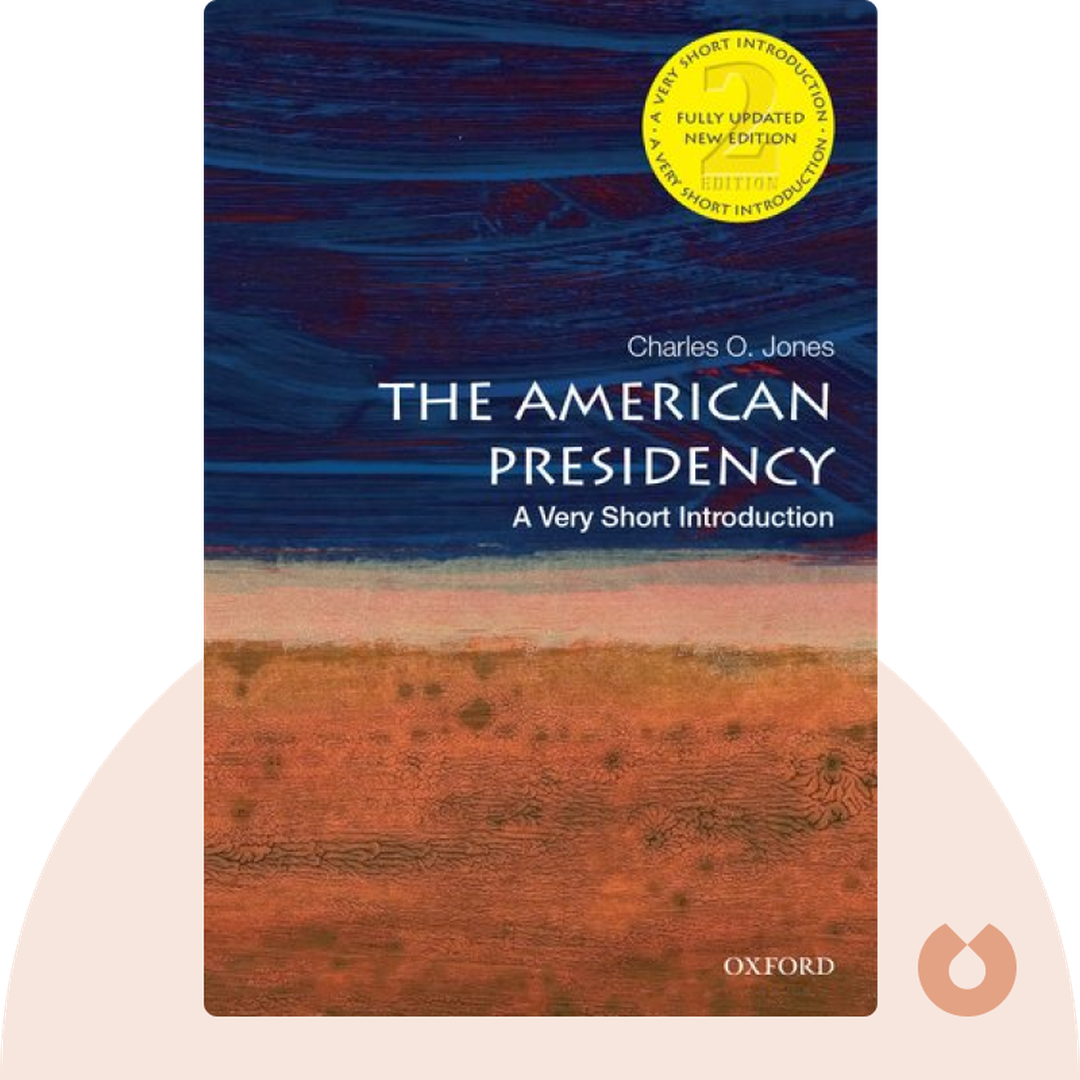
The American Presidency
Start ListeningDownload Try free on iPhoneScan to start in 5 seconds
Categories:
If You're Curious About These Questions...
You should listen to this audiobook
- Have you ever wondered why the Founding Fathers designed the U.S. presidency as a grand "experiment"—and how that experiment is still surprising us today?
- Did you know that the role of the president has transformed from a limited executive position into a unique global powerhouse unlike any other in history?
- Are you curious about the original logic behind the controversial Electoral College and how it was actually intended to balance the American government?
Listen to The American Presidency — Free Audiobook
Loading player...
Key Takeaways from The American Presidency
- Understand how the Founding Fathers deliberately designed a 'separated presidency' with built-in checks and balances to prevent the executive branch from exercising tyrannical, unchecked power.
- Discover why the electoral college was established as a crucial compromise between Federalists and Anti-Federalists to balance centralized authority with state power.
- Learn why the title of 'president' and a separate capital city were specifically chosen to break away from British colonial associations and prevent state favoritism.
- Find out how the chaotic election of fierce rivals to the top two offices led to the 12th Amendment, forever changing the way presidential and vice-presidential tickets are structured.
- Trace the fascinating evolution of the US election process, from exclusive congressional nominations to the rise of party conventions and citizen-driven primaries in the twentieth century.
Learning Tools
Reinforce what you learned from The American Presidency
Mind Map
The American Presidency
Origins & The Grand Experiment+
Separation of Powers+
Evolution of Elections+
Legislative Challenges & Tactics+
Evolving Scope & Power+
Quiz — Test Your Understanding
Question 1 of 7
Why did the Founding Fathers choose the title 'president' for the new executive leader instead of 'governor'?
Question 2 of 7
The creation of the electoral college was a compromise between which two ideological camps?
Question 3 of 7
Which model of the presidency did the Founding Fathers ultimately decide upon in 1787 to balance efficiency and prevent tyranny?
Question 4 of 7
What structural issue prompted the passage of the Twelfth Amendment in 1803?
Question 5 of 7
According to the text, how did Lyndon B. Johnson's approach to passing legislation differ from Barack Obama's?
Question 6 of 7
Why was the 22nd Amendment passed in 1947?
Question 7 of 7
How did the George W. Bush administration navigate constitutional limits to take military action after 9/11 without formal congressional approval?
The American Presidency — Full Chapter Overview
- 1Recommendation
- 2The American presidency arose from an experimental new model of governance.
- 3From the outset, the presidency’s role and all government branches were laid out clearly and definitively.
- 4The United States election process has evolved over years.
- 5Because of the US government’s unique design, it can often be difficult for a president to take decisive action.
- 6The nature of the United States presidency has evolved, and will continue to evolve.
The American Presidency Summary & Overview
The American Presidency (2007) offers an introduction to the US presidency and the unique role each president must play in world politics. Find out what kind of thinking went into the creation of this job and how it has changed over the years. America’s Founding Fathers created a uniquely experimental government when they broke free from British influence; even today, their experiment continues to surprise us.
Who Should Listen to The American Presidency?
- Readers interested in American history
- Students of politics or public policy
- Frustrated voters trying to understand the electoral college
Books Similar to The American Presidency
Readers who enjoyed this also liked these titles.