If You're Curious About These Questions...
You should listen to this audiobook
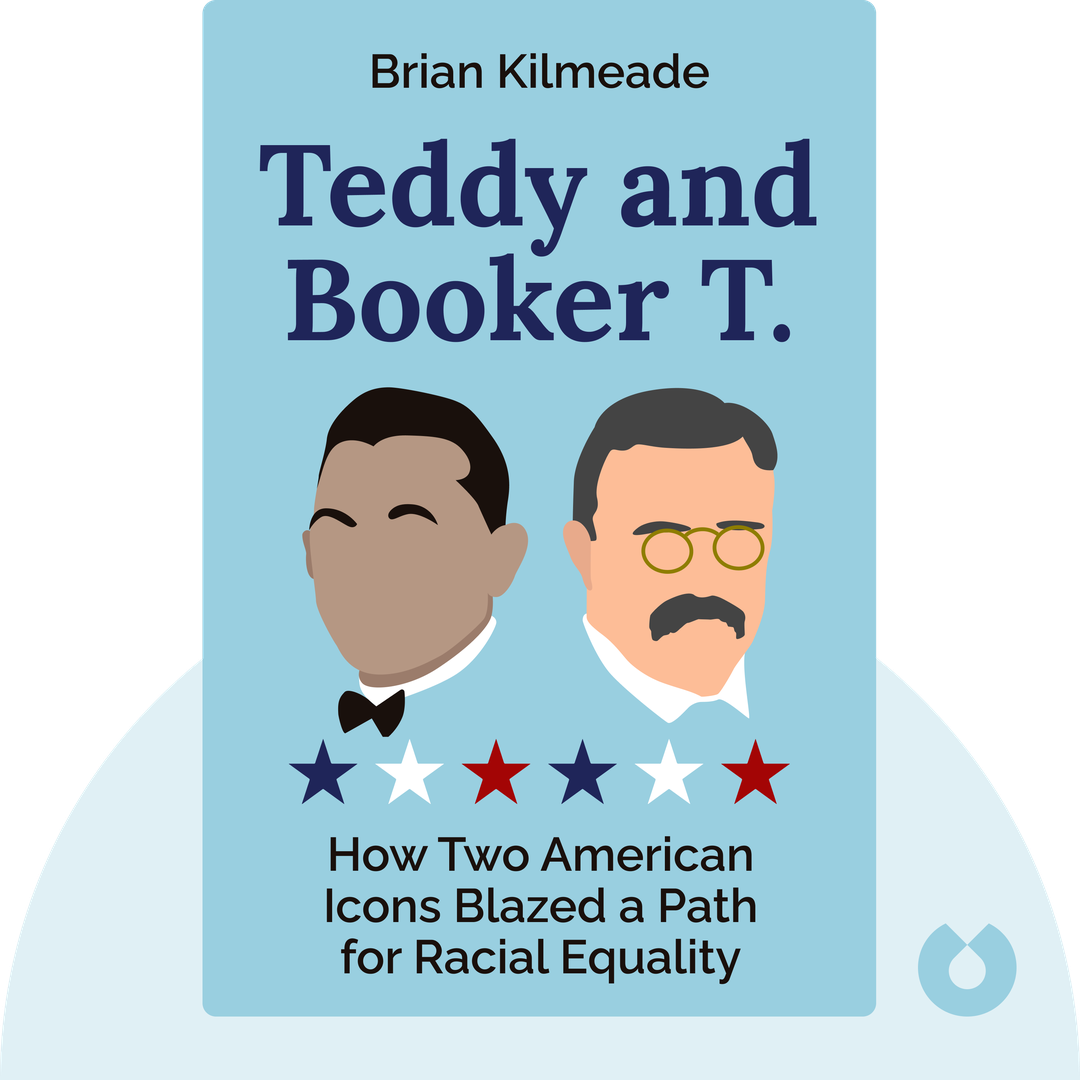
- Did you know that a single dinner invitation at the White House in 1901 sparked a national firestorm and forever changed the course of American race relations?
- Have you ever wondered how a former slave and a wealthy New York aristocrat forged an unlikely partnership to challenge the brutal realities of the Jim Crow era?
- Are you curious about the secret leadership tactics used by Roosevelt and Washington to pursue equality during one of the most violent and divided times in history?
Listen to Teddy and Booker T. — Free Audiobook
Loading player...
Key Takeaways from Teddy and Booker T.
- Discover how Theodore Roosevelt and Booker T. Washington formed an unlikely, barrier-breaking alliance to subtly advance civil rights during the oppressive Jim Crow era.
- Learn how both leaders leveraged intense persistence to overcome drastically different early hardships, from Washington's childhood in slavery to Roosevelt's debilitating physical ailments.
- Understand how to transform profound personal tragedy into public good by exploring how both men channeled the devastating early deaths of their wives into building enduring institutions.
- Find out how Washington utilized 'bootstrap grit' and a focus on skilled trades to build the Tuskegee Institute from scratch, literally having students construct their own campus.
- Explore the strategic value of patient cooperation, education, and economic empowerment as essential tools for laying the necessary social groundwork for broader civil rights victories.
Learning Tools
Reinforce what you learned from Teddy and Booker T.
Mind Map
Teddy and Booker T.
Core Themes+
Formative Years+
Early Careers & Tragedies+
Rising to National Prominence+
The Fateful 1901 Dinner+
Collaborative Work & Legacy+
Quiz — Test Your Understanding
Question 1 of 8
How did a young Booker T. Washington manage to pay for his tuition at the Hampton Normal and Agricultural Institute?
Question 2 of 8
What motivated Theodore Roosevelt to intensely focus on whipping his body into shape during his youth?
Question 3 of 8
What was the reality of the Tuskegee Normal and Industrial Institute when Booker T. Washington arrived to spearhead it in 1881?
Question 4 of 8
How did Theodore Roosevelt cope with the simultaneous deaths of his wife and mother in 1884?
Question 5 of 8
Why did Booker T. Washington's famous Atlanta Exposition address appeal to many white political leaders in the South?
Question 6 of 8
What action did Roosevelt take during the 1898 crisis in Cuba that cemented his status as a courageous national hero?
Question 7 of 8
What was the immediate public reaction to President Roosevelt inviting Booker T. Washington to dine at the White House in 1901?
Question 8 of 8
How did Washington and Roosevelt collaborate politically during Roosevelt's presidency?
Teddy and Booker T. — Full Chapter Overview
- 1Recommendation
- 2Very Different Childhoods
- 3A Story of Two Daughters
- 4Rising to Prominence
- 5The Rise to Power
- 6The Fateful Dinner
- 7Their Work Together
- 8Final summary
Teddy and Booker T. Summary & Overview
Teddy and Booker T. (2023) tells the story of how President Theodore Roosevelt and Booker T. Washington, two wildly different Americans, faced the challenge of advancing racial equality in the early 1900s. When Roosevelt welcomed Washington into his circle of advisors in 1901, they confronted violent racist backlash, having risen to prominence in an era of increasing Jim Crow laws and lynching. Though coming from vastly different backgrounds, both men embodied the pioneering American spirit and believed progress was possible through collaboration.
Who Should Listen to Teddy and Booker T.?
- History buffs
- Leadership readers
- People looking to be inspired
Books Similar to Teddy and Booker T.
Readers who enjoyed this also liked these titles.