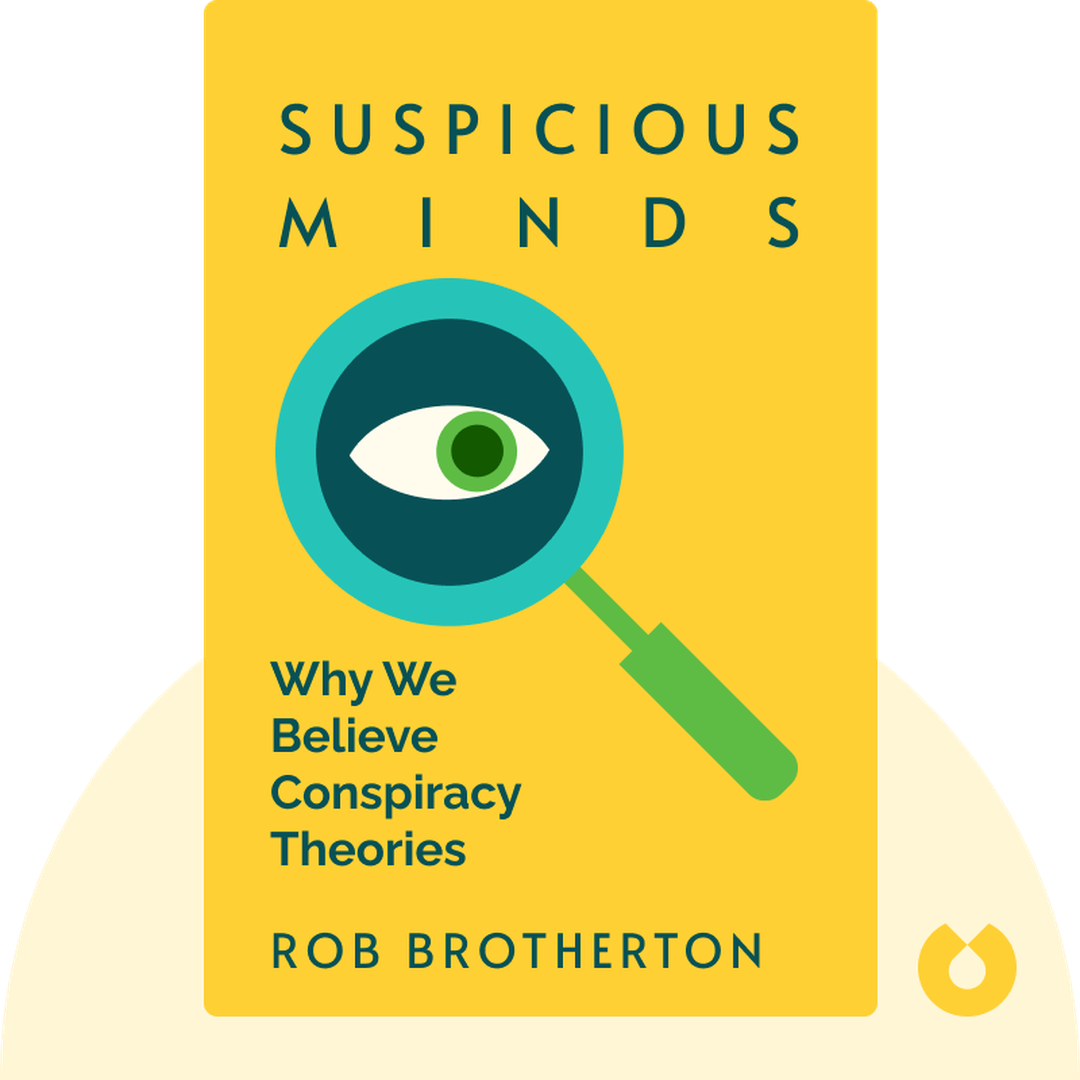
If You're Curious About These Questions...
You should listen to this audiobook
- Have you ever wondered why almost everyone—including you—is naturally hardwired to be a conspiracy theorist?
- Did you know that your brain’s tendency to find patterns in chaos is the secret reason why even the wildest rumors can seem like common sense?
- What if the way we process tragic world events has less to do with the facts and more to do with a hidden psychological bias we all share?
Listen to Suspicious Minds — Free Audiobook
Loading player...
Key Takeaways from Suspicious Minds
- Discover why conspiracy theories are born from a natural human instinct to seek explanations for unanswered questions, rather than being the obsession of antisocial outliers.
- Learn how conspiracy theories predate the internet by millennia, tracing all the way back to rumors about Emperor Nero in ancient Rome and the 18th-century Illuminati.
- Understand the deadly consequences of conspiracy theories, as historical crises like the Black Death show how they are often used to tragically scapegoat innocent groups.
- Find out how the 'conspiracy mindset' leads people to accept multiple, even contradictory, theories simply because they share a deep distrust of mainstream narratives.
- Recognize how conspiracy theories captivate our minds by following the exact same basic storytelling templates and hero-versus-villain tropes as blockbuster movies.
Learning Tools
Reinforce what you learned from Suspicious Minds
Mind Map
Suspicious Minds
Psychological Origins+
The Conspiracy Mindset+
Storytelling Templates+
Historical Roots+
Deadly Consequences+
Quiz — Test Your Understanding
Question 1 of 7
According to the book, what is the primary psychological reason people are drawn to conspiracy theories?
Question 2 of 7
Which historical event is cited in the text to prove that conspiracy theories existed long before the internet?
Question 3 of 7
How does the book illustrate the potentially deadly consequences of conspiracy theories?
Question 4 of 7
What defines the 'conspiracy mindset' when evaluating official stories, according to the text?
Question 5 of 7
How do conspiracy theories relate to popular storytelling templates like 'Harry Potter' or 'Star Wars'?
Question 6 of 7
Why do conspiracy theorists often reject mundane explanations for tragic events, such as a plane crashing due to bad weather?
Question 7 of 7
How do conspiracy theorists typically react to new evidence that contradicts their beliefs?
Suspicious Minds — Full Chapter Overview
- 1Recommendation
- 2Conspiracy theories emerge from unanswered questions and our own natural instincts.
- 3Conspiracy theories stretch back to the days of ancient Roman civilization.
- 4Conspiracy theories can inflict enormous damage and even kill millions of people.
- 5Believing one conspiracy theory leads to believing many – even when they contradict each other.
- 6Like popular books and movies, conspiracy theories follow classic storytelling patterns.
- 7Conspiracy theorists are biased and seek hidden motives behind every occurrence.
Suspicious Minds Summary & Overview
Conspiracy theorists are everywhere. In fact, you might be one of them yourself! Have you ever questioned the official accounts of, say, 9/11 or the assassination of John F. Kennedy? Suspicious Minds (2015) reveals why we look for extreme answers to tragic events and explains that there’s much more to conspiracy theories than tinfoil hats and UFOs.
Who Should Listen to Suspicious Minds?
- People who are suspicious about 9/11
- Anyone interested in conspiracy theories
- Psychology students
Books Similar to Suspicious Minds
Readers who enjoyed this also liked these titles.