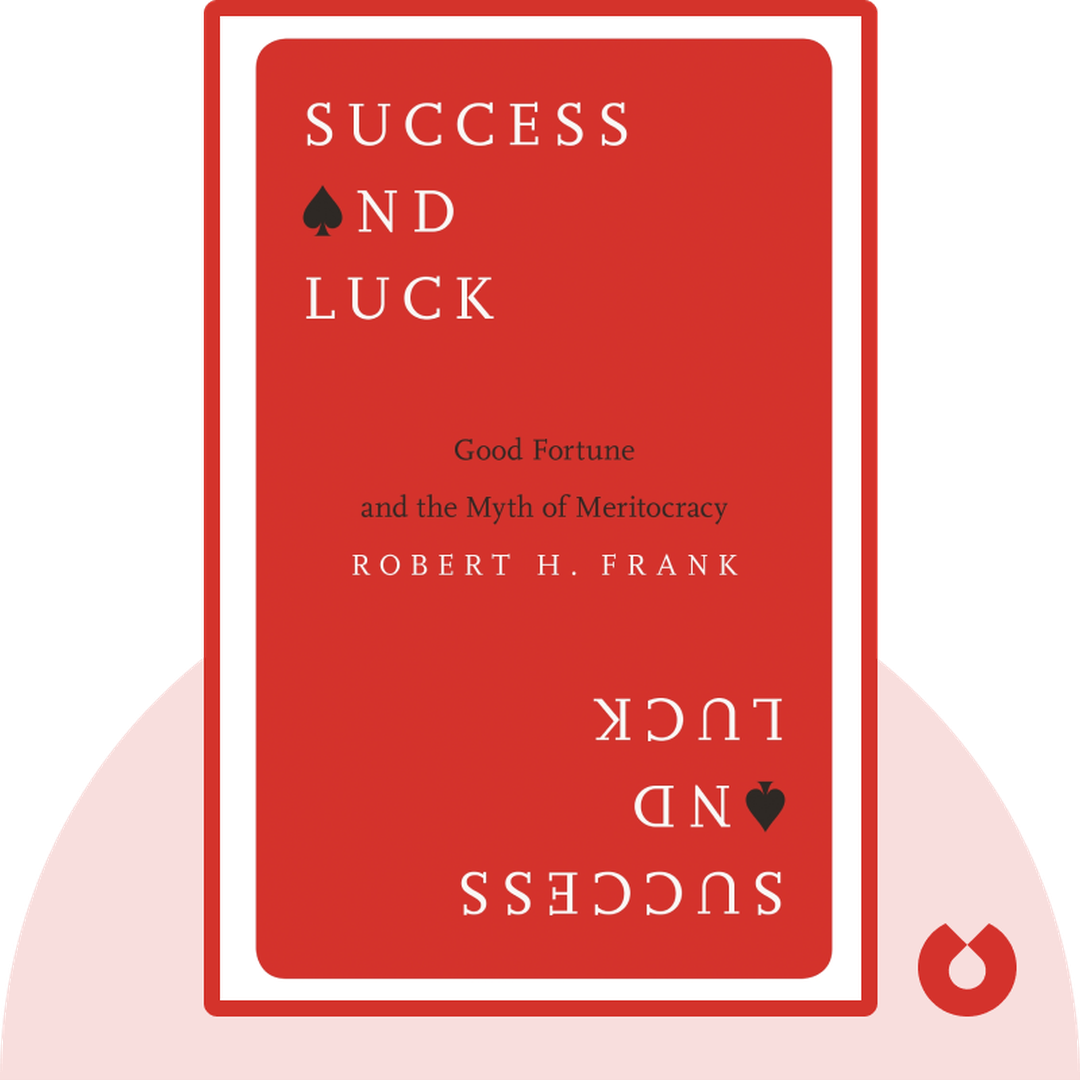
If You're Curious About These Questions...
You should listen to this audiobook
- Did you know that in today’s hyper-competitive markets, being the most talented person in the room is often not enough to reach the top?
- Have you ever wondered why the most successful people are often the most likely to ignore the role that pure chance played in their rise?
- What if the secret to creating a more prosperous and thriving economy depends on changing how we view our own personal achievements?
Listen to Success and Luck — Free Audiobook
Loading player...
Key Takeaways from Success and Luck
- Understand why the myth of pure meritocracy is flawed, and discover how unforeseen chance dictates extreme economic success just as much as hard work.
- Discover how hindsight bias tricks us into viewing successful outcomes as inevitable destiny, hiding the crucial role that random events play in shaping careers.
- Learn how globalized markets create a 'winner-takes-all' economy where even a tiny stroke of luck compounds into an unbeatable competitive advantage.
- Find out how seemingly trivial circumstances—like a summer birth month or attending the right high school—can permanently alter your confidence and leadership trajectory.
- Recognize why exceptional talent is simply the baseline today, and why standing out among millions of competitors ultimately requires a rare lucky break.
Learning Tools
Reinforce what you learned from Success and Luck
Mind Map
Success and Luck
The Myth of Meritocracy+
How Luck Drives Outcomes+
The Psychology of Luck+
Societal Impact & Solutions+
The Power of Humility+
Quiz — Test Your Understanding
Question 1 of 7
Why does the author argue that the strict belief in a meritocracy is flawed?
Question 2 of 7
What psychological concept explains why society views the massive success of individuals like Bill Gates as destiny rather than chance?
Question 3 of 7
How have modern technologies and expanding markets altered the landscape of economic success?
Question 4 of 7
Why do successful people often fail to credit luck for their accomplishments?
Question 5 of 7
According to the text, what is a major reason why wealthy individuals often resist paying higher taxes for public goods?
Question 6 of 7
What is the primary theoretical benefit of a progressive consumption tax as proposed in the book?
Question 7 of 7
What does the story of Scott Forstall and the author's experiment with the fictional 'Harold Johnson' demonstrate?
Success and Luck — Full Chapter Overview
- 1Recommendation
- 2Luck has a bigger impact on economic success than we admit.
- 3An exceptional career may hinge on a string of lucky breaks.
- 4A touch of luck can compound into unbeatable advantage.
- 5People struggle to recognize when luck has been on their side.
- 6To keep our society fortunate, we must share the rewards of good luck.
- 7A consumption tax can curb spending and finance collective goods.
- 8A little humility and a lot of teamwork are crucial to getting ahead.
Success and Luck Summary & Overview
Success and Luck (2016) presents an unconventional look at the role chance plays in our economy. This manifesto argues that a little luck matters a lot more than we think and that ignoring this reality is what keeps us from thriving.
Who Should Listen to Success and Luck?
- (Aspiring) business leaders
- Government officials
- People interested in the irrationality of human behavior
Books Similar to Success and Luck
Readers who enjoyed this also liked these titles.