If You're Curious About These Questions...
You should listen to this audiobook
- Have you ever wondered what the world’s greatest athletes must sacrifice in their personal lives to achieve a level of greatness that seems almost superhuman?
- Did you know that the true difference between a talented amateur and a pro isn't just skill, but a near-mystical experience of the game that most mortals will never touch?
- What’s the secret to how a simple game of tennis can reveal the most profound truths about human limits, discipline, and the pursuit of perfection?
Listen to String Theory — Free Audiobook
Loading player...
Key Takeaways from String Theory
- Understand why tennis serves as the ultimate test of self-reliance, requiring players to unite mind and body in real-time without the safety net of a team.
- Learn how to use uncontrollable environmental conditions as a strategic ally, just as Wallace used the unpredictable Illinois wind to outsmart technically superior opponents.
- Discover the profound trade-offs behind elite athletic performance, where ordinary life is sacrificed so that abstractions like grace and control can become visible.
- Find out how impeccable performance under pressure isn't about rising to the occasion, but rather falling back on automatic execution built through thousands of hours of discipline.
- Master the art of turning perceived biological disadvantages into competitive edges, much like Wallace used his heavy sweating and targeted hydration to outlast his opponents.
Learning Tools
Reinforce what you learned from String Theory
Mind Map
String Theory
Author's Junior Career+
The Pro Tennis Ecosystem+
Physicality and Perception+
Athlete Psychology+
Roger Federer's Impact+
Core Philosophy+
Quiz — Test Your Understanding
Question 1 of 6
How did David Foster Wallace compensate for his lack of technical proficiency as a junior tennis player?
Question 2 of 6
What does Wallace highlight as a harsh reality of the tennis 'quallies' (qualifying events)?
Question 3 of 6
According to the text, professional tennis players must master hand-eye coordination as well as what other type of vision?
Question 4 of 6
Why does Wallace believe that sports memoirs are almost universally boring and full of clichés?
Question 5 of 6
How did Roger Federer break the 'dead-end' impasse of modern baseline-smashing tennis?
Question 6 of 6
When Roger Federer is playing at the absolute height of his powers, how does he reportedly perceive the tennis ball?
String Theory — Full Chapter Overview
- 1Recommendation
- 2David Foster Wallace delivered far more than elegant prose.
- 3No two ways about it — tennis stars don’t ever appear magically from nowhere.
- 4No flashy trick shots here. Pro life demands serious hard work and skill.
- 5Sports memoirs often bore us because champions must be boring to become truly great.
- 6Federer restored tennis’s grace again as he rises toward pure brilliance.
String Theory Summary & Overview
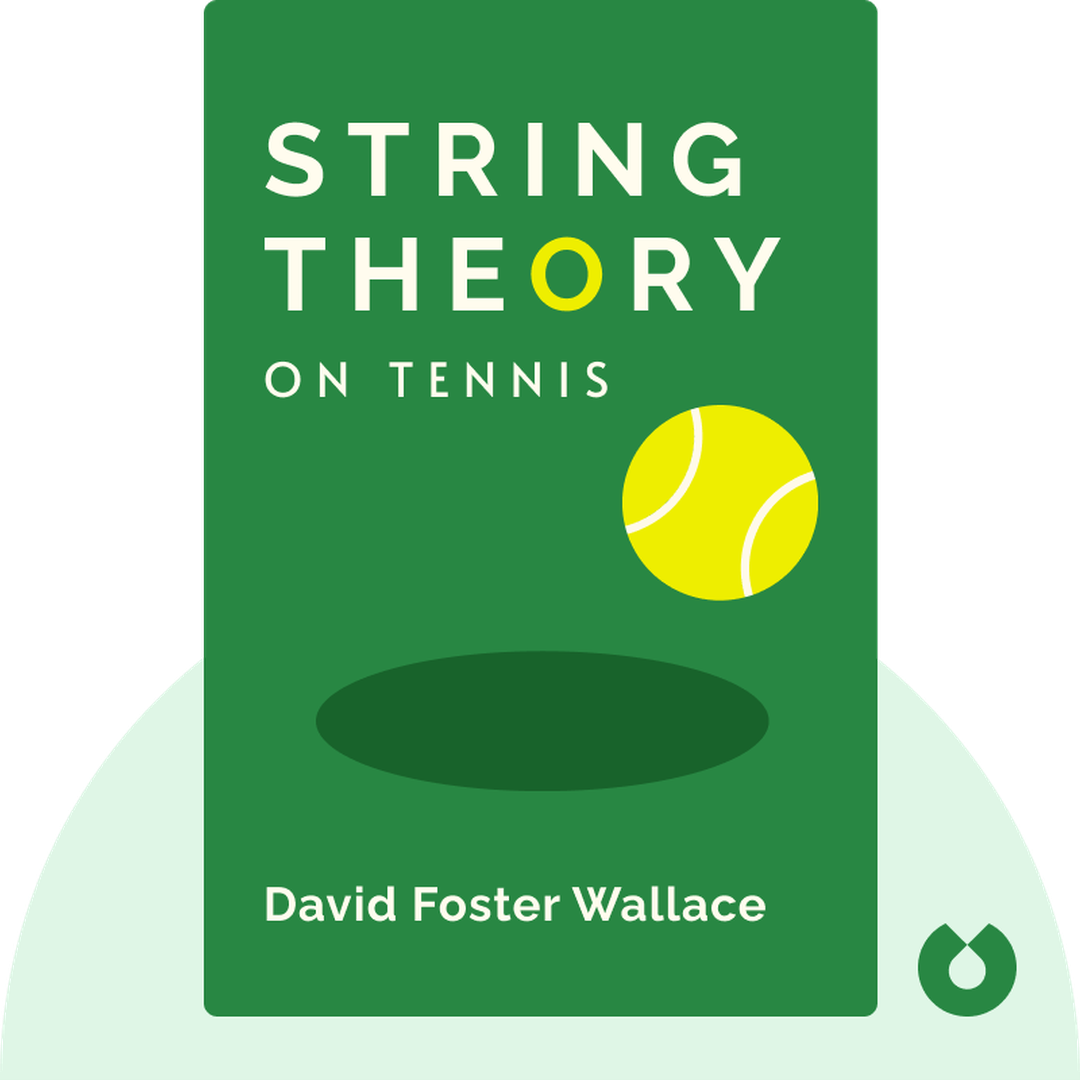
String Theory (2016) is a collection of essays about tennis by David Foster Wallace. The best players in the world sacrifice their lives so that they can entertain us, but their sacrifice elevates them to a level of greatness that the rest of us lowly mortals will never achieve.
Who Should Listen to String Theory?
- Tennis players who wonder if there is really such a gap between them and the best players
- Sports enthusiasts who are looking for an incisive analysis of what makes a great athlete
- David Foster Wallace fans who want to see another side of his brilliant mind
Books Similar to String Theory
Readers who enjoyed this also liked these titles.