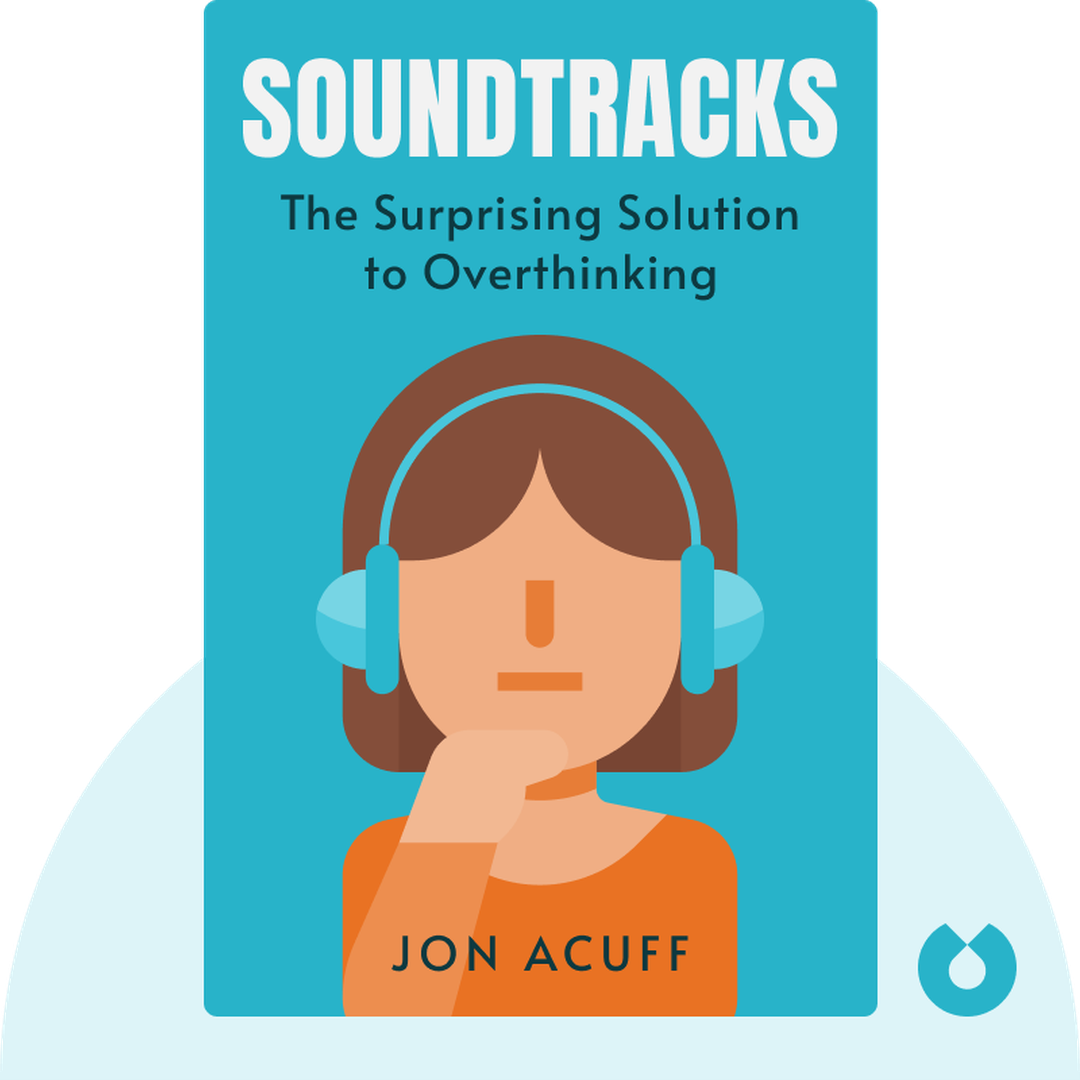
If You're Curious About These Questions...
You should listen to this audiobook
- What if you could turn your loudest inner critic into your most powerful motivation tool just by changing a single "soundtrack"?
- Have you ever wondered how much time and energy you’re actually losing to overthinking, and what you could achieve if you reclaimed it?
- What’s the secret three-question test that can instantly stop a spiral of self-doubt and help you finally take action?
Listen to Soundtracks — Free Audiobook
Loading player...
Key Takeaways from Soundtracks
- Discover how overthinking acts as a negative internal soundtrack, and learn how leveraging neuroplasticity can help you rewire your brain to stop procrastinating and start acting.
- Understand that you can control your thoughts just like a musical playlist, empowering you to consciously swap out self-criticism for encouraging beliefs.
- Master a simple method to eliminate toxic thoughts by passing them through a three-part filter: asking if the thought is true, helpful, and kind.
- Find out how to borrow empowering mental soundtracks from the world around you, such as focusing on how awesome you will feel after completing a difficult task.
- Learn how to adopt a 'Pivot, don't panic' mindset to remain flexible, overcome hesitation, and calmly adapt to life's unexpected challenges.
Learning Tools
Reinforce what you learned from Soundtracks
Mind Map
Soundtracks
The Problem of Overthinking+
Neuroplasticity & Choice+
The 3-Question Filter+
Building Better Soundtracks+
Defeating the Pocket Jury+
Anchoring with Symbols+
Key Action: Respond, Don't React+
Quiz — Test Your Understanding
Question 1 of 7
According to the book, what is an internal 'soundtrack' primarily composed of?
Question 2 of 7
How does the concept of neuroplasticity relate to overcoming overthinking?
Question 3 of 7
When interrogating a negative thought, which three key questions should you ask yourself to determine if it belongs on your mental soundtrack?
Question 4 of 7
What is a telltale sign of a 'broken soundtrack' that makes it ripe for inversion?
Question 5 of 7
What strategy does the author recommend for dealing with your 'pocket jury' of harsh inner critics?
Question 6 of 7
Why does the author recommend using physical symbols, such as a piece of tape with a goal written on it?
Question 7 of 7
According to the actionable advice from Zig Ziglar, what is the difference between 'reacting' and 'responding' to a problem?
Soundtracks — Full Chapter Overview
- 1Recommendation
- 2To stop overthinking, change the soundtrack of your thoughts.
- 3Ask whether your current soundtrack is true, helpful, and kind.
- 4Borrow new, helpful soundtracks from the world around you.
- 5Turn an old soundtrack around to create a new one.
- 6Collect the evidence you need to prove your pocket jury wrong.
- 7Use symbols to help your new soundtracks stick.
- 8Final summary
Soundtracks Summary & Overview
Soundtracks (2021) is a simple guide to ending self-doubt, hesitation, and overthinking. Instead of being at the mercy of your fickle and often unhelpful thoughts, you’ll discover patterns of thinking that can strengthen you, make you happier, and bring you closer to achieving your goals.
Who Should Listen to Soundtracks?
- Lifelong overthinkers who finally want to start taking action
- Negative Nancies who need to inject some optimism into their lives
- Anyone who lets self-doubt interfere with work, life goals, or relationships
Books Similar to Soundtracks
Readers who enjoyed this also liked these titles.