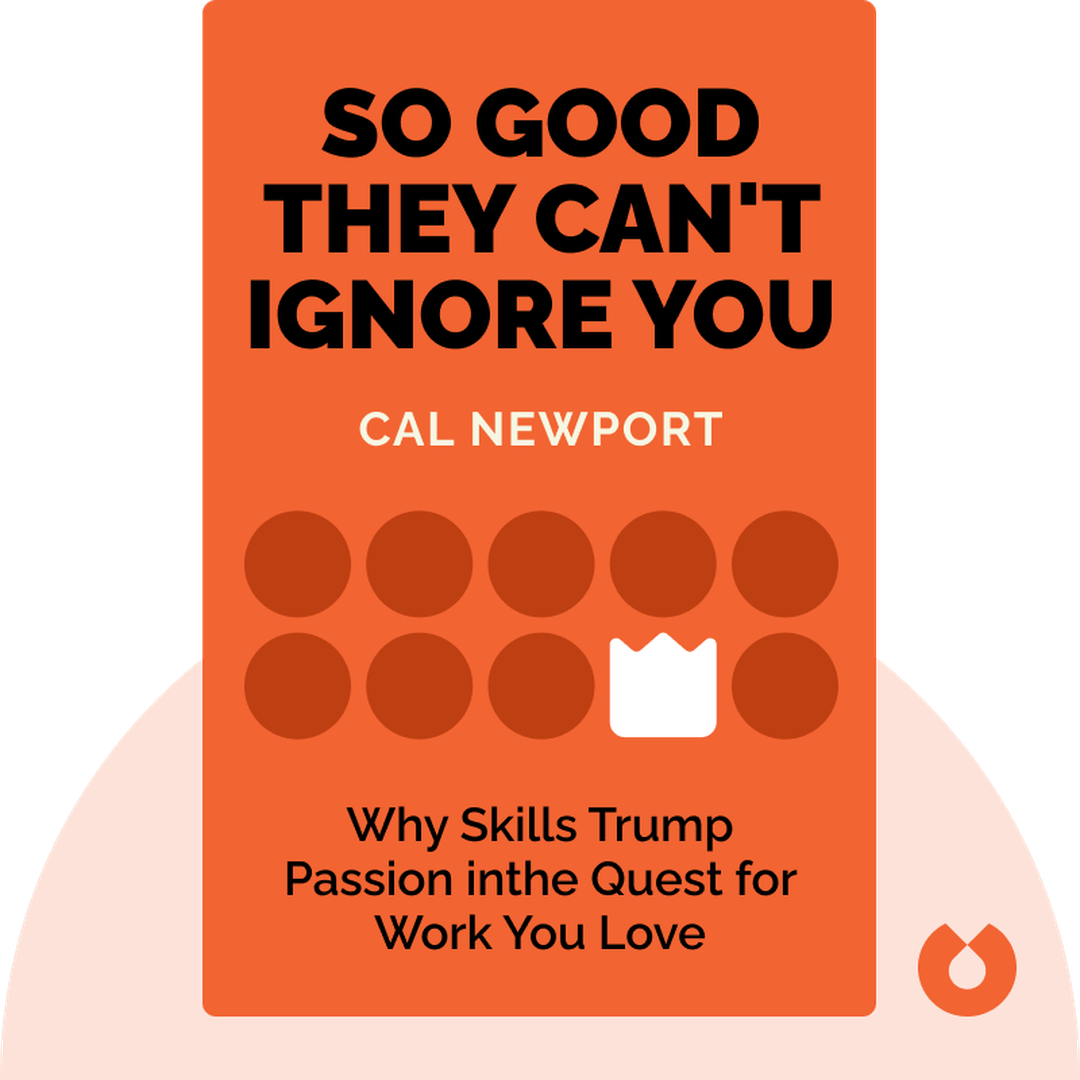
So Good They Can't Ignore You
Start ListeningDownload Try free on iPhoneScan to start in 5 seconds
Categories:
If You're Curious About These Questions...
You should listen to this audiobook
- Have you ever wondered why the popular advice to 'follow your passion' might actually be the biggest obstacle to finding a career you love?
- What if the secret to job satisfaction isn't about finding the right job, but about adopting a 'craftsman mindset' that makes you indispensable?
- Are you curious about how top performers build 'career capital' to gain the control and autonomy that most people only dream of?
Listen to So Good They Can't Ignore You — Free Audiobook
Loading player...
Key Takeaways from So Good They Can't Ignore You
- Discover why the common advice to follow your passion is actually a trap that leads to chronic career dissatisfaction and frequent job-hopping.
- Master the craftsperson's mindset by shifting your focus away from what a job can offer you, and instead toward the tangible value and output you bring to the table.
- Understand the psychology of motivation and how true workplace contentment relies on satisfying three core needs: autonomy, competence, and relatedness.
- Learn how to build and leverage 'career capital' to earn the rare, highly desirable traits of great work, such as creativity, control, and impact.
- Find out how committing to the 10,000-hour rule of deliberate practice allows you to transform from an ordinary worker into an undeniable, extraordinary expert.
Learning Tools
Reinforce what you learned from So Good They Can't Ignore You
Mind Map
So Good They Can't Ignore You
The Passion Trap+
Cultivating Satisfaction+
The Craftsman Mindset+
Career Capital+
Control and Autonomy+
Motivating Missions+
Executing the Mission+
Quiz — Test Your Understanding
Question 1 of 8
According to the book, why is the 'passion hypothesis' (following your passion) often a poor career strategy?
Question 2 of 8
The book suggests that instead of finding a passion, you should learn to love what you do. According to the Self-Determination Theory mentioned, what are the three key factors that generate this love for your work?
Question 3 of 8
What is the core question that defines the 'craftsman mind-set'?
Question 4 of 8
The book defines 'career capital' as the key to getting a great job. What is career capital?
Question 5 of 8
The book highlights a 'control trap' where gaining control without sufficient career capital fails. Which example illustrates this trap?
Question 6 of 8
According to the book, where should one look to find a motivating career mission?
Question 7 of 8
How does the book suggest you should pursue a mission once you've found one?
Question 8 of 8
What is the key principle of 'deliberate practice'?
So Good They Can't Ignore You — Full Chapter Overview
- 1Recommendation
- 2True passion is rare, and chasing a job you love often brings unhappiness and deep dissatisfaction instead.
- 3Don’t just do what you love; learn to love what you do by gaining mastery, autonomy, and relatedness.
- 4Embrace the craftsman mindset, practice intensely, and step beyond your comfort zone daily.
- 5To land a great job, build career capital by gaining rare and valuable skills.
- 6Build career capital to preserve control and autonomy over your work.
- 7Use the craftsman mindset to find a motivating mission that becomes a unifying goal for your work life.
- 8Achieving a mission demands bold bets and a standout approach that sets you apart.
So Good They Can't Ignore You Summary & Overview
How can you find a job that you are good at and enjoy? This book advocates the "craftsman mind-set" of patiently developing skills instead of the typical "follow-your-passion" advice, and offers practical solutions to acquiring and maintaining job satisfaction.
Who Should Listen to So Good They Can't Ignore You?
- Anyone who wants to know why “follow your passion” is bad advice
- Anyone interested in alternative routes to job satisfaction and success
Books Similar to So Good They Can't Ignore You
Readers who enjoyed this also liked these titles.