If You're Curious About These Questions...
You should listen to this audiobook
- Have you ever wondered why traditional marketing tactics often backfire when you're trying to sell a service instead of a physical product?
- What's the secret to making your customers feel completely confident in a purchase they can't see, touch, or hold before they buy it?
- Are you curious about how to turn your 'invisible' expertise into a powerful, marketable brand that sets you apart from every competitor?
Listen to Selling the Invisible — Free Audiobook
Loading player...
Key Takeaways from Selling the Invisible
- Understand why the modern economy is increasingly driven by the service sector and how attaching value-adding services to physical products can make them highly desirable.
- Discover how to effectively market intangible services by utilizing abstract advertising techniques and symbols that represent your brand's core value.
- Learn how to measure service quality by actively gathering customer feedback and transforming negative responses into actionable improvements.
- Find out how to differentiate your invisible service from competitors by embracing radical innovation and capitalizing on untapped business territories.
- Master the art of proactive execution by moving quickly past the strategic planning phase and taking immediate action to adapt to changing markets.
Learning Tools
Reinforce what you learned from Selling the Invisible
Mind Map
Selling the Invisible
The Nature of Services+
Quality & Expectations+
Standing Out+
Execution vs. Planning+
Holistic Marketing+
Customer Psychology+
Focus and Positioning+
Pricing Strategy+
Branding and Storytelling+
Quiz — Test Your Understanding
Question 1 of 10
Why is marketing services generally more difficult than marketing physical products?
Question 2 of 10
According to the text, how do customers primarily evaluate the quality of a service?
Question 3 of 10
What is a major drawback of obsessive strategic planning mentioned in the book?
Question 4 of 10
Why does the author argue that every employee in a company is part of the marketing strategy?
Question 5 of 10
Which of the following is an example of an 'irrational factor' that influences customer buying behavior?
Question 6 of 10
How does the book distinguish between a company's 'focus' and its 'position'?
Question 7 of 10
Which pricing strategy does the author suggest is often the safest and most effective for services?
Question 8 of 10
Why is creating a strong brand compared to an 'insurance policy' for customers?
Question 9 of 10
How did Wal-Mart utilize the 'adaptor's edge' to gain a significant market advantage?
Question 10 of 10
When turning your marketing message into a compelling story, what must the story ultimately focus on to be successful?
Selling the Invisible — Full Chapter Overview
- 1Recommendation
- 2Marketing services is difficult because they’re intangible and their quality can vary.
- 3Make sure your service goes beyond customer expectations.
- 4Help your service stand out by being different, bold, and innovative.
- 5Don’t stay stuck in planning — be proactive and ready to act.
- 6Make every part of your business, from employees to branding, part of your marketing strategy.
- 7Customer choices aren’t always rational — factors like prestige and familiarity can shape behavior too.
- 8Set yourself up for success by narrowing the focus of your service.
- 9Low-cost and mid-market pricing can be risky; premium pricing is often the safer strategy.
- 10Succeed by turning your company and the service you offer into a brand.
- 11Stories are powerful and persuasive — shape your message into a compelling story about your service.
- 12Final Summary
- 13Actionable ideas from this book on AudiobookHub
Selling the Invisible Summary & Overview
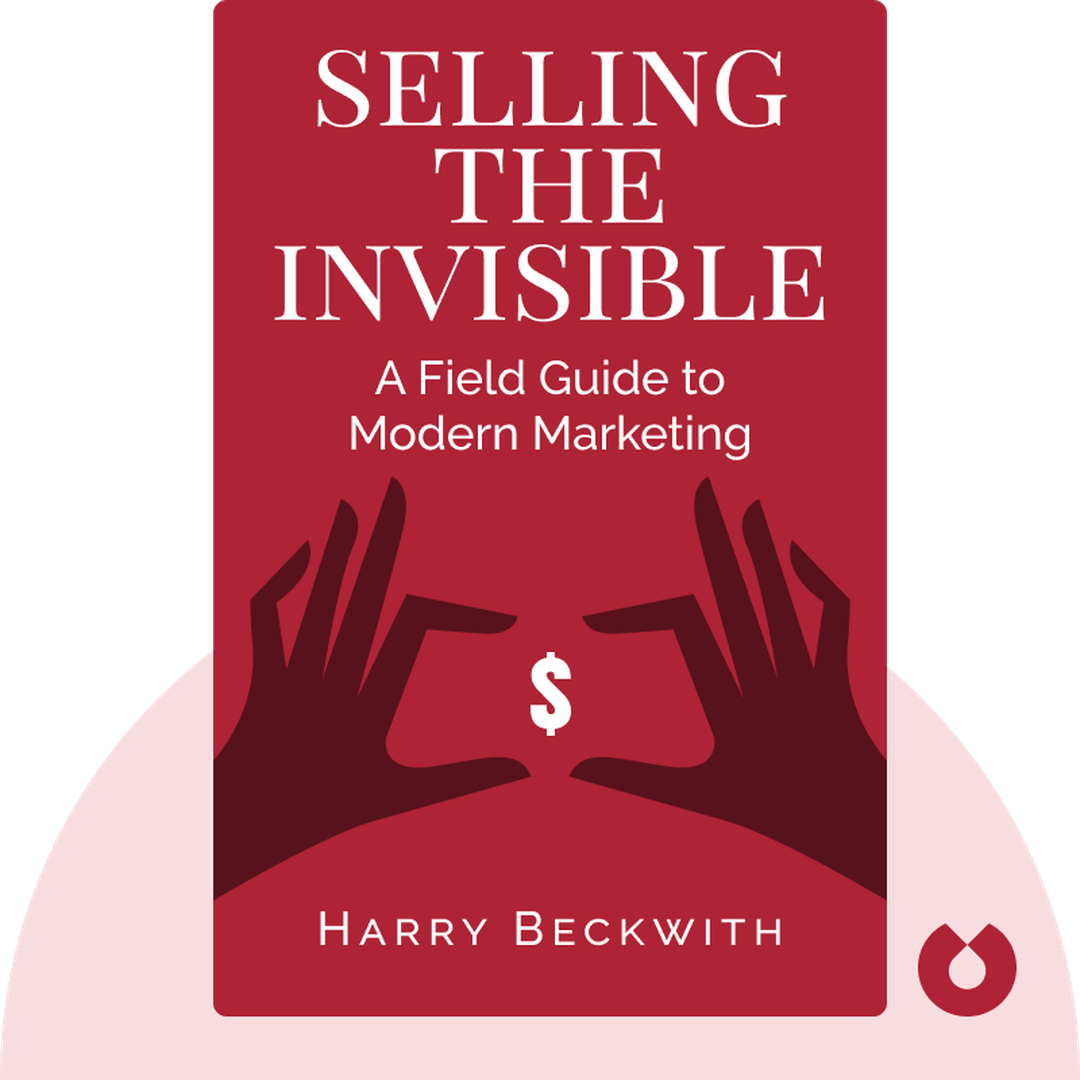
Services represent a significant and growing portion of the modern economy, yet marketing them remains a mystery. Selling the Invisible (1997) serves as a guide for promoting the intangible. It outlines how to set up a marketable service company, and how that business can then be advertised and promoted.
Who Should Listen to Selling the Invisible?
- Anyone who provides a service
- Anyone who owns a service-based business
- Marketing or advertising professionals
- Anyone interested in marketing or advertising
Books Similar to Selling the Invisible
Readers who enjoyed this also liked these titles.