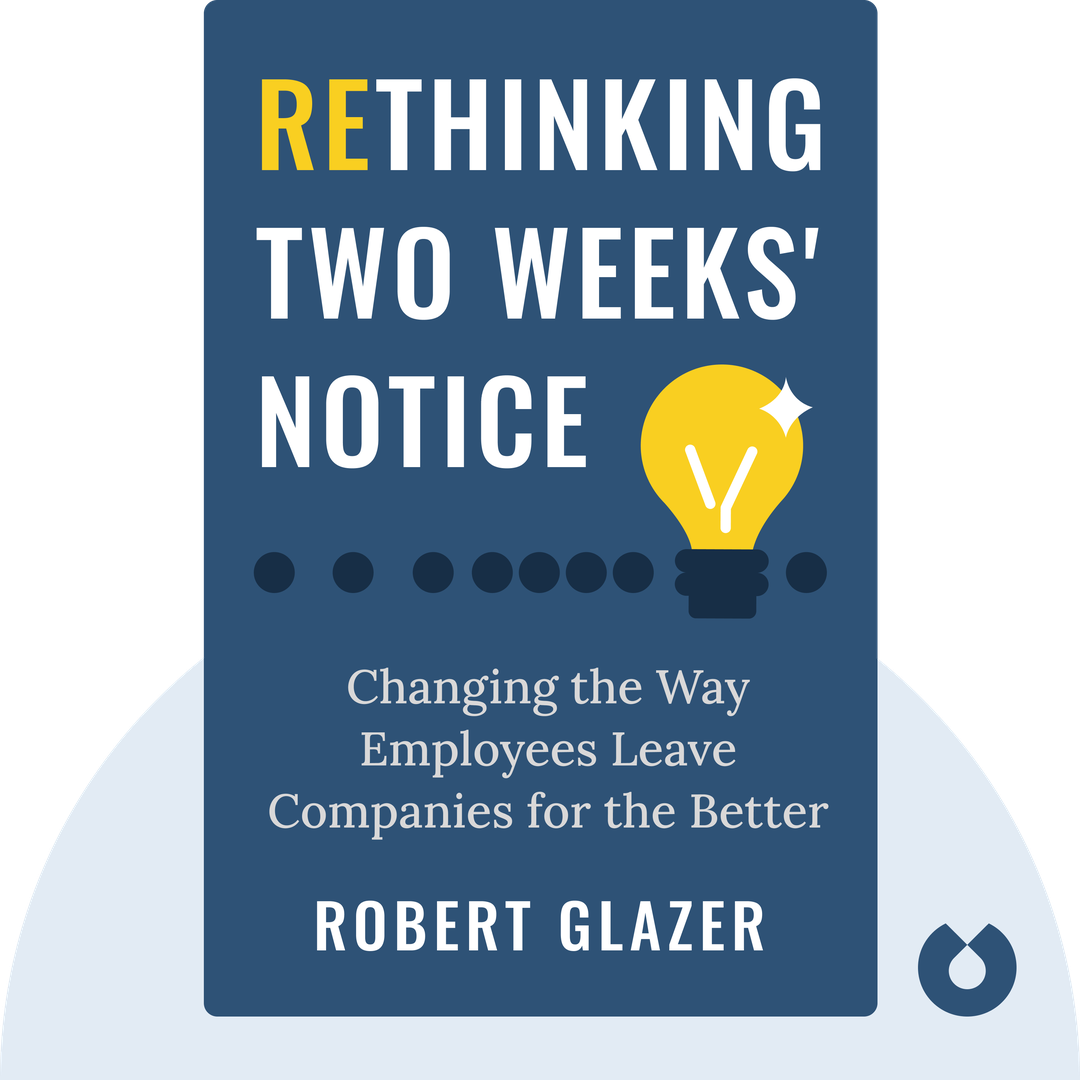
Rethinking Two Weeks' Notice
Start ListeningDownload Try free on iPhoneScan to start in 5 seconds
Categories:
If You're Curious About These Questions...
You should listen to this audiobook
- Did you know that the traditional two-week notice is an outdated model that often damages workplace culture and leads to costly, sudden transitions?
- What if you could create a 'safe' environment where employees share their career move plans months in advance instead of keeping them a secret?
- What’s the secret to turning a standard resignation into a transparent, mutual transition that actually strengthens professional relationships and team morale?
Listen to Rethinking Two Weeks' Notice — Free Audiobook
Loading player...
Key Takeaways from Rethinking Two Weeks' Notice
- Discover why the traditional two-week notice period poisons workplace trust and deeply damages both team performance and critical client relationships.
- Learn how to implement the Open Transition Program (OTP) to replace secret job searches with radical transparency and mutually beneficial career planning.
- Understand how giving employees the time to plan thoughtful, extended transitions saves your company money, preserves client trust, and builds a valuable alumni network.
- Master the art of building psychological safety by having leaders share their own vulnerabilities and mistakes to foster a culture of authentic communication.
- Find out how asking three simple questions—'Are you happy? Are you present? Are you engaged?'—can help you spot subtle signs of disconnection and proactively support team growth.
Learning Tools
Reinforce what you learned from Rethinking Two Weeks' Notice
Mind Map
Rethinking Two Weeks' Notice
The Problem with Traditional Exits+
The Open Transition Program (OTP)+
Building Psychological Safety+
The Three Buckets Approach+
Navigating Business Evolution+
Quiz — Test Your Understanding
Question 1 of 6
According to the text, what is a major negative consequence of the traditional two-week notice period?
Question 2 of 6
What is the primary goal of the Open Transition Program (OTP) framework?
Question 3 of 6
According to the text, what is an effective way for a manager to start building psychological safety within a team?
Question 4 of 6
Why does the author argue against relying heavily on anonymous feedback tools like suggestion boxes?
Question 5 of 6
In the 'Three Buckets Approach,' how should an organization handle a situation placed in the 'third bucket' (unchangeable factors)?
Question 6 of 6
What lesson about business evolution is illustrated by the example of Netflix shifting from DVD rentals to streaming?
Rethinking Two Weeks' Notice — Full Chapter Overview
- 1Recommendation
- 2Why standard employee departures fall short
- 3The Open Transition Program structure
- 4Building psychological safety
- 5The Three Buckets Method
- 6When skills and business needs grow apart
Rethinking Two Weeks' Notice Summary & Overview
Rethinking Two Weeks' Notice (2024) takes a critical look at our outdated employee departure model, proposing a new framework, the Open Transition Program, built on transparency and mutual respect. Through practical strategies, it shows how you can create an environment where career transitions strengthen rather than damage workplace relationships.
Who Should Listen to Rethinking Two Weeks' Notice?
- Managers seeking better ways to handle employee departures
- HR professionals focused on improving company culture and retention
- Business leaders wanting to reduce costs of sudden transitions
Books Similar to Rethinking Two Weeks' Notice
Readers who enjoyed this also liked these titles.