If You're Curious About These Questions...
You should listen to this audiobook
- Why are our most vivid and emotionally charged memories, such as where we were during a major historical event, often entirely inaccurate?
- How is the act of forgetting actually a vital and healthy cognitive function, and what happens when a person completely loses this ability?
- Why is your brain significantly more likely to remember that a new acquaintance works as a baker than it is to remember that their last name is Baker?
Listen to Remember — Free Audiobook
Loading player...
Key Takeaways from Remember
- Every time you recall an episodic memory, your brain subtly alters and overwrites the original event to align with your current mood, beliefs, and circumstances.
- Muscle memory is formed in the motor cortex rather than the hippocampus, allowing people to learn and retain physical skills even if their ability to form traditional long-term memories is destroyed.
- Forgetting is a necessary cognitive feature that prevents our working memory from being overwhelmed by useless, everyday sensory data.
- Prospective memory—the intention to do something in the future—is inherently unreliable, making external aids like checklists and physical cues a crucial necessity rather than a sign of mental weakness.
- Building cognitive resilience through lifelong learning, social engagement, and stress management helps the brain create alternate neural pathways that can stave off the debilitating effects of dementia.
Learning Tools
Reinforce what you learned from Remember
Mind Map
Remember
Memory Mechanics+
Flaws & Alterations+
The Value of Forgetting+
Aging vs. Alzheimer's+
Preservation & Optimization+
Quiz — Test Your Understanding
Question 1 of 10
According to the book, what is the process by which sensory data becomes a stable, long-term memory?
Question 2 of 10
What did the study involving the Space Shuttle Challenger explosion reveal about episodic memory?
Question 3 of 10
Why was the patient Henry Molaison still able to learn the physical skill of mirror drawing even after his hippocampus was removed?
Question 4 of 10
How does the book view the human brain's tendency to forget information?
Question 5 of 10
Which of the following is recommended as the most effective way to handle 'prospective memory' (remembering to do something in the future)?
Question 6 of 10
Why are people more likely to experience a 'tip-of-the-tongue' memory glitch when trying to recall someone's name (e.g., Mr. Baker) compared to their profession (e.g., a baker)?
Question 7 of 10
According to the text, what distinguishes the memory lapses of normal aging from those caused by Alzheimer’s disease?
Question 8 of 10
What did the study of the 678 elderly Catholic nuns suggest about Alzheimer’s disease and memory?
Question 9 of 10
What crucial role does sleep play in the functioning of your memory?
Question 10 of 10
How did Joshua Foer and Akira Haraguchi optimize their memories to memorize long sequences of numbers?
Remember — Full Chapter Overview
- 1Recommendation
- 2Memory is a physical phenomenon sparked by attention and built through encoding and consolidation.
- 3Our episodic memories feel vivid and powerful, but they’re usually quite inaccurate.
- 4Muscle memory is a distinct and crucial kind of memory formed in the motor cortex through practice.
- 5Forgetting may annoy us, but it’s natural, necessary, and often beneficial.
- 6Our memory for future intentions is extremely fragile and unreliable.
- 7Your ability to learn and recall things is astonishing yet also unreliable and flawed.
- 8Age-related memory decline is normal and annoying, but Alzheimer’s disease is a very different condition.
- 9An active, healthy lifestyle can delay Alzheimer’s and help you counter normal memory decline.
- 10Alongside healthy habits, you can apply specific techniques and tricks to boost your memory.
Remember Summary & Overview
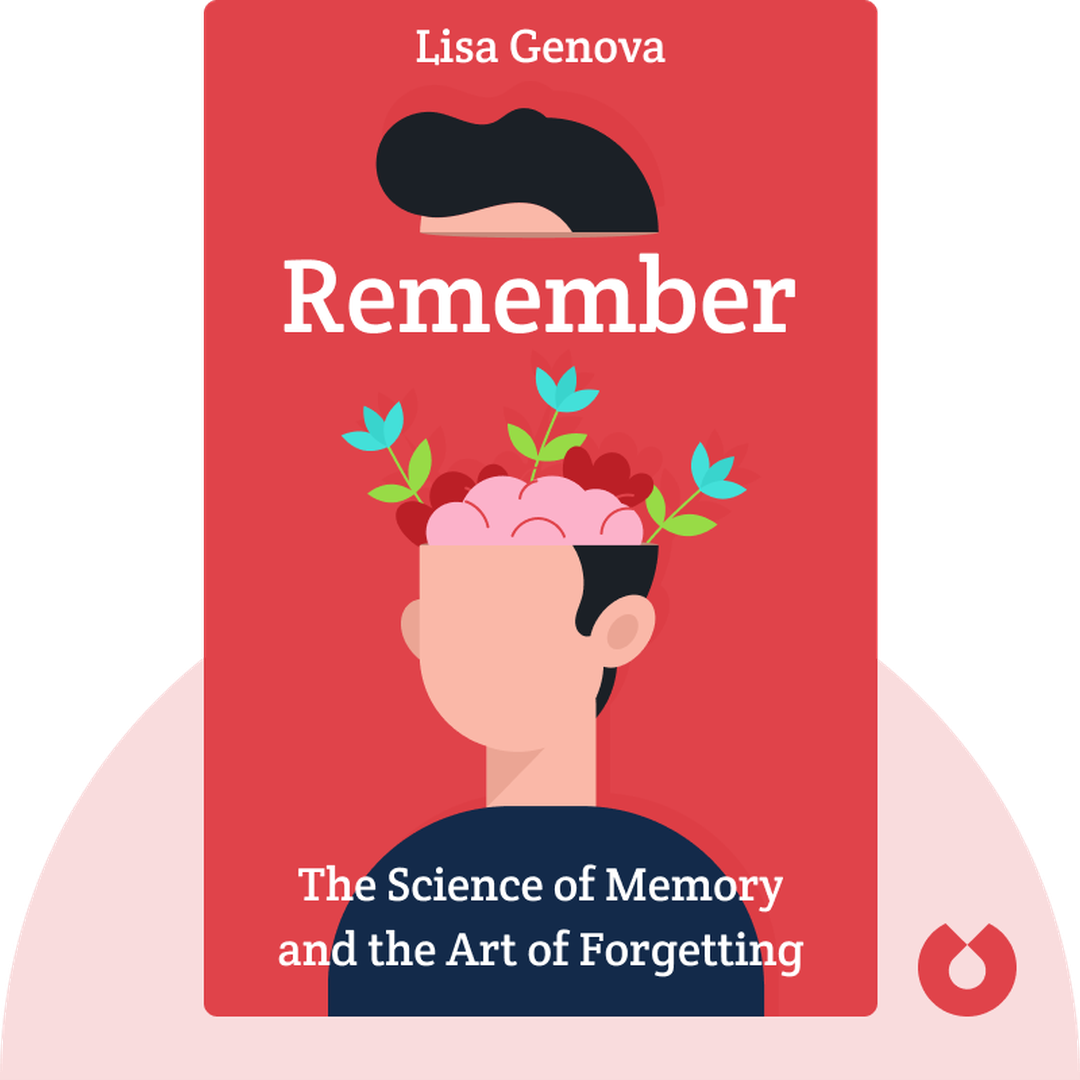
Remember (2021) is about our marvelous and flawed ability to create memories. It explores the different sorts of memories we create, how the brain makes them, why they often fail, and what we can do to get the best out of our astonishing and troubled capacity to remember.
Who Should Listen to Remember?
- People curious about our brain functions
- Anyone interested in the human capacity to remember and to forget
- Folks concerned about what happens to memory as we get older
Books Similar to Remember
Readers who enjoyed this also liked these titles.