If You're Curious About These Questions...
You should listen to this audiobook
- Have you ever wondered why powerful leaders and global brands rely so heavily on public ceremonies to influence how we think and act?
- What’s the secret connection between ancient tribal rituals and the massive success of modern events like the Super Bowl or a Steve Jobs keynote?
- Did you know that the key to solving complex social problems lies in a game theory concept called 'common knowledge'—and that rituals are the primary way we create it?
Listen to Rational Ritual — Free Audiobook
Loading player...
Key Takeaways from Rational Ritual
- Understand how everyday dilemmas, from attending a protest to choosing a brand, are 'coordination problems' that rely on our knowledge of others' actions.
- Discover the power of 'common knowledge'—the state where everyone knows what everyone else knows—and how it serves as the ultimate solution to driving collective action.
- Learn how authorities throughout history use public rituals, symbols, and even new social conventions to generate common knowledge and solidify their political power.
- Find out why companies pay premium prices to advertise 'social goods' like beer and cars during the Super Bowl, leveraging massive audiences to create profitable common knowledge.
- Master the dynamics of social networks by recognizing why weak links with acquaintances are best for rapid communication, while strong links with close friends are essential for group coordination.
Learning Tools
Reinforce what you learned from Rational Ritual
Mind Map
Rational Ritual
Coordination Problems+
Common Knowledge+
Political Rituals+
Advertising+
Social Networks+
The Panopticon+
Culture and Rationality+
Quiz — Test Your Understanding
Question 1 of 7
According to the text, which of the following best defines a 'coordination problem'?
Question 2 of 7
How does the author use the analogy of email CC and BCC fields to explain 'common knowledge'?
Question 3 of 7
Why did the new regime after the French Revolution establish new conventions, such as the metric system and driving on the right side of the road?
Question 4 of 7
Why do advertisements for 'social goods' (like beer or cars) dominate the Super Bowl compared to 'nonsocial goods' (like batteries)?
Question 5 of 7
According to the text, what is the primary difference in utility between 'weak links' and 'strong links' in social networks?
Question 6 of 7
In Jeremy Bentham's panopticon prison design, how does 'asymmetrical visibility' (where prisoners cannot see the guard) help maintain power?
Question 7 of 7
How do cultural practices relate to game theory and coordination problems, such as deciding which side of the road to drive on?
Rational Ritual — Full Chapter Overview
- 1Recommendation
- 2Some situations called coordination problems are best resolved through common knowledge.
- 3Public rituals generate common knowledge, which is why authorities depend on them to maintain their power.
- 4Advertising likewise creates common knowledge.
- 5While weak links often work better for communication, strong links excel at coordination.
- 6The panopticon prison design shows how limiting common knowledge can be crucial to preserving political power.
- 7Rational choice and cultural practices together shape how coordination problems get solved.
Rational Ritual Summary & Overview
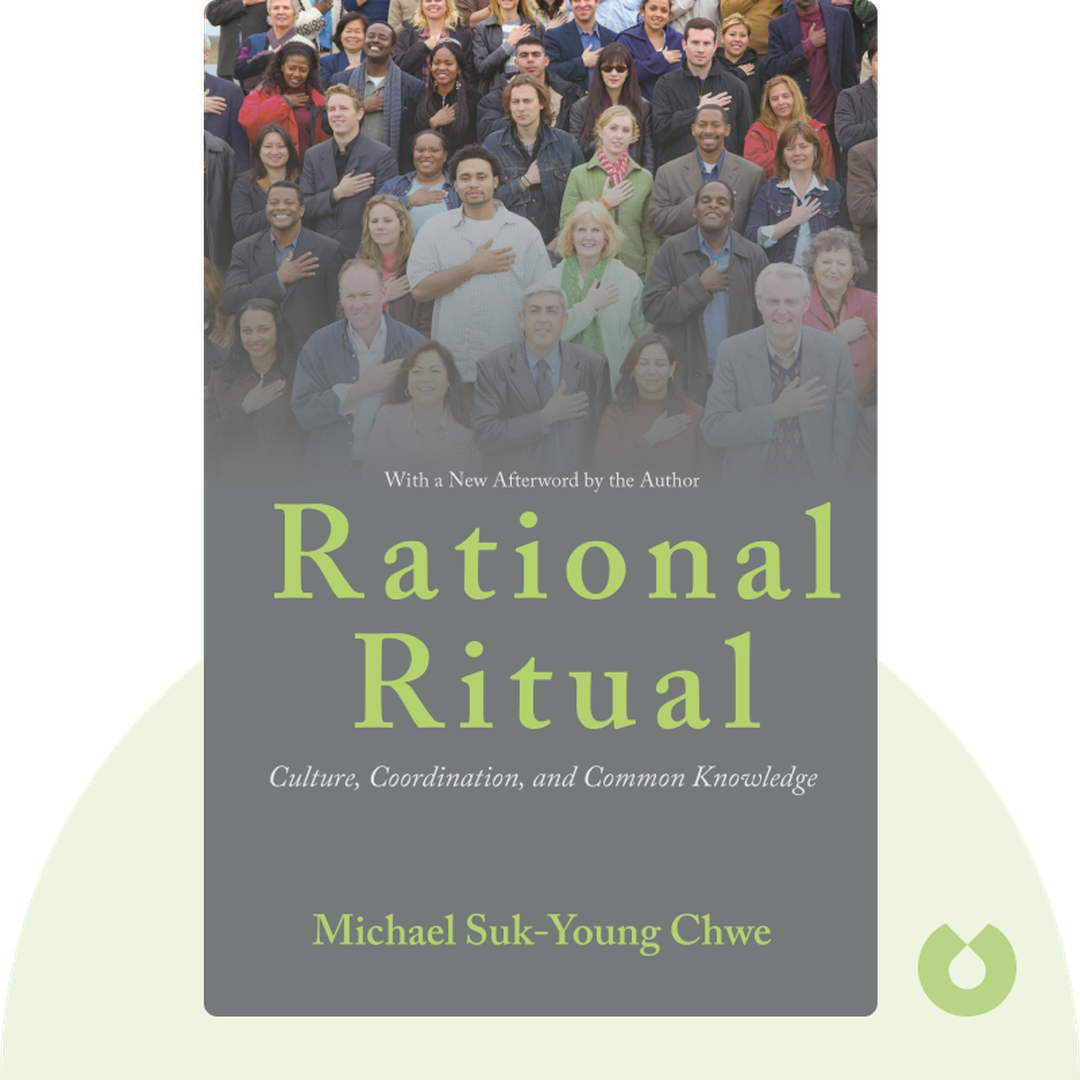
Rational Ritual (2001) offers a profound, game theory-based analysis of the role that rituals, ceremonies and media events play in society. Throughout the ages, these rites have been used to create “common knowledge” that allows people to solve problems such as which ruler to obey and which products to buy. Essential reading for budding Robespierres or Steve Jobses alike.
Who Should Listen to Rational Ritual?
- Amateur game theorists, social psychologists or sociologists
- Anyone interested in the true societal function of rituals, ceremonies and other cultural practices
Books Similar to Rational Ritual
Readers who enjoyed this also liked these titles.