Theme Song
If You're Curious About These Questions...
You should listen to this audiobook
- Have you ever wondered why two people can experience the exact same situation but perceive two entirely different realities?
- Did you know that the true distinction between an introvert and an extravert has nothing to do with shyness, but rather how your mind directs its energy?
- What if you could unlock the secret framework of four cognitive functions that govern every decision you make and every conflict you face?
Listen to Psychological Types — Free Audiobook
Loading player...
Key Takeaways from Psychological Types
- Understand the foundational concepts of introversion and extroversion, and discover how the four cognitive functions—thinking, feeling, sensation, and intuition—shape the way you process the world.
- Learn how recognizing your unique blend of psychological tendencies can lead to greater self-awareness, bridge communication gaps, and improve your relationships with others.
- Discover the hidden depths of the mind by exploring both your personal unconscious and the collective unconscious, a shared human reservoir filled with universal patterns and archetypes.
- Master the technique of active imagination and use dream analysis to access your unconscious mind, preventing unacknowledged inner conflicts from manifesting outwardly as unexpected fate.
- Explore the process of individuation to become your true, authentic self by embracing both your light and your 'shadow'—the suppressed or denied aspects of your personality.
Learning Tools
Reinforce what you learned from Psychological Types
Mind Map
Psychological Types
Core Concepts+
The Unconscious+
Individuation+
Relationships+
Practical Application+
Quiz — Test Your Understanding
Question 1 of 7
According to Jung, what is the fundamental difference between introverts and extroverts?
Question 2 of 7
Which of the following correctly lists the four basic cognitive functions identified by Jung?
Question 3 of 7
How did Jung define the 'collective unconscious'?
Question 4 of 7
In the context of Jungian psychology, what does the 'shadow' represent?
Question 5 of 7
What is the primary goal of the 'individuation' process described by Jung?
Question 6 of 7
How did Jung view the dynamic of opposite psychological types in relationships?
Question 7 of 7
According to Jung, why is it important to develop our less-preferred cognitive functions?
Psychological Types — Full Chapter Overview
- 1Recommendation
- 2The idea of psychological types
- 3The significance of the unconscious
- 4The journey of individuation
- 5Psychological types in our relationships
- 6The four functions and their role in your life
Psychological Types Summary & Overview
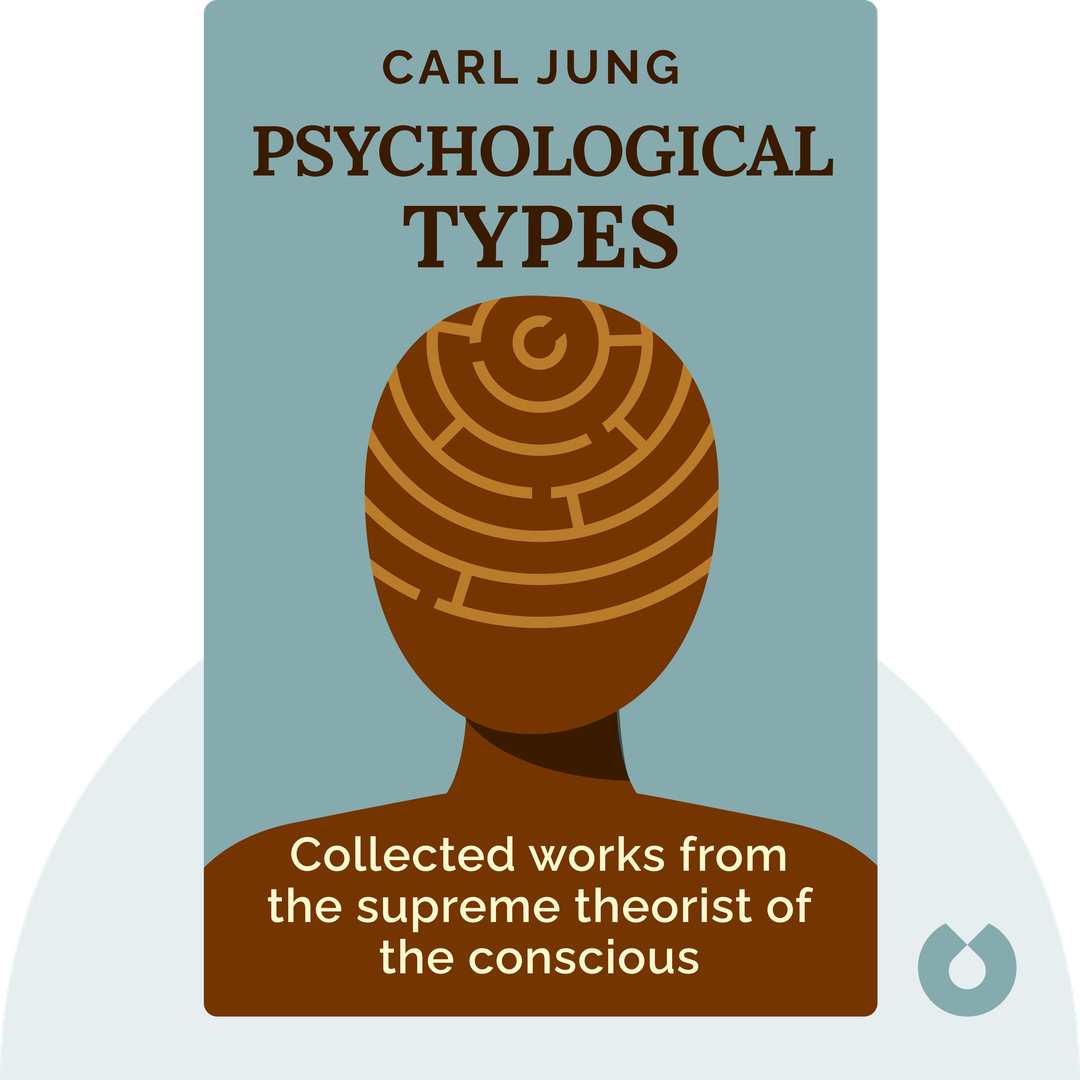
Psychological Types (1921) presents a groundbreaking theory of human personality and cognition, exploring the concepts of introversion and extraversion, alongside four cognitive functions—thinking, feeling, sensation, and intuition. It offers a comprehensive framework for understanding individual differences in how people perceive the world and make decisions.
Who Should Listen to Psychological Types?
- Psychology enthusiasts looking to deepen their understanding of personality theory
- Fans of mythology and literature drawn to Jung's ideas about archetypes and the collective unconscious
- Anyone interested in personal growth and self-discovery
Books Similar to Psychological Types
Readers who enjoyed this also liked these titles.