If You're Curious About These Questions...
You should listen to this audiobook
- What's the secret to achieving true success without sacrificing your values?
- Are you curious about how to prioritize what's truly important in your life and unlock your full potential?
- Can you really develop inner character and become a more effective leader by leveraging just 12 key principles?
Listen to Primary Greatness — Free Audiobook
Loading player...
Key Takeaways from Primary Greatness
- Discover why true success comes from developing 'primary greatness'—inner qualities like honor and persistence—rather than chasing the fleeting material symbols of 'secondary greatness'.
- Learn how to actively develop your inner character and build a fulfilling life by mastering Stephen Covey's 12 levers of success.
- Master the practice of using daily, present-tense self-affirmations and adopting a cooperative abundance mindset to prime your brain for long-lasting prosperity.
- Understand how combining humility and courage creates true integrity, aligning your values and actions so you can authentically earn the trust of others.
- Find out why taking the time to explicitly define your life's purpose is essential for making meaningful contributions and giving your life a clear sense of direction.
Learning Tools
Reinforce what you learned from Primary Greatness
Mind Map
Primary Greatness
Core Concepts of Success+
Mental Preparation+
The 12 Levers of Success+
Actionable Advice+
Quiz — Test Your Understanding
Question 1 of 11
According to Stephen Covey, what is the fundamental difference between primary and secondary greatness?
Question 2 of 11
What did the 1965 Perry Preschool Project demonstrate regarding inner character traits?
Question 3 of 11
How does shifting from a 'scarcity mindset' to an 'abundance mindset' impact personal success?
Question 4 of 11
Covey defines integrity, the foundation of primary greatness, as a combination of which two traits?
Question 5 of 11
Which of the following is recommended to help identify your purpose and activate the lever of contribution?
Question 6 of 11
When applying the lever of prioritization, how should one handle tasks?
Question 7 of 11
What is the necessary foundation for fostering the levers of reciprocity and diversity?
Question 8 of 11
How does the book suggest practicing the lever of loyalty in everyday life?
Question 9 of 11
According to the lever of responsibility, what is the proper way to handle a mistake?
Question 10 of 11
Why does the author argue that 'teaching' is the eleventh lever of success?
Question 11 of 11
What psychological technique does Covey suggest to motivate the holistic self-care required for the lever of renewal?
Primary Greatness — Full Chapter Overview
- 1Recommendation
- 2Inner character drives genuine success, and it’s a quality you can indeed develop.
- 3Self-affirmations and an abundance mindset can prepare you to achieve primary greatness.
- 4Integrity, the bedrock of primary greatness, aligns your values, beliefs, and actions.
- 5Strengthen the levers of contribution and prioritization by discovering your purpose.
- 6The levers of sacrifice and service build personal connections, which are crucial to success.
- 7The levers of reciprocity and diversity create productive, effective relationships.
- 8Remain accountable through the levers of loyalty and responsibility.
- 9The lever of teaching complements and strengthens the lever of learning.
- 10Balance your physical, mental, and social health to achieve the final lever of renewal.
Primary Greatness Summary & Overview
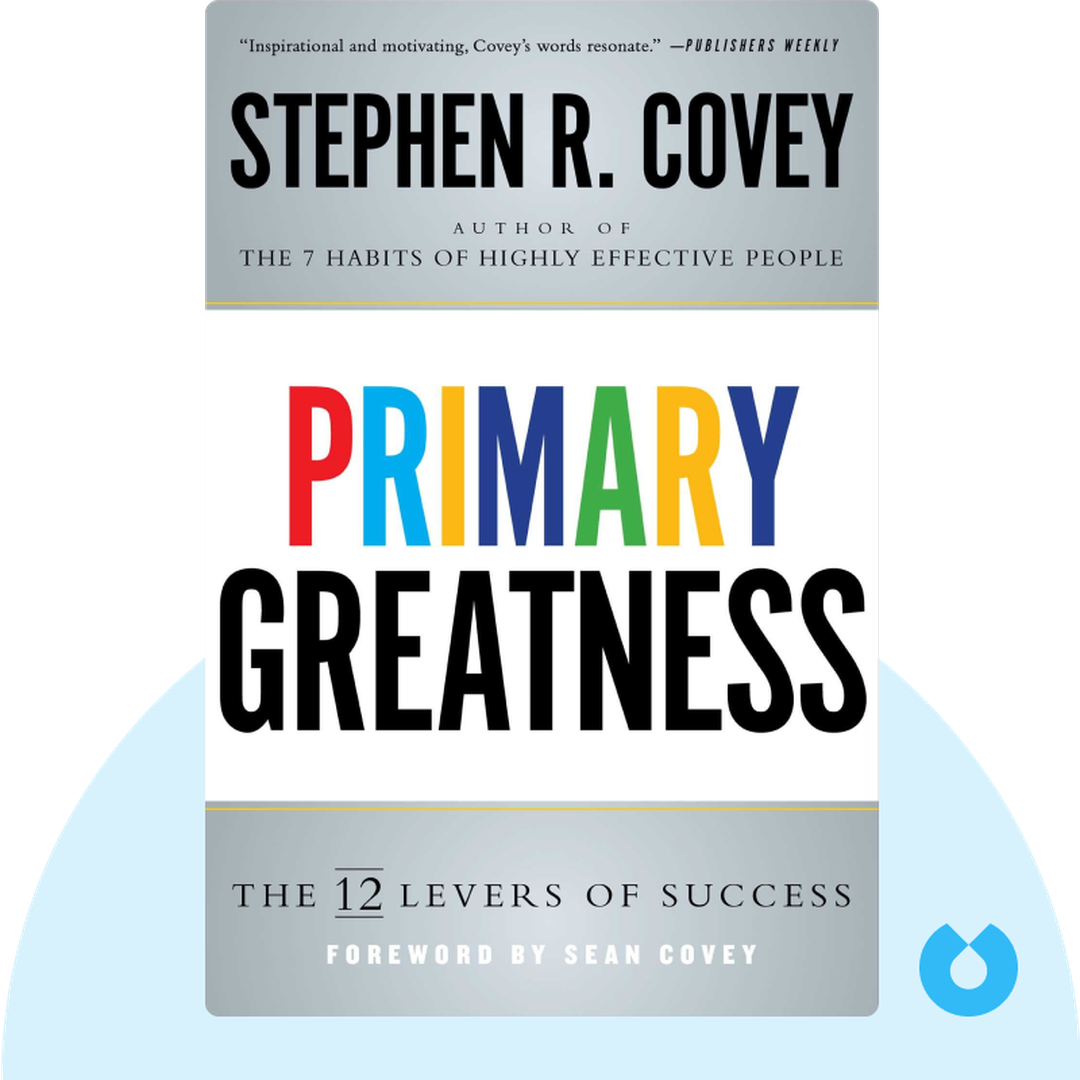
Primary Greatness (2015) explains that anyone can live a fulfilling life. It’s as simple as prioritizing the things that are truly important. Instead of trying to appear successful by accumulating status, fame and money, you should focus on finding true success by developing your inner character – a task that the 12 levers of success make simple.
Who Should Listen to Primary Greatness?
- People curious about what constitutes success
- Self-improvers interested in character development
- Those seeking a meaningful life
Books Similar to Primary Greatness
Readers who enjoyed this also liked these titles.