Theme Song
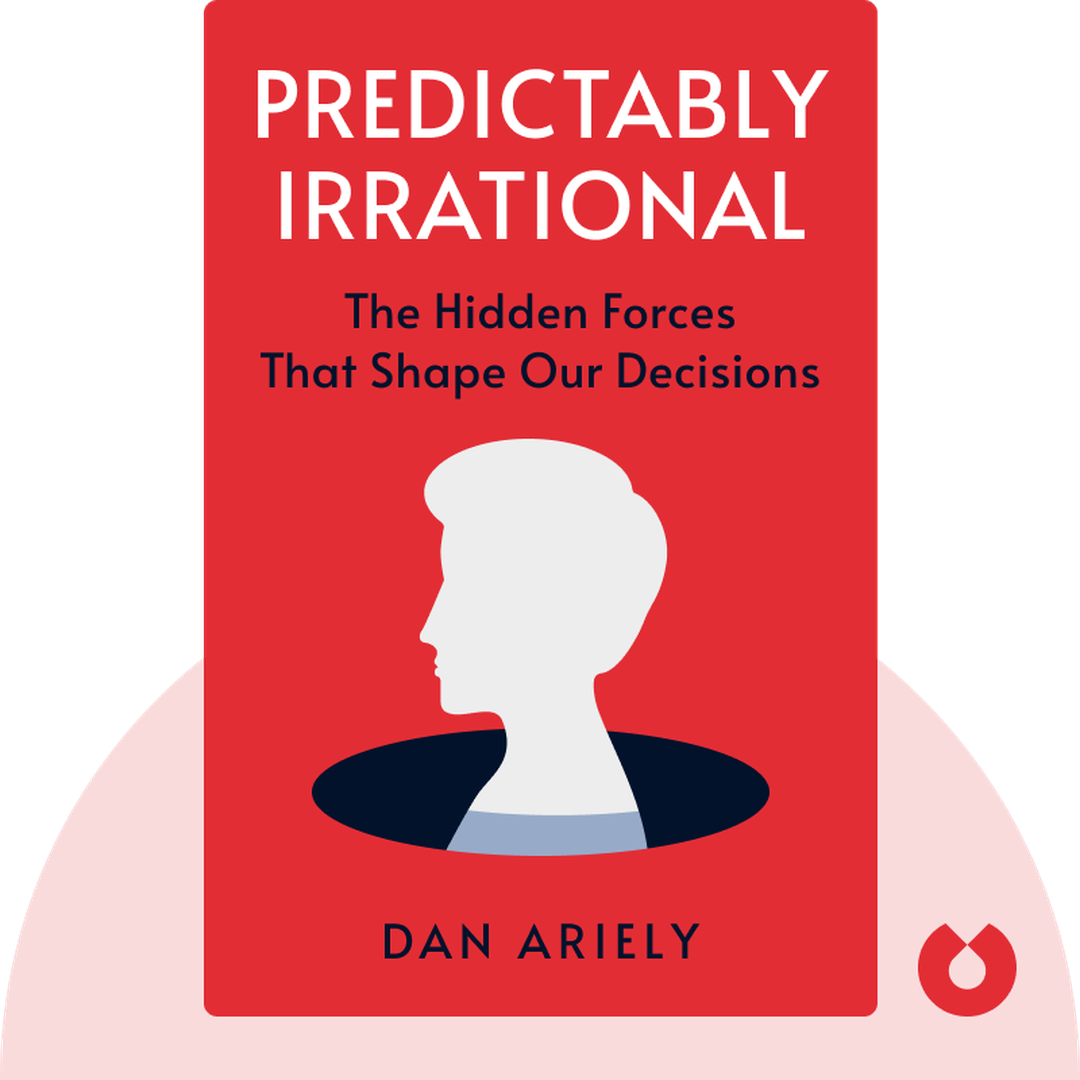
Predictably Irrational
Start ListeningDownload Try free on iPhoneScan to start in 5 seconds
Categories:
Listen to Predictably Irrational — Cinematic Audio Edition
Loading player...
Key Takeaways from Predictably Irrational
- Understand how our minds rely on comparisons to make decisions, and learn to boost your happiness by consciously shrinking your circle of comparison.
- Discover how the first price you see becomes a mental 'anchor' that irrationally dictates your future buying habits and willingness to pay.
- Learn why the allure of getting something for 'free' is actually an emotional trap that often tricks you into passing up more profitable deals.
- Master the delicate balance between social and market norms to avoid ruining personal relationships with inappropriate transactional behaviors.
- Recognize how intense emotional arousal and passion can temporarily hijack your rational brain, causing you to make highly irrational and out-of-character choices.
Learning Tools
Reinforce what you learned from Predictably Irrational
Mind Map
Predictably Irrational
Pricing & Perception+
Valuation Traps+
Emotions & Social Spheres+
Choices & Self-Control+
Conclusion & Actionable Steps+
Quiz — Test Your Understanding
Question 1 of 10
According to the book, why do people tend to choose the more expensive magazine subscription when a 'print-only' option is introduced at the same price as a 'print and internet' option?
Question 2 of 10
What term does the author use to describe how an initial, seemingly random price establishes itself in our minds and shapes what we are willing to pay for similar products in the future?
Question 3 of 10
Why does the concept of 'free' frequently lead us to make bad economic decisions, such as choosing a free $10 gift certificate over a $20 certificate that costs $7?
Question 4 of 10
What happens when market norms are introduced into a strictly social domain, such as offering to pay your mother-in-law for cooking a Thanksgiving dinner?
Question 5 of 10
Based on the discussion about passion and arousal, what change does the book suggest for sex education in schools?
Question 6 of 10
Which of the following is recommended as a strategy to combat our natural tendency to procrastinate, particularly regarding personal finances and health?
Question 7 of 10
How do concepts like '30-day money-back guarantees' and product trials manipulate our buying behavior?
Question 8 of 10
According to the book, what is the negative consequence of the cultural desire to 'keep our options open,' such as encouraging kids to do too many extracurricular activities?
Question 9 of 10
How does the price of a product or service influence its effectiveness through the 'placebo effect'?
Question 10 of 10
What practical advice does the author offer to minimize the negative effects of relativity (the 'comparison trap') on our happiness?
Predictably Irrational — Full Chapter Overview
- 1Recommendation
- 2When we’re offered something for free, our rational thinking disappears.
- 3The first price we hear shapes what we’re willing to pay later.
- 4We place too much value on what we already own.
- 5Our expectations influence how we experience the world.
- 6How people respond to you depends on social or market norms.
- 7People tend to be dishonest, but only up to a point.
- 8Dr. Jekyll plans our goals, but we must resist Mr. Hyde’s impulses.
- 9We cling to open options, even when it harms us over time.
Predictably Irrational Summary & Overview
Predictably Irrational (2010) explains the fundamentally irrational ways we behave every day. Why do we decide to diet and then give it up as soon as we see a tasty dessert? Why would your mother be offended if you tried to pay her for a Sunday meal she lovingly prepared? Why is pain medication more effective when the patient thinks it is more expensive? The reasons and remedies for these and other irrationalities are explored and explained with studies and anecdotes.
Who Should Listen to Predictably Irrational?
- Anyone who wants to understand why we indulge in irrational behaviors like procrastination, overeating and overpaying, and how we can avoid this
- Anyone who wants to learn how to counter their innate irrationality and make better decisions
- Anyone interested in social psychology and people’s decision-making behavior in general
Books Similar to Predictably Irrational
Readers who enjoyed this also liked these titles.