If You're Curious About These Questions...
You should listen to this audiobook
- Have you ever wondered why being 'better' than your competition is often a losing strategy, and what you should be doing instead to dominate your industry?
- What's the secret to carving out a unique space in a prospect's mind that your competitors can never take away from you?
- Are you curious about why some of the world's most famous brands failed the moment they tried to expand, and how you can avoid the same fatal trap?
Listen to Positioning — Cinematic Audio Edition
Loading player...
Key Takeaways from Positioning
- Understand how the human brain filters a daily barrage of advertising by ranking brands on a mental ladder, and learn how to claim the top rung.
- Discover the massive advantage of being the first brand in a customer's mind, allowing you to shape the product's image and easily outsell 'me-too' competitors.
- Learn how to establish a memorable brand by aligning with current market trends, and understand why you must stick to your successful messaging long-term to avoid plummeting sales.
- Find out how to succeed as a follow-up brand by discovering an untapped niche, such as premium pricing, or by using a dominant competitor's strength to create a contrasting 'against' position.
- Master the marketing tactic of repositioning a market leader by strategically highlighting their product's weaknesses to shift consumer perception and claim their spot.
Learning Tools
Reinforce what you learned from Positioning
Mind Map
Positioning
The Problem: Information Overload+
The Power of Being First+
Strategies for Followers+
Positioning Consistency+
Marketing Traps to Avoid+
Effective Naming+
Quiz — Test Your Understanding
Question 1 of 7
How do consumers mentally cope with the overwhelming amount of advertising and information they encounter daily?
Question 2 of 7
According to the text, what is a primary advantage of being the first brand to enter a new market?
Question 3 of 7
What mistake did the car rental company Avis make regarding its market positioning?
Question 4 of 7
How did Tylenol successfully position itself against the market leader, Aspirin?
Question 5 of 7
What is the 'line-extension trap' described in the book?
Question 6 of 7
When is it acceptable to use a coined, non-descriptive name like 'Kodak' or 'Xerox' for your product?
Question 7 of 7
Why does the book generally advise against using acronyms for brand names?
Positioning — Full Chapter Overview
- 1Recommendation
- 2We’re inundated with information, so our brains screen out most brands we see daily.
- 3Be the earliest fish in the pond.
- 4To position your product well, you need a memorable, on-trend marketing angle.
- 5If you can’t be first, find a niche or leverage your competition.
- 6Don’t ride on the coattails of famous brands, whether it’s your own or your competitors’.
- 7Your name must be clear and memorable.
Positioning Summary & Overview
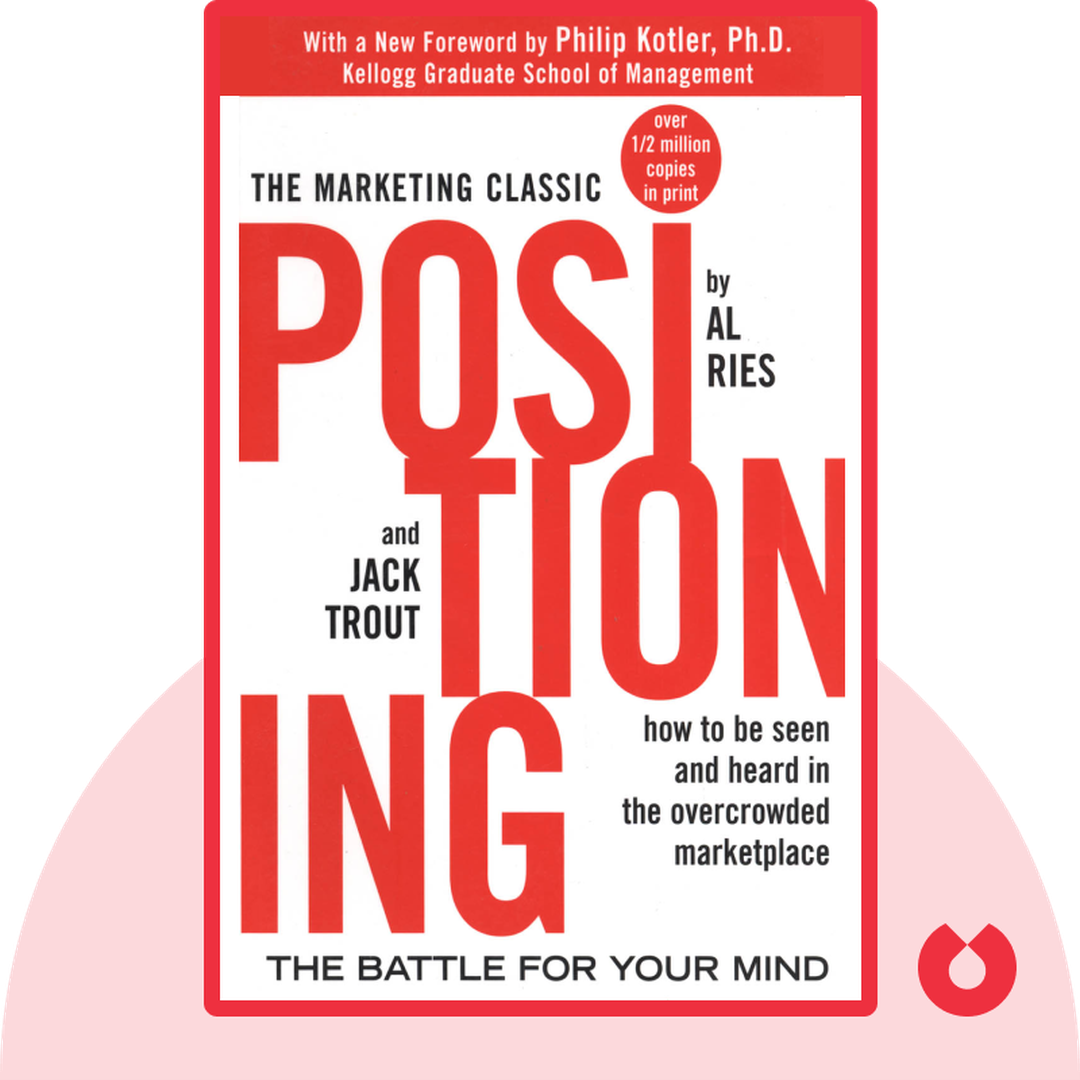
Positioning has become one of the most renowned, best-selling books about marketing strategies in the last few decades. It describes a revolutionary marketing concept developed by the authors in the 1970s after it became clear that classic advertising was no longer effective due to an increase in media and competition. Positioning focuses on how to position your product in the market to become an industry leader.
Who Should Listen to Positioning?
- Anyone who wants to read one of the most influential books on marketing
- Anyone who wants to create and market a product successfully
- Anyone interested in the function of modern advertising and how it’s portrayed to the customer
Books Similar to Positioning
Readers who enjoyed this also liked these titles.