If You're Curious About These Questions...
You should listen to this audiobook
- Have you ever wondered what happens to your sense of identity when you lose the ability to form a single new memory for the rest of your life?
- Did you know that one of the most significant breakthroughs in modern neuroscience was the result of a radical and controversial surgical gamble?
- Are you curious about how a man who couldn't remember his own doctor ended up unlocking the secrets of how every human brain stores its past?
Listen to Patient H.M. — Free Audiobook
Loading player...
Key Takeaways from Patient H.M.
- Discover how early civilizations, from prehistoric surgeons to ancient Egyptians and Hippocrates, first recognized the vital importance and fragility of the human brain.
- Learn about the extreme experimental therapies of the 1930s, such as pyretherapy and insulin comas, which laid the dark groundwork for the rise of psychosurgery.
- Understand the chilling methodology behind Dr. Walter Freeman's lobotomies, where patients were kept conscious during surgery to ensure they achieved the exact right level of permanent disorientation.
- Explore how the medical consensus shifted from viewing the brain as a 'perfect democracy' to mapping specific functions like speech and memory to distinct anatomical regions.
- Find out how the reckless ambition of Dr. William Scoville led to the historic operation on Patient H.M., unintentionally unlocking the mysterious mechanisms of human memory.
Learning Tools
Reinforce what you learned from Patient H.M.
Mind Map
Patient H.M.
History of Brain Surgery+
Asylum Era Therapies+
Mapping Brain Functions+
The Case of Henry Molaison+
Breakthroughs in Memory+
Posthumous Legacy+
Quiz — Test Your Understanding
Question 1 of 9
Before the mid-1800s, how did most people view the functioning of the human brain?
Question 2 of 9
What was Dr. Walter Freeman's primary goal when performing lobotomies on conscious patients?
Question 3 of 9
How did Dr. William Scoville alter the standard lobotomy procedure in 1948 to make it less destructive?
Question 4 of 9
How did Dr. Wilder Penfield inadvertently discover clues about the location of the brain's memory center?
Question 5 of 9
Why did Dr. Scoville decide to remove both hemispheres of Henry Molaison's (Patient H.M.) medial temporal lobes?
Question 6 of 9
Through studying Patient H.M., Dr. Scoville and Dr. Brenda Milner concluded that which specific part of the brain acts as its memory center?
Question 7 of 9
What did Patient H.M.'s ability to improve at the mirror-tracing star test reveal about human memory?
Question 8 of 9
According to psychologist Suzanne Corkin, Patient H.M. completely lacked 'episodic memory.' How did this manifest in his life?
Question 9 of 9
What surprising discovery did Dr. Jacopo Annese make while dissecting Patient H.M.'s brain posthumously?
Patient H.M. — Full Chapter Overview
- 1Recommendation
- 2Our fascination with the brain has a long and truly storied history.
- 3Psychiatric asylums were home to experimental therapies, including the lobotomy.
- 4Lobotomies helped usher in a new grasp of the brain, and Dr. Scoville truly led the way.
- 5As our knowledge of the brain expanded, lobotomies seemed more justifiable.
- 6In the course of treating epilepsy, progress was made in locating the brain’s memory center.
- 7For Henry Molaison, Dr. Scoville’s lobotomy was truly a last resort.
- 8Henry’s profound amnesia gave doctors a new understanding of the brain.
- 9Henry’s condition also provided insight into different varieties of memory.
- 10Even after Patient H.M. died, fascination with his brain still persisted.
Patient H.M. Summary & Overview
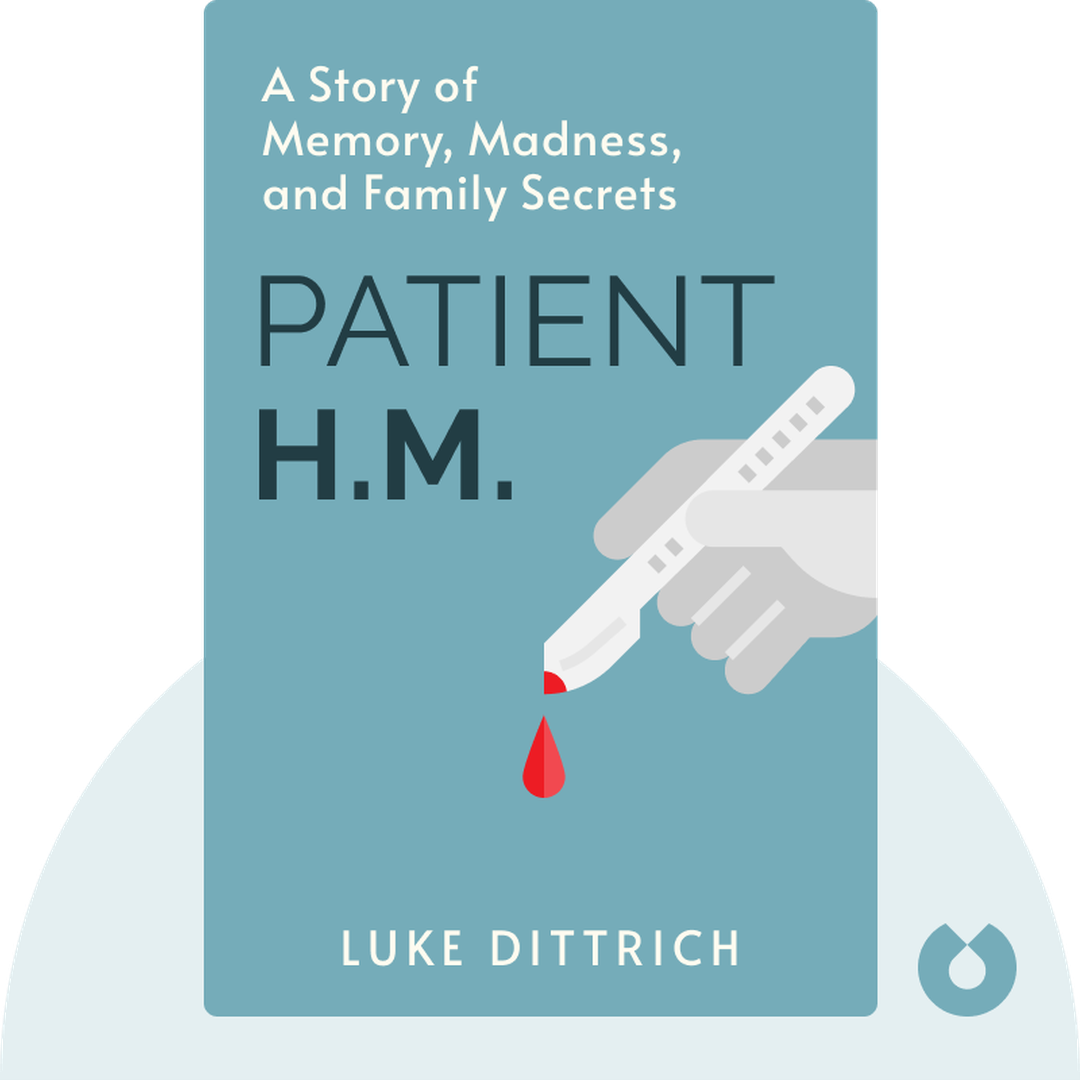
Patient H. M. (2016) chronicles the history of the lobotomy procedure, focusing particularly on a famous figure in this story – an amnesic named Henry Molaison, or, as he is also known, Patient H.M. Journey back to when the lobotomy first became a popular treatment for mental illness and learn how it helped us better understand the brain.
Who Should Listen to Patient H.M.?
- Science geeks interested in neuroscience
- Readers who want to better understand themselves
- Anyone interested in the history of medicine
Books Similar to Patient H.M.
Readers who enjoyed this also liked these titles.