Theme Song
If You're Curious About These Questions...
You should listen to this audiobook
- Did you know that writing isn’t just a tool for recording your voice, but is actually the hidden engine that makes all human language and meaning possible in the first place?
- Have you ever wondered why we traditionally value spoken words over written ones, and how flipping that logic could completely change your understanding of everything from literature to emojis?
- Are you curious about the invisible system that dictates how we interpret the world around us—not just through books, but through architecture, art, and the digital technology we use every day?
Listen to Of Grammatology — Free Audiobook
Loading player...
Key Takeaways from Of Grammatology
- Discover why the ancient assumption that speech precedes writing is backwards, and how writing is actually the foundational system that makes all meaning possible.
- Understand the hidden system of differences that governs language, revealing that we only comprehend what a word means by subconsciously recognizing what it isn't.
- Explore the profound concept of the 'trace' to see how every word, thought, and emotion is actively shaped by the invisible presence of absent things.
- Realize how your own identity relies on an endless dance of presence and absence, carrying traces of who you have been and who you might become.
- Learn why the traditional, linear structure of a book is breaking down in the digital age, exposing that all human knowledge is actually an endless, interconnected web of meaning.
Learning Tools
Reinforce what you learned from Of Grammatology
Mind Map
Of Grammatology
Flipping the Hierarchy+
The Trace and Absence+
The End of the Book+
Deconstructing Binaries+
The Violence of Writing+
Quiz — Test Your Understanding
Question 1 of 5
According to Derrida, why is the traditional hierarchy of speech and writing backwards?
Question 2 of 5
What does Derrida mean by the concept of the 'trace'?
Question 3 of 5
How does the digital age's web of connections relate to Derrida's view of traditional books?
Question 4 of 5
How does Derrida approach traditional binary oppositions like nature versus culture or inside versus outside?
Question 5 of 5
What is the 'violence of writing' described in the text?
Of Grammatology — Full Chapter Overview
- 1Recommendation
- 2Reversing the hierarchy
- 3Trace and its absence
- 4The end of books and the dawn of writing
- 5Dismantling binaries
- 6The violence in writing
Of Grammatology Summary & Overview
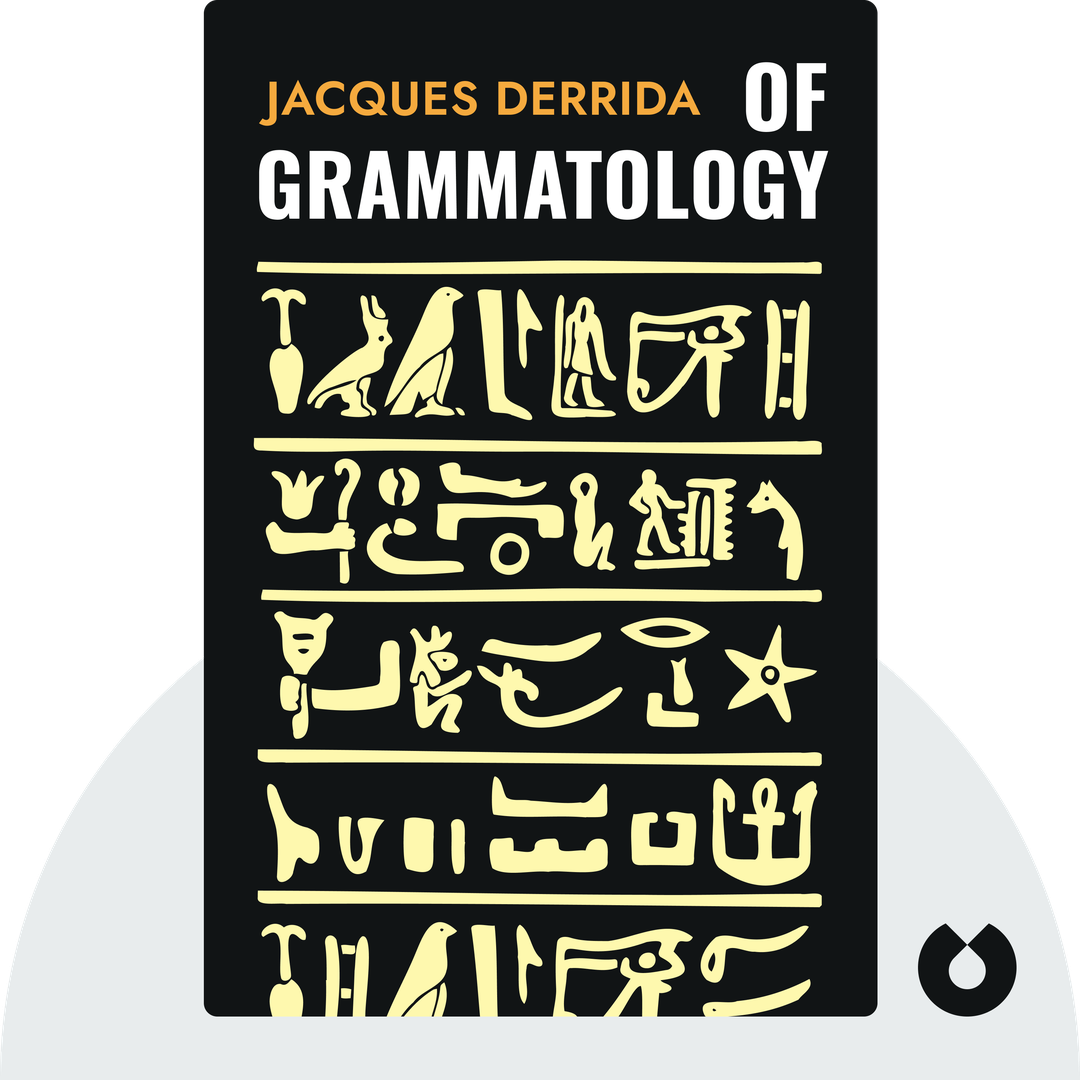
Of Grammatology (1967) overturns basic assumptions about writing and speech, uncovering that writing isn't just a tool for recording words but a fundamental system that makes all meaning possible. This revolutionary work became one of the cornerstones of poststructuralist thought, changing how we understand language, knowledge, and meaning-making across philosophy, literature, and cultural studies.
Who Should Listen to Of Grammatology?
- Anyone fascinated by how digital technology is changing how we read, write, and communicate
- Linguists and language lovers curious about the relationship between speech and writing
- Those curious about how meaning works across different forms of expression, from architecture to emojis
Books Similar to Of Grammatology
Readers who enjoyed this also liked these titles.