If You're Curious About These Questions...
You should listen to this audiobook
- Even when warned to stop digging, Oedipus acts like a detective hunting down a killer, only to discover he is the culprit. What does his relentless pursuit of a truth that destroys him say about human nature and the desire for knowledge?
- The story highlights a fascinating tension between inescapable fate and human free will. How does Oedipus demonstrate agency and heroism in the final scenes, even after realizing his entire life is the result of a cursed prophecy?
- Sight and blindness are major themes in the tragedy, culminating in Oedipus's shocking decision to physically blind himself. How does Sophocles use the irony of the blind prophet Tiresias to emphasize Oedipus's own metaphorical blindness to the truth?
Listen to Oedipus Rex — Free Audiobook
Loading player...
Key Takeaways from Oedipus Rex
- Discover why Sophocles's 2,450-year-old tragedy remains a masterpiece that inspired Freud's controversial theories and explores humanity's deepest desires.
- Understand the masterful use of dramatic irony as you watch a compassionate leader unknowingly act as the detective investigating his own horrific crimes.
- Learn how human psychology drives us to be inconsistent in our beliefs, perfectly illustrated by Oedipus selectively trusting divine messages to avoid painful truths.
- Explore the relentless human drive to uncover the truth, showing how our need for certainty pushes us forward even when the answers promise our destruction.
- Find out how desperate attempts to avoid terrible prophecies become the exact actions that make them come true, raising profound questions about fate and free will.
Learning Tools
Reinforce what you learned from Oedipus Rex
Mind Map
Oedipus Rex
Introduction & Impact+
The Plague & The Investigation+
Unraveling the Past+
The Tragic Discovery+
The Downfall & Aftermath+
Quiz — Test Your Understanding
Question 1 of 10
What well-known psychological theory was inspired by the narrative of this play?
Question 2 of 10
According to the oracle at Delphi, what action must be taken to end the plague in Thebes?
Question 3 of 10
How does Oedipus react when the blind prophet Tiresias reveals that Oedipus himself is the murderer?
Question 4 of 10
Why does Jocasta initially believe the prophecy regarding King Laius's death is false?
Question 5 of 10
What prompted Oedipus to originally flee his childhood home and travel toward Thebes?
Question 6 of 10
What crucial piece of information does the messenger bring that definitively connects Oedipus to King Laius?
Question 7 of 10
According to the book's analysis, how does Oedipus's continuous pursuit of the truth reflect the theme of free will?
Question 8 of 10
Why does Oedipus claim he chose to blind himself after discovering the truth?
Question 9 of 10
From a literary perspective, why is Oedipus's decision to blind himself considered deeply ironic?
Question 10 of 10
What is Oedipus's final request to Creon at the end of the play?
Oedipus Rex — Full Chapter Overview
- 1Recommendation
- 2King Oedipus must track down a killer and drive him out
- 3Oedipus begins to fear that he might be the killer
- 4Oedipus learns the truth, more horrifying than he imagined
- 5Stripped of everything, Oedipus pleads to be sent into exile
Oedipus Rex Summary & Overview
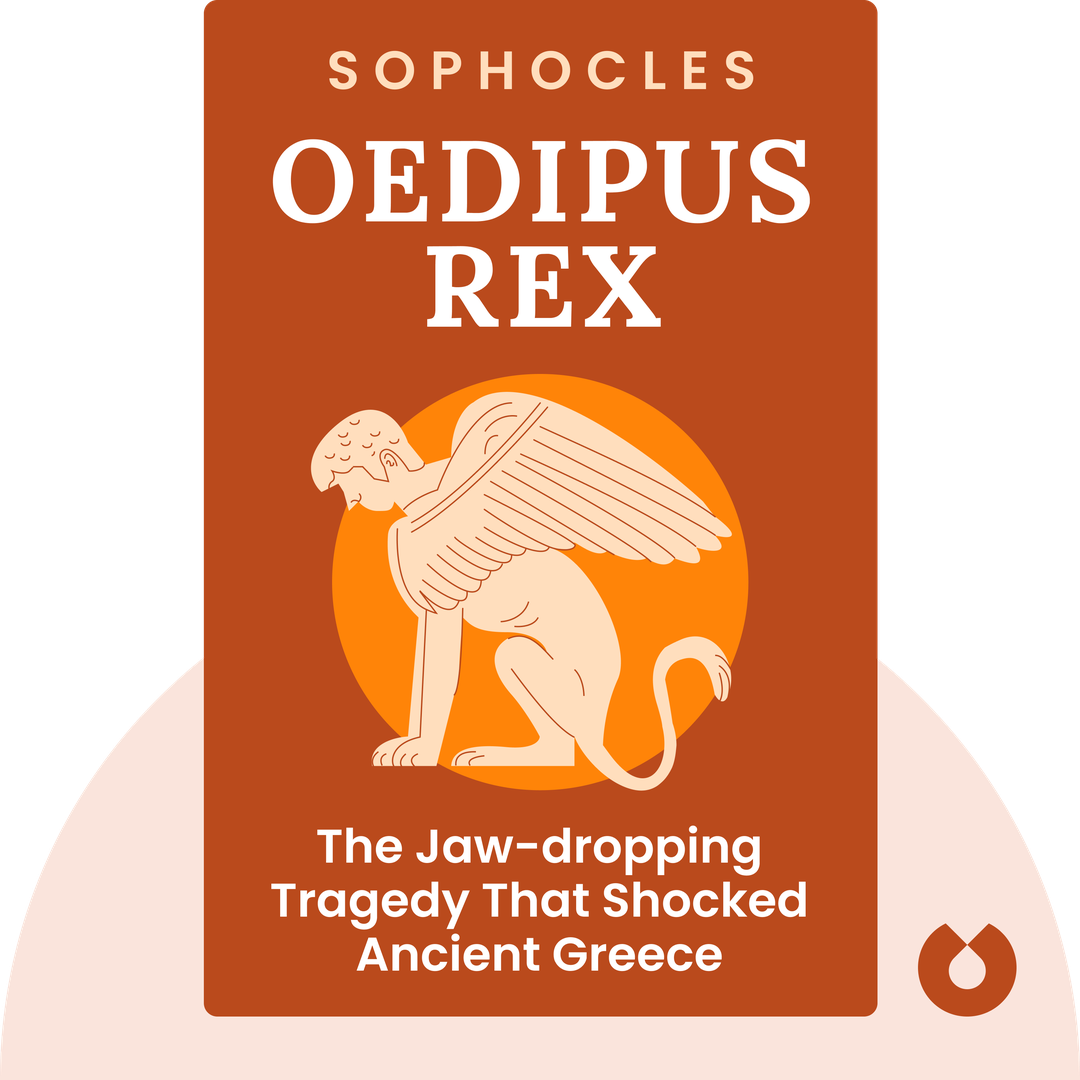
Oedipus Rex (fifth century BCE) is a tragedy based on the myth of King Oedipus. While investigating a murder, Oedipus learns shocking truths about his life.
Who Should Listen to Oedipus Rex?
- Fans of Greek mythology
- People who enjoy dark, dramatic stories
- Anyone interested in one of the greatest plays of all time
Books Similar to Oedipus Rex
Readers who enjoyed this also liked these titles.