If You're Curious About These Questions...
You should listen to this audiobook
- Did you know that there is a hidden, borderless 'country' where the world’s elite keep their wealth entirely out of reach from taxes and the law?
- Have you ever wondered why some of the most effective tax havens for the global corrupt aren’t tropical islands, but landlocked American states like Nevada?
- What’s the secret to how billions of dollars can simply disappear from a nation's economy and resurface as luxury assets on the other side of the globe?
Listen to Moneyland — Free Audiobook
Loading player...
Key Takeaways from Moneyland
- Discover how postwar financial regulations were dismantled by the invention of 'eurodollars' and anonymous 'eurobonds,' allowing the ultra-wealthy to hide their assets globally.
- Learn how offshore havens like Nevis purposefully design their legal systems with strict confidentiality laws and steep upfront fees to shield illicit wealth from foreign courts.
- Understand the sinister role of shell companies in places like Jersey, which enable corrupt foreign officials to anonymously siphon billions of dollars from their own national banks.
- Find out how corrupt politicians in resource-rich but deeply impoverished nations exploit their countries' oil and diamond wealth to fund lavish personal luxuries.
- Uncover the extreme measures, including blackmail and public smear campaigns, that corrupt elites use to silence investigators and protect their offshore financial secrets.
Learning Tools
Reinforce what you learned from Moneyland
Mind Map
Moneyland
Post-WWII Financial Evolution+
Mechanics of Offshore Havens+
Kleptocracy in Developing Nations+
Borderless Reach of Corruption+
Global Transparency & Its Flaws+
The Rise of US Tax Havens+
Quiz — Test Your Understanding
Question 1 of 7
How did bankers initially bypass the strict financial regulations established by the Allied powers after World War II?
Question 2 of 7
What specific legal hurdle makes the Caribbean island of Nevis an highly attractive place to hide illicit assets?
Question 3 of 7
What was the underlying significance of an Angolan minister's daughter spending $200,000 on a wedding dress in New York?
Question 4 of 7
According to the book, what does the assassination of Alexander Litvinenko in London demonstrate about modern kleptocracy?
Question 5 of 7
Why is the Common Reporting Standard (CRS), designed to automatically swap financial account details between countries, fundamentally flawed when it comes to helping poorer nations?
Question 6 of 7
What ironic role does the United States play in the modern landscape of global financial transparency?
Question 7 of 7
How does the state of Nevada legally protect the assets of billionaires from creditors and foreign governments?
Moneyland — Full Chapter Overview
- 1Recommendation
- 2Postwar attempts to stabilize markets soon failed.
- 3Offshore havens are ideal centers for financial crime and corruption.
- 4Corrupt leaders enrich themselves in some of the world’s poorest countries.
- 5Corruption does not stop at national borders.
- 6Swiss financial secrecy has ended, but new problems have appeared.
- 7Many US states are becoming global tax havens.
- 8Final summary
Moneyland Summary & Overview
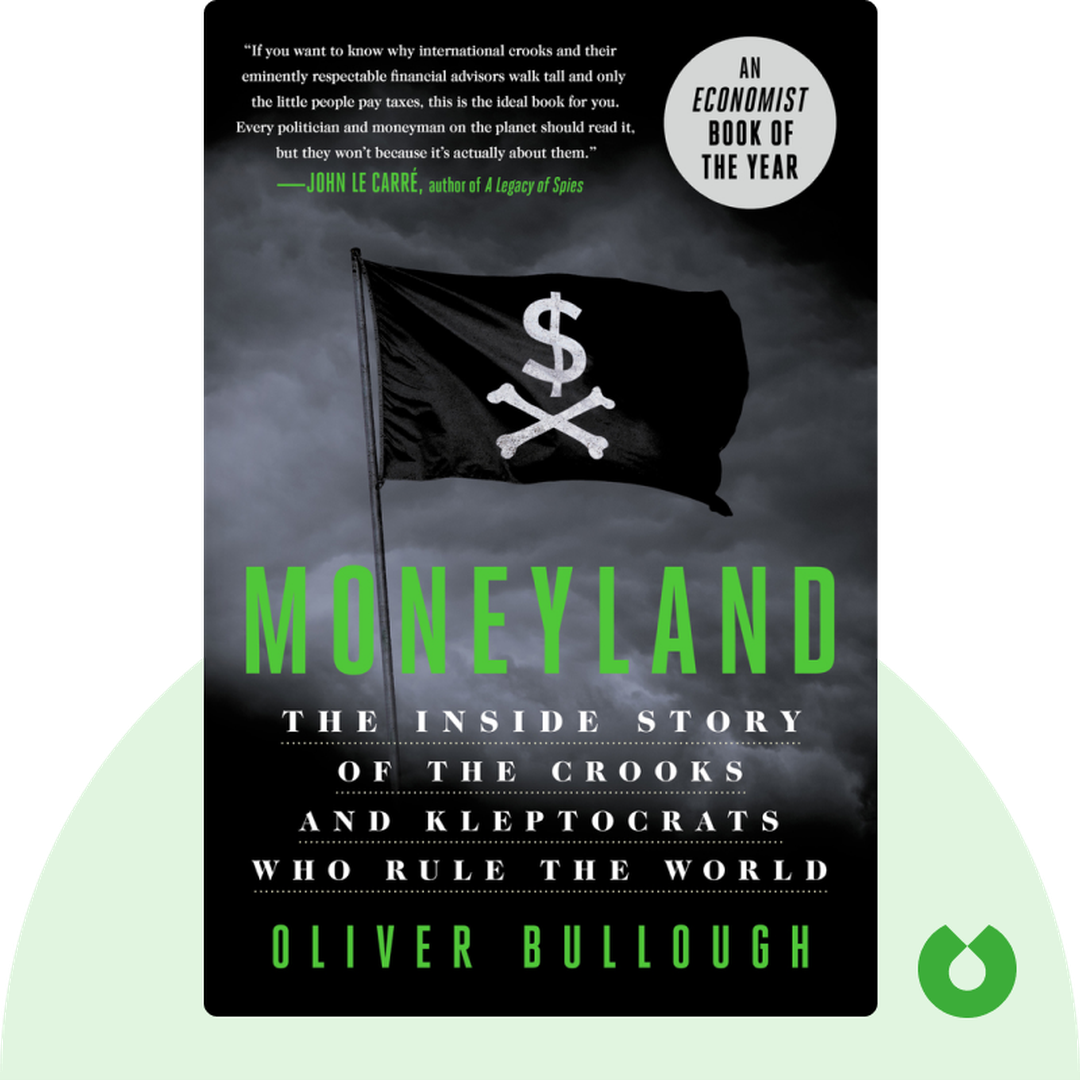
Moneyland (2018) is a revealing – and worrying – examination of the lengths to which the rich and corrupt will go in order to keep their money safe. From Nevadan trusts and Angolan oil fields to Russian assassins and tropical islands, this book tracks dirty money, no matter where it goes.
Who Should Listen to Moneyland?
- Current affairs addicts
- Billionaires trying to protect their assets
- Anyone working in finance
Books Similar to Moneyland
Readers who enjoyed this also liked these titles.