If You're Curious About These Questions...
You should listen to this audiobook
- Did you know that the foundation of our global financial system wasn't built on gold or coins, but on simple clay tablets from 5,000 years ago?
- Have you ever wondered how money has evolved not just as a tool for trade, but as a powerful force that dictates human behavior and social structures?
- Are you curious about how a concept as abstract as money has survived every major technological revolution—from the first written ledgers to the complex world of modern cryptocurrencies?
Listen to Money — Free Audiobook
Loading player...
Key Takeaways from Money
- Understand how money emerged not as a mere convenience, but as a vital social technology and survival tool that allowed early farming communities to cooperate and scale.
- Discover why grain became the world's first currency, transforming ancient storage granaries into the earliest central banks capable of regulating supply to stabilize economies.
- Learn how the invention of interest rates in ancient Mesopotamia changed humanity's relationship with time by putting a precise price on the future.
- Recognize how early lending and compound interest forced societies to think long-term, turning debt into a powerful forecasting tool to evaluate risk and opportunity.
- Explore how the revolutionary leap to paper money was only possible in high-trust societies, requiring citizens to shift their faith from tangible assets to institutional guarantees.
Learning Tools
Reinforce what you learned from Money
Mind Map
Money
Social Technology+
Interest Rates & Time+
Paper Money & Trust+
Modern Credit+
Evolution & Inclusion+
Quiz — Test Your Understanding
Question 1 of 6
According to the text, why did money originally emerge in human history?
Question 2 of 6
In early civilizations like Sumer, what dual role did the granary play?
Question 3 of 6
How did the invention of interest rates in ancient Mesopotamia fundamentally change human perception?
Question 4 of 6
What broader societal change in Europe helped make the leap of trust required for paper money possible?
Question 5 of 6
According to the book, where does the majority of money in circulation in the modern economy come from?
Question 6 of 6
Why does the author highlight M-Pesa in Kenya as a successful monetary innovation compared to many cryptocurrencies?
Money — Full Chapter Overview
- 1Recommendation
- 2Money as a social technology
- 3How interest rates changed humanity’s sense of time
- 4Paper money required high-trust societies
- 5Most money today is created out of thin air
- 6Money needs to evolve to stay useful, inclusive, and trusted
- 7Final summary
Money Summary & Overview
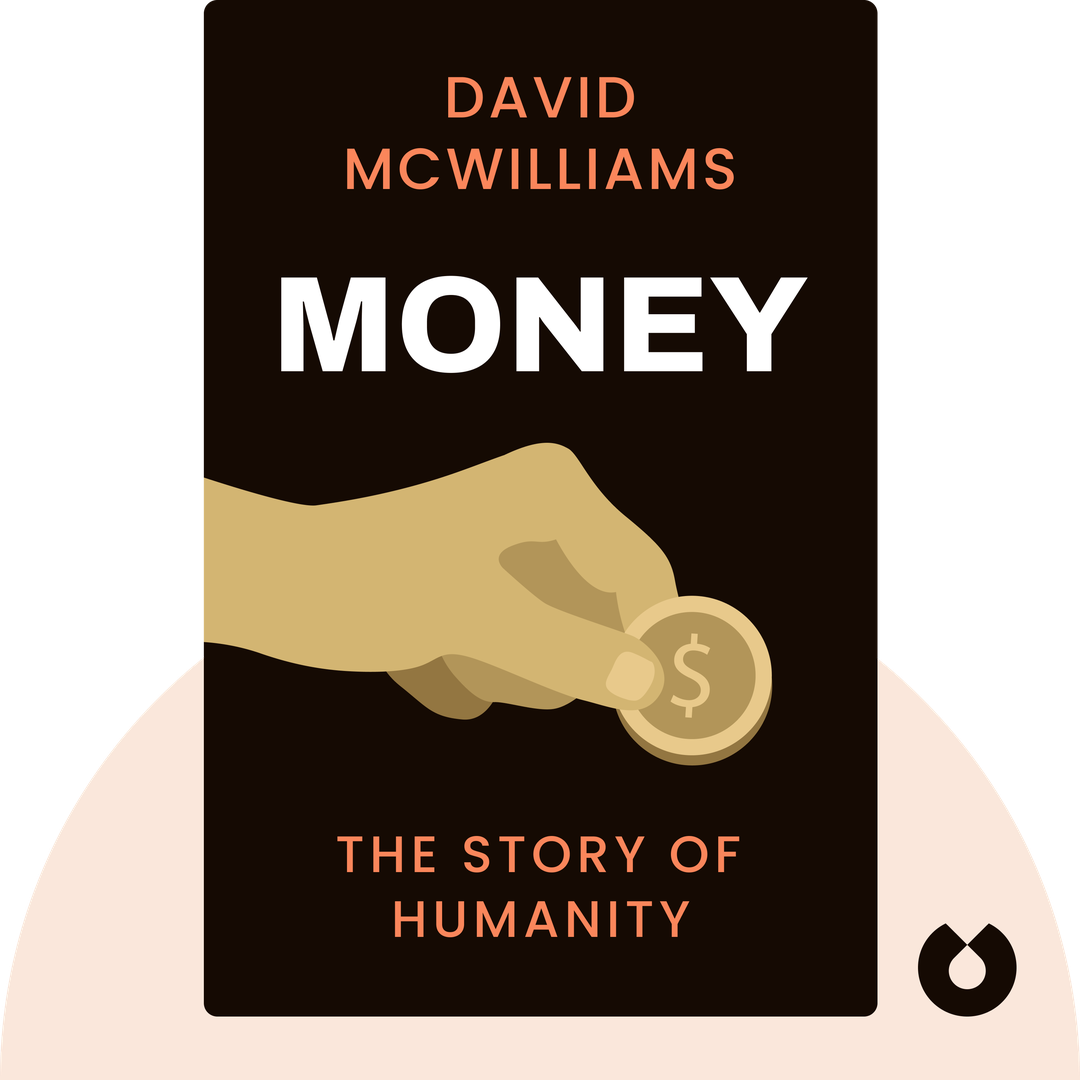
Money (2023) explores the evolving relationship between humans and money over the past 5,000 years, from its origins in Mesopotamian clay tablets to modern cryptocurrencies. It traces how money has continually adapted to changing technologies, economies, and societies, shaping human behavior as much as being shaped by it.
Who Should Listen to Money?
- History enthusiasts curious about money’s evolution
- Economics students seeking engaging, real-world insights
- General readers interested in financial systems and society
Books Similar to Money
Readers who enjoyed this also liked these titles.