If You're Curious About These Questions...
You should listen to this audiobook
- Did you know that a grassroots movement of ordinary women, armed only with white t-shirts and a refusal to be silenced, managed to end one of Africa’s bloodiest civil wars?
- What is the secret to uniting thousands of women across deep religious and political divides to successfully challenge powerful warlords and demand peace?
- Have you ever wondered how a mother who lost everything to violence could transform her personal despair into a global force for justice and change?
Listen to Mighty Be Our Powers — Free Audiobook
Loading player...
Key Takeaways from Mighty Be Our Powers
- Discover how African women wielded their collective power to achieve lasting peace in Liberia when male leaders completely failed.
- Learn how Leymah Gbowee transformed her life, overcoming horrific domestic abuse and grim refugee camps to become a Nobel Peace Prize-winning leader.
- Understand the devastating speed at which civil war can destroy everyday life, as seen through the sudden collapse of Gbowee’s comfortable upbringing and medical dreams.
- Find out how volunteering to counsel traumatized victims of war provided a crucial stepping stone out of a life of violence and into dedicated peacebuilding.
- Explore the harrowing realities and immense resilience required to survive as a refugee, from enduring nightmare voyages to rebuilding a life from absolute rock bottom.
Learning Tools
Reinforce what you learned from Mighty Be Our Powers
Mind Map
Mighty Be Our Powers
Early Life & War's Outbreak+
Refugee Trauma & Survival+
Rise as a Peacebuilder+
Ending the War (2003)+
Post-War Rebuilding+
Global Recognition & Legacy+
Quiz — Test Your Understanding
Question 1 of 8
What was Leymah Gbowee's original career aspiration before the civil war disrupted her life?
Question 2 of 8
What was one of the primary reasons for the civil war led by Charles Taylor's NPFL against President Samuel Doe?
Question 3 of 8
What horrific ordeal did Gbowee face in a Ghanaian hospital after fleeing Liberia in 1996?
Question 4 of 8
What realization drove Gbowee to focus on a women-centered agenda for peacebuilding through WIPNET?
Question 5 of 8
What was a defining and powerful characteristic of the peace protests organized by WIPNET in Liberia?
Question 6 of 8
What bold action did Gbowee and the women of WIPNET take during the 2003 peace talks in Ghana to force progress?
Question 7 of 8
Following the end of the war, what significant political milestone did WIPNET help achieve in Liberia's 2005 election?
Question 8 of 8
Which documentary brought international attention to Gbowee and the "peace women" of Liberia?
Mighty Be Our Powers — Full Chapter Overview
- 1Recommendation
- 2Leymah Gbowee’s happy life and promising future were shattered when war erupted in Liberia.
- 3Gbowee’s family escaped to Ghana, but when they came back, everything had changed.
- 4By 1996, Leymah Gbowee was a pregnant refugee fighting to survive at the lowest point in her life.
- 5Back in Liberia, Gbowee began working as a peacebuilder for the first time.
- 6In 2001, Gbowee committed herself to a new peacebuilding network for Liberian women.
- 7Through the protests led by Gbowee and WIPNET, thirteen years of war finally ended.
- 8After the war, Gbowee continued her peacebuilding work in Liberia and pursued her education.
- 9Gbowee’s activism has earned her significant attention, but Liberia still has far to go.
- 10Final summary
Mighty Be Our Powers Summary & Overview
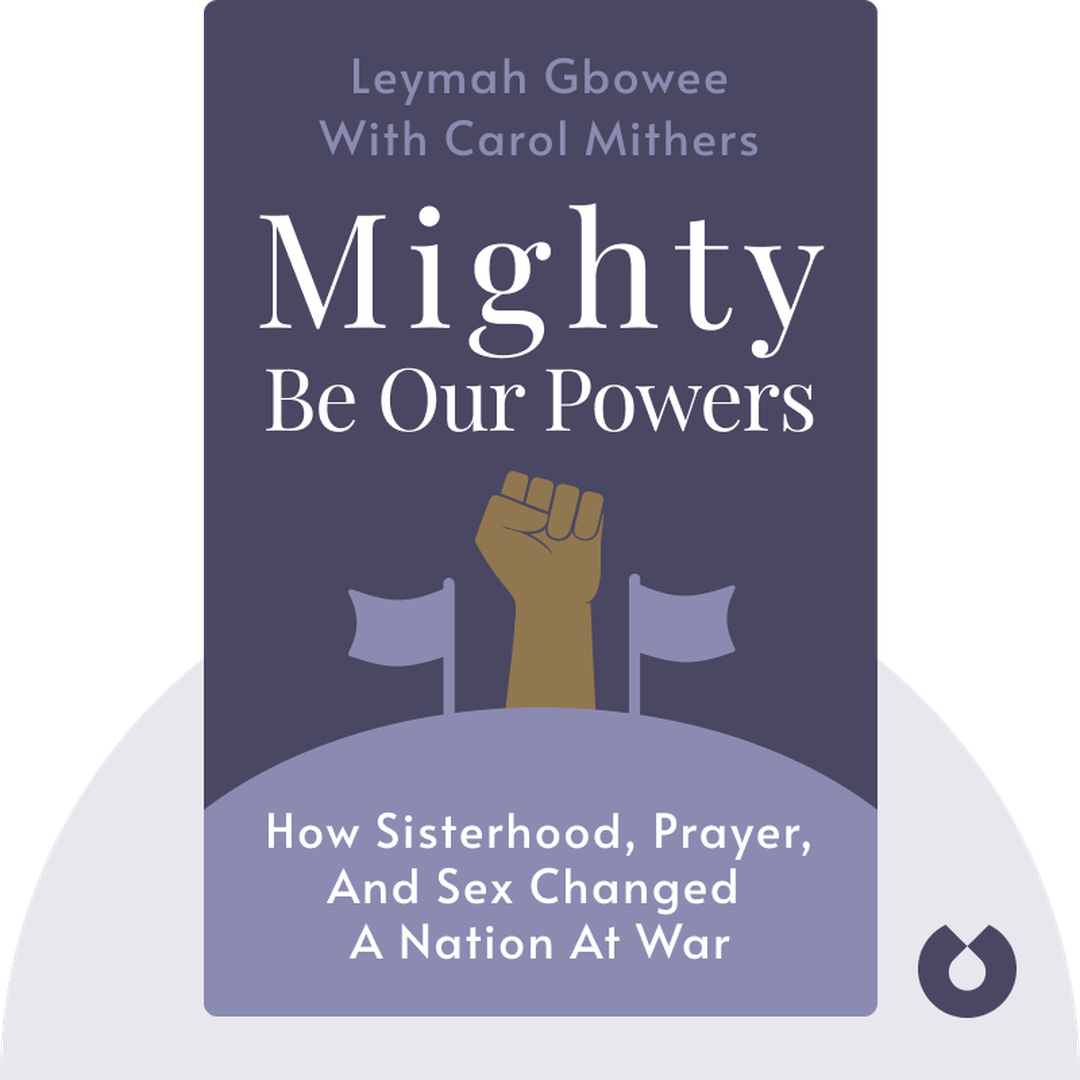
Mighty Be Our Powers (2011) tells the inspirational story of Leymah Gbowee, a woman who fought for peace after years of civil war had devastated her country, Liberia. As a mother who believed her bright future had been snatched away from her, Gbowee brought together a powerful group of women who were fed up with the violence. Their peaceful protests changed the course of history, and their story deserves to be heard by anyone who’s ever lost hope.
Who Should Listen to Mighty Be Our Powers?
- Peace workers and activists
- Women, mothers and feminists
- Anyone who loves an inspirational story of peace
Books Similar to Mighty Be Our Powers
Readers who enjoyed this also liked these titles.