If You're Curious About These Questions...
You should listen to this audiobook
- What’s the secret to transforming your passion for a cause into a movement that creates real, lasting social change?
- What if you could use your existing skills and resources to become a powerful force for justice, regardless of your background?
- Are you curious about the vital lessons a leading social justice activist learned from both his biggest wins and his toughest losses?
Listen to Make Change — Free Audiobook
Loading player...
Key Takeaways from Make Change
- Understand why human history isn't a linear path toward justice, but a continuous fluctuation of peaks and dips that requires active effort to navigate.
- Discover how your unique personal backstory and past struggles determine the specific social causes you are best equipped to champion.
- Learn how to maximize your impact as an agent of change by narrowing your focus to the single issue that evokes your deepest rage and despair.
- Recognize that staying silent makes you complicit in systemic injustice, and learn to consciously commit your time and resources to fighting it.
- Find out why successful social movements depend on everyday individuals, proving that age, background, or busyness are never valid excuses to avoid activism.
Learning Tools
Reinforce what you learned from Make Change
Mind Map
Make Change
Understanding History+
Choosing Your Cause+
Taking Initial Action+
Anatomy of a Movement+
Resilience & Self-Care+
Driving Systemic Change+
Quiz — Test Your Understanding
Question 1 of 7
According to the book, what profound insight did Leopold von Ranke's historical timeline reveal about human history?
Question 2 of 7
How does the author suggest you narrow your focus when deciding which social cause to fight for?
Question 3 of 7
What is recommended as the best approach when first getting involved as a volunteer with an activist organization?
Question 4 of 7
According to the book, what are the three indispensable components of any successful social movement?
Question 5 of 7
What important lesson did the organization Real Justice learn after their candidates lost district attorney elections in San Diego and Sacramento?
Question 6 of 7
Why is setting boundaries and practicing self-care considered crucial for activists?
Question 7 of 7
How does the author view the idea that American systems of government and global capitalism are 'broken'?
Make Change — Full Chapter Overview
- 1Recommendation
- 2To understand change, you first need to understand history.
- 3Your story shapes the causes you care about.
- 4Choose a cause, drop the excuses, and start creating change.
- 5Start working, discover your gift, and learn the rest as you go.
- 6Every movement needs three things: energized people, strong organization, and a solid plan.
- 7Activism isn’t about winning every battle; it’s about learning from failure and bouncing back.
- 8Change won’t happen unless you make it happen.
- 9Final summary
Make Change Summary & Overview
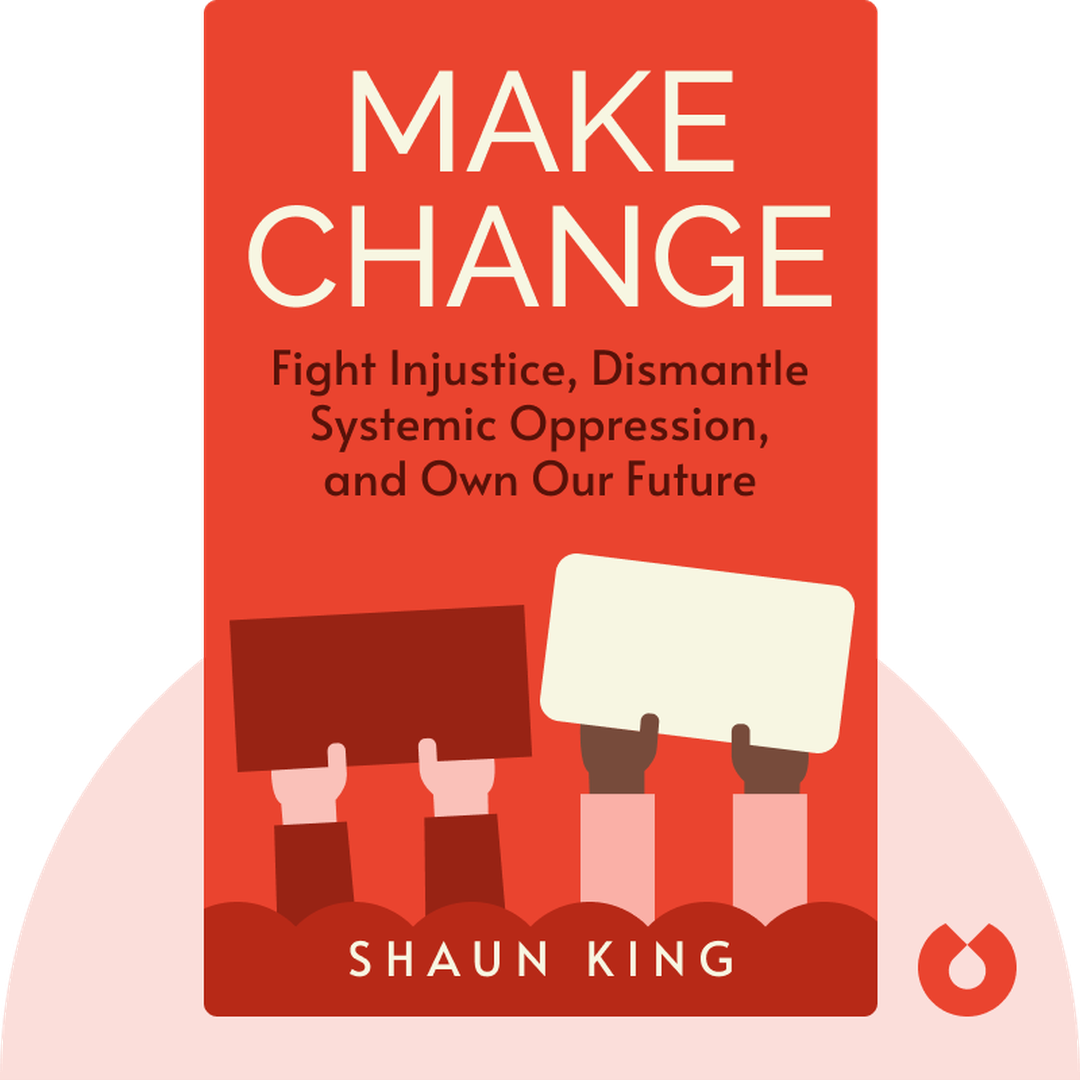
Informed by the life and work of successful social justice activist Shaun King, Make Change (2020) is your guide on how to join the fight for a better world. King is a leading figure in the fight against police brutality and mass incarceration in America, and his wins and losses along the way have taught him vital lessons on how to create real, lasting social change. No matter the cause you’re invested in, these blinks will show you how to use your skills and resources to make a real difference.
Who Should Listen to Make Change?
- Budding activists and future organizers
- Shaun King admirers who want to know more about his life and work
- Anyone looking to make a real difference in the world
Books Similar to Make Change
Readers who enjoyed this also liked these titles.