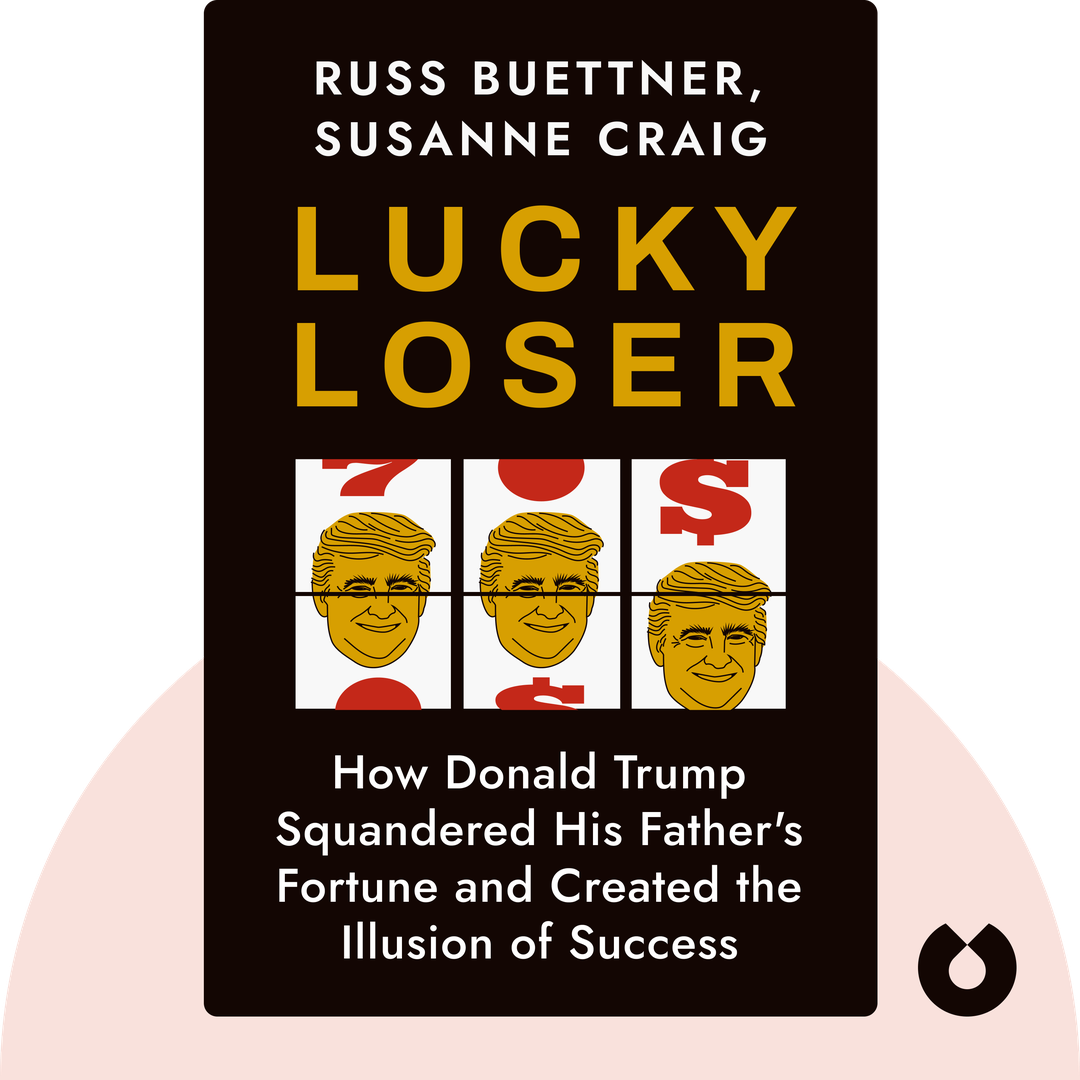
If You're Curious About These Questions...
You should listen to this audiobook
- Did you know that while projecting an image of ultimate wealth, one of history's most famous businessmen was actually reporting some of the largest financial losses in the country?
- Have you ever wondered how a business empire could continue to thrive and expand even after a series of high-profile failures and staggering debt?
- Are you curious about the hidden role family wealth and risky bailouts played in keeping a legendary 'self-made' tycoon from financial ruin?
Listen to Lucky Loser — Free Audiobook
Loading player...
Key Takeaways from Lucky Loser
- Discover the truth behind Donald Trump's self-made image by exploring how his early career was actually bankrolled by his father's massive real estate fortune.
- Learn how Fred Trump built the family's initial empire by exploiting post-war federal housing loans and strategically navigating Senate hearings to keep millions in excess government funds.
- Understand how Fred's early wealth transfers, such as putting massive apartment complexes into trusts, completely secured Donald's financial future from a young age.
- Find out how Donald solidified his position as the family's successor after his brother stepped away, using his father's wealth and influence to navigate military school and university.
- Uncover the origins of 'The Trump Organization' and how Donald used his father's money to rebrand the family business to escape the mundane grind of being a landlord.
Learning Tools
Reinforce what you learned from Lucky Loser
Mind Map
Lucky Loser
The Self-Made Myth+
Fred Trump's Empire+
The Trump Organization+
Financial Misadventures+
The Television Savior+
Tax Dodges & Politics+
Core Behavioral Patterns+
Quiz — Test Your Understanding
Question 1 of 8
What is the central thesis of 'Lucky Loser' regarding Donald Trump's financial history?
Question 2 of 8
How did Fred Trump significantly expand his real estate empire during and immediately after World War II?
Question 3 of 8
How did Fred Trump manage to survive the scandal regarding his misuse of Section 608 federal housing funds?
Question 4 of 8
What was the outcome of the 1973 US Department of Justice lawsuit against the Trump Organization?
Question 5 of 8
How did Fred Trump intervene to save Donald from defaulting on his massive debts related to the Taj Mahal casino in 1990?
Question 6 of 8
According to the book, what was the primary impact of the reality show 'The Apprentice' on Donald Trump's career?
Question 7 of 8
How did Donald Trump handle the financial failure of his Chicago tower project during the 2008 financial crisis?
Question 8 of 8
What was a notable financial consequence of Donald Trump launching his presidential campaign in 2015?
Lucky Loser — Full Chapter Overview
- 1Recommendation
- 2The self-made man
- 3Fred chooses a successor
- 4Inside the Trump Organization
- 5Shaping the narrative
- 6The TV star
- 7Force majeure
- 8Final summary
Lucky Loser Summary & Overview
Lucky Loser (2024) delves into the wild financial rollercoaster of Donald Trump, exploring how he kept his empire afloat with risky deals and family wealth. The book looks at the man behind the myth, uncovering the fascinating contradictions between Trump’s public image of success and the staggering losses he accounted for behind the scenes.
Who Should Listen to Lucky Loser?
- Political junkies
- Fans of investigative journalism
- History buffs
Books Similar to Lucky Loser
Readers who enjoyed this also liked these titles.