If You're Curious About These Questions...
You should listen to this audiobook
- Have you ever wondered why the secret to long-term creative success isn't about reaching a destination, but about mastering your daily routine?
- What if you could create a "bliss station" that shields your best ideas from the constant distractions of the modern world?
- Are you curious about the simple, everyday habits that can help you stay inspired even when you feel like you’ve hit a total dead end?
Listen to Keep Going — Free Audiobook
Loading player...
Key Takeaways from Keep Going
- Understand why feelings of apathy are actually essential wake-up calls, and learn to embrace the invisible inner work necessary to fuel your future achievements.
- Discover how to navigate life's chaos by establishing grounding daily rituals and utilizing unique to-do lists, like a 'paper prayer,' to stay focused on the present.
- Master the art of overcoming perfectionism by treating your work like a game, deliberately doing tasks poorly at first to lower the bar and bypass procrastination.
- Learn why you shouldn't monetize every talent you possess, and discover how protecting your hobbies from commercial pressure keeps them as a vital source of joyful energy.
- Find out how to cure creative burnout and reconnect with your passion by shifting your focus away from expectations and simply making your work as a gift for someone else.
Learning Tools
Reinforce what you learned from Keep Going
Mind Map
Keep Going
Establish a Routine+
Disconnect & Focus+
Organize & Refresh+
Protect Your Passion+
Verbs over Nouns+
Play & Observe+
Keep Life in Perspective+
Quiz — Test Your Understanding
Question 1 of 9
According to the author, what is the one aspect of creativity that you can actually control?
Question 2 of 9
What is a 'Bliss Station' as described in the text?
Question 3 of 9
What is the author's rule of thumb regarding messiness and tidying in a creative workspace?
Question 4 of 9
Why does the author caution against turning your creative passion into your sole source of income?
Question 5 of 9
What does the author mean by advising creatives to focus on 'verbs' rather than 'nouns'?
Question 6 of 9
How can adult creatives benefit from observing how young children make art?
Question 7 of 9
How does the author address the belief that you need an extraordinary life to create extraordinary work?
Question 8 of 9
What is the author's stance on the 'tortured artist' myth?
Question 9 of 9
What powerful practice does the author suggest to reconnect to your creativity uninfected by money or popularity metrics?
Keep Going — Full Chapter Overview
- 1Recommendation
- 2Build a routine so you show up for your work, no matter how creative you feel.
- 3Disconnect from distractions to create the time and space for your creative work.
- 4Support your creativity by using lists, tidying up, and getting enough sleep.
- 5Protect your creativity by not fully monetizing it or obsessing over popularity.
- 6Focus less on being creative and more on doing creative work, and let go of the idea of “arriving.”
- 7Reignite your creativity by reconnecting with playfulness.
- 8You don’t need an extraordinary life to create extraordinary work.
- 9If your creative work is making you or others miserable, it may be time to step back.
- 10Final summary
Keep Going Summary & Overview
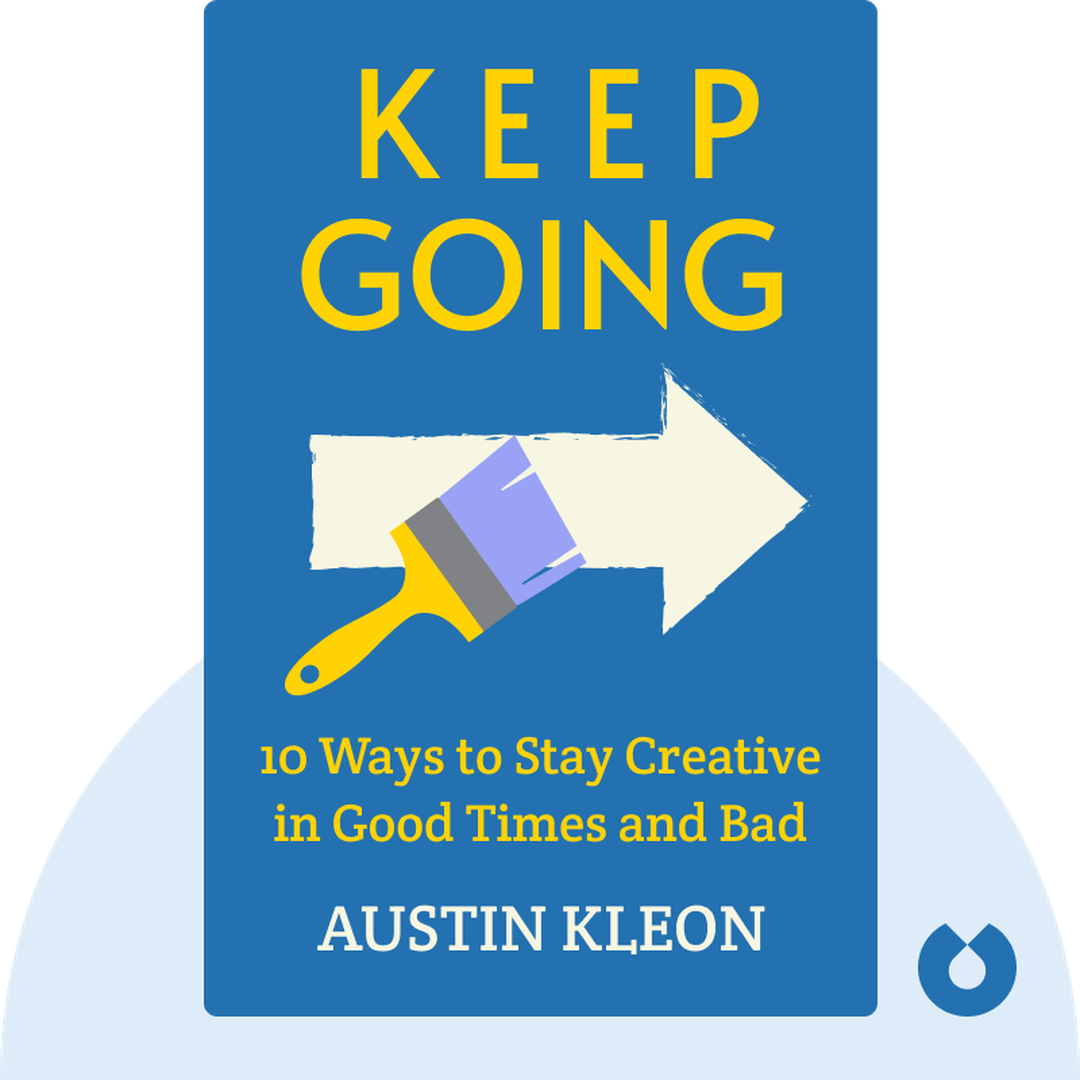
Full of practical tips, techniques and strategies for fostering creativity, Keep Going (2019) provides readers with a wide variety of ways to persevere in the face of difficulties with their creative work. While the text is written primarily with professional and non-professional artists in mind, the ideas are applicable to anyone whose job or pastime requires creativity.
Who Should Listen to Keep Going?
- Artists looking for inspiration
- Creative professionals and hobbyists feeling stuck in a rut
- Teachers, entrepreneurs, activists and anyone else whose work could use a boost of creativity
Books Similar to Keep Going
Readers who enjoyed this also liked these titles.