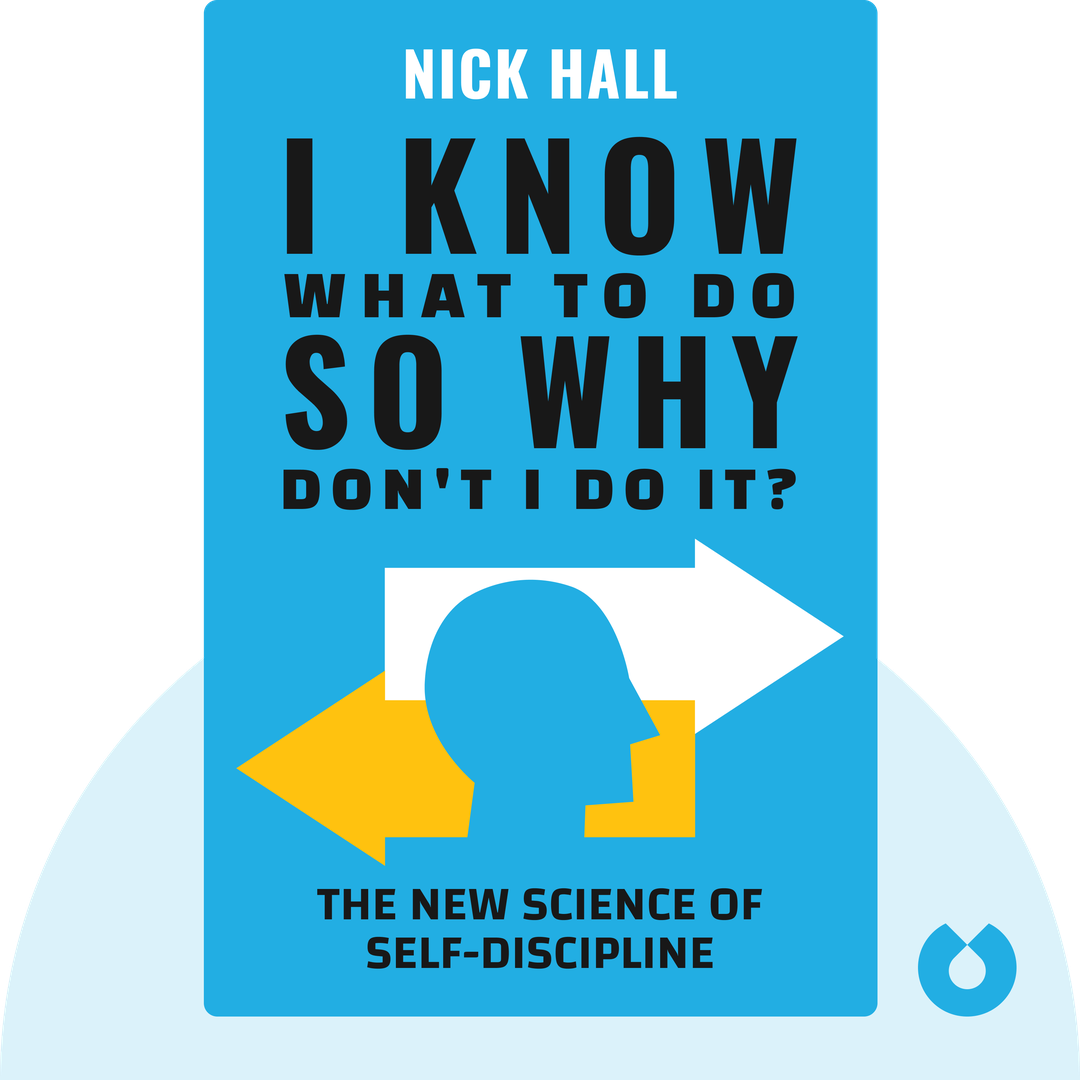
I Know What to Do So Why Don't I Do It?
Start ListeningDownload Try free on iPhoneScan to start in 5 seconds
Categories:
If You're Curious About These Questions...
You should listen to this audiobook
- Did you know that relying on traditional willpower might actually be the hidden reason you’re struggling to stay motivated?
- Have you ever wondered why you feel completely paralyzed to start a task, even when you know exactly what needs to be done?
- What if the secret to ending procrastination isn't about discipline, but about understanding a surprising link between your emotions and your brain's 'stop' button?
Listen to I Know What to Do So Why Don't I Do It? — Cinematic Audio Edition
Loading player...
Key Takeaways from I Know What to Do So Why Don't I Do It?
- Discover why procrastination is actually an emotion management problem, not a time management issue, and how avoiding uncomfortable feelings keeps you stuck.
- Understand how willpower functions like a muscle that depletes with use, making structured recovery periods crucial for sustaining your motivation.
- Learn how to harness the psychological principle of loss aversion by reframing the consequences of your delays to overcome fear-based procrastination.
- Master practical strategies for managing discomfort through systematic exposure, gathering concrete information, and utilizing a mentor to gradually build your confidence.
- Find out how to identify and rewrite the limiting internal narratives and outdated mental scripts that unconsciously trigger your task avoidance.
Learning Tools
Reinforce what you learned from I Know What to Do So Why Don't I Do It?
Mind Map
I Know What to Do So Why Don't I Do It?
Psychology of Procrastination+
Willpower & Motivation+
Managing Fear & Discomfort+
Rewriting Limiting Stories+
Biological Rhythms & Tactics+
Quiz — Test Your Understanding
Question 1 of 7
According to the author, what is the true underlying cause of procrastination?
Question 2 of 7
How does the author describe the nature of willpower?
Question 3 of 7
How can the behavioral economics concept of 'loss aversion' be harnessed to combat procrastination?
Question 4 of 7
In the ABC method recommended for overcoming feeling stuck, what does the 'A' stand for?
Question 5 of 7
Why does the author caution against the popular advice of broadcasting your goals to the world?
Question 6 of 7
How does the author define 'true optimism' in the context of overcoming setbacks?
Question 7 of 7
Based on the concept of ultradian rhythms, what is the recommended maximum duration for focused work periods?
I Know What to Do So Why Don't I Do It? — Full Chapter Overview
- 1Recommendation
- 2The psychology behind procrastination
- 3How willpower really works
- 4Working through fear and discomfort
- 5Rewrite your story
- 6Understanding your natural rhythms
- 7Final summary
I Know What to Do So Why Don't I Do It? Summary & Overview
I Know What to Do, So Why Don't I Do It? (2022) explores the complex relationship between emotions and motivation, revealing why traditional concepts of willpower and discipline often fail us. It explains why we sometimes feel paralyzed to take action, offering practical strategies to overcome inaction.
Who Should Listen to I Know What to Do So Why Don't I Do It??
- Chronic procrastinators who struggle to get started on important tasks
- Leaders who want to better support team members dealing with motivation
- Anyone who battles with fear of failure
Books Similar to I Know What to Do So Why Don't I Do It?
Readers who enjoyed this also liked these titles.