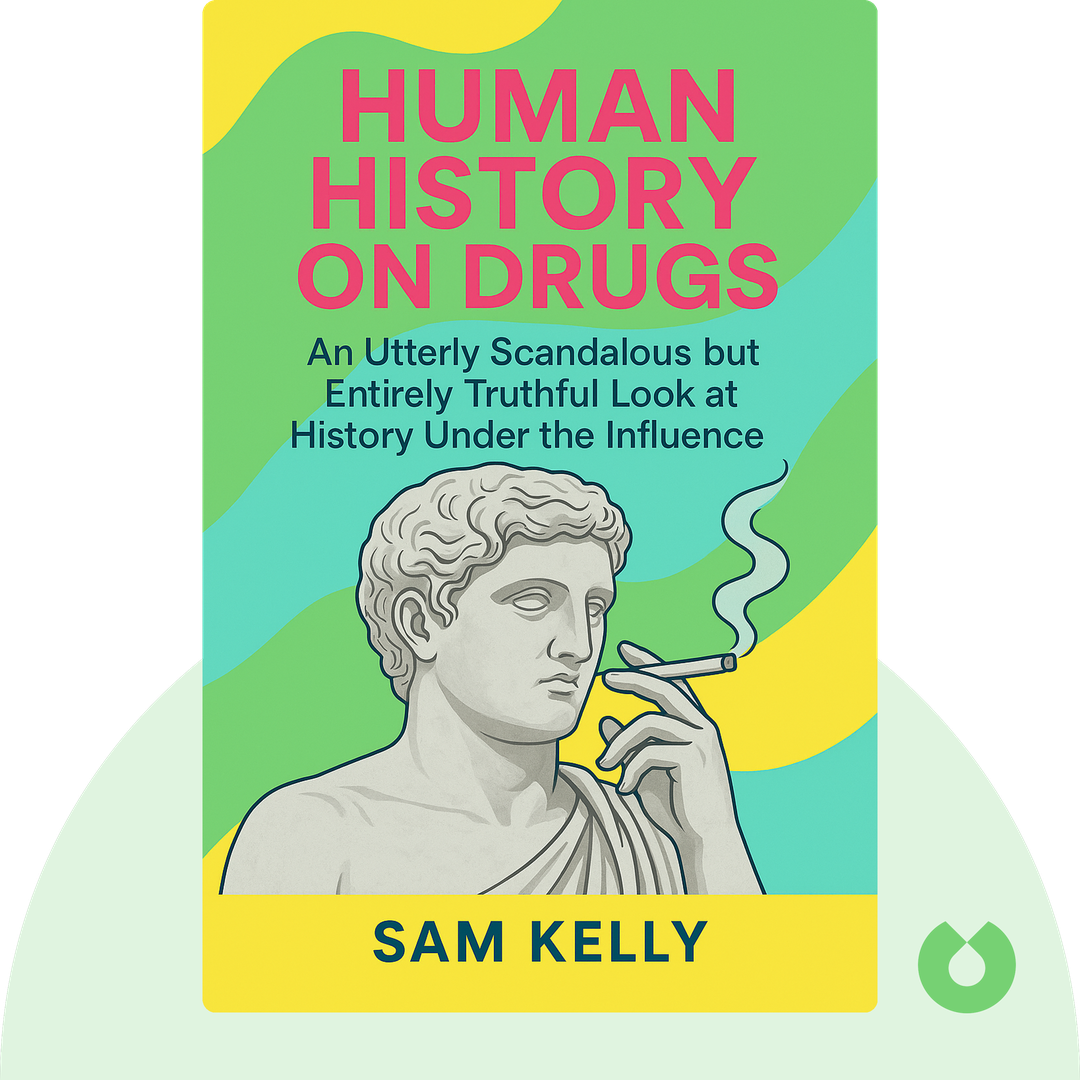
Human History on Drugs
Start ListeningDownload Try free on iPhoneScan to start in 5 seconds
Categories:
If You're Curious About These Questions...
You should listen to this audiobook
- Did you know that some of history’s most pivotal, world-changing decisions were actually fueled by mind-altering substances used by the leaders we admire most?
- Have you ever wondered if the secret behind the world's greatest scientific breakthroughs and cultural revolutions was hidden in the private habits of history’s most brilliant minds?
- What if the hidden key to human progress—from the visions of ancient oracles to the innovations of modern-day tech billionaires—has always been the pursuit of altered states of consciousness?
Listen to Human History on Drugs — Free Audiobook
Loading player...
Key Takeaways from Human History on Drugs
- Discover how revered historical figures, from the famously strict Queen Victoria to ancient Egyptian pharaohs, regularly consumed hard drugs like cocaine and cannabis.
- Learn how the most crucial military and political decisions of the ancient Mediterranean world were guided by the Oracle of Delphi hallucinating on volcanic gases.
- Understand the irony behind Marcus Aurelius’s foundational stoic philosophy by discovering how his famous reflections on self-discipline were written under the heavy influence of opiates.
- Find out how the foundational concepts of modern psychoanalysis and dream interpretation were developed while Sigmund Freud was consuming and heavily promoting daily doses of cocaine.
- Uncover the profound impact of mind-altering substances on modern history, from fueling Carl Sagan's brilliant cosmic theories to triggering the violent radicalization of Ted Kaczynski through secret CIA LSD experiments.
Learning Tools
Reinforce what you learned from Human History on Drugs
Mind Map
Human History on Drugs
Ancient & Imperial Leaders+
Science & Psychology+
War & Geopolitics+
Art & Literature+
Technology & Innovation+
Quiz — Test Your Understanding
Question 1 of 7
What was the actual source of the Oracle of Delphi's prophetic visions that shaped ancient Greek geopolitics?
Question 2 of 7
How did Marcus Aurelius's drug use seemingly contrast with his famous philosophical writings?
Question 3 of 7
How did Sigmund Freud's relationship with cocaine influence his career?
Question 4 of 7
How was a potential nuclear catastrophe averted during Richard Nixon's presidency?
Question 5 of 7
According to the book, what medical explanation accounts for the distinctive yellow hues in Vincent van Gogh's most famous paintings?
Question 6 of 7
How did Steve Jobs view the role of psychedelics in the development of Apple?
Question 7 of 7
What is the overarching thesis of 'Human History on Drugs'?
Human History on Drugs — Full Chapter Overview
- 1Recommendation
- 2Divine visions and imperial decisions
- 3Scientific breakdowns and breakthroughs
- 4Fate’s shaky hands
- 5The arts and literature
- 6The secret behind innovation
- 7Final summary
Human History on Drugs Summary & Overview
Human History on Drugs (2025) reveals how mind-altering substances have shaped forty of history's most influential figures, from ancient oracles to modern tech billionaires. The book exposes the hidden role of drugs in world-changing decisions, scientific breakthroughs, and cultural revolutions across five thousand years of human civilization.
Who Should Listen to Human History on Drugs?
- People interested in the intersection of science, creativity, and consciousness
- History buffs who enjoy learning surprising facts about well-known figures
- Anyone who's ever wondered about the real stories from behind the scenes of pivotal world events
Books Similar to Human History on Drugs
Readers who enjoyed this also liked these titles.