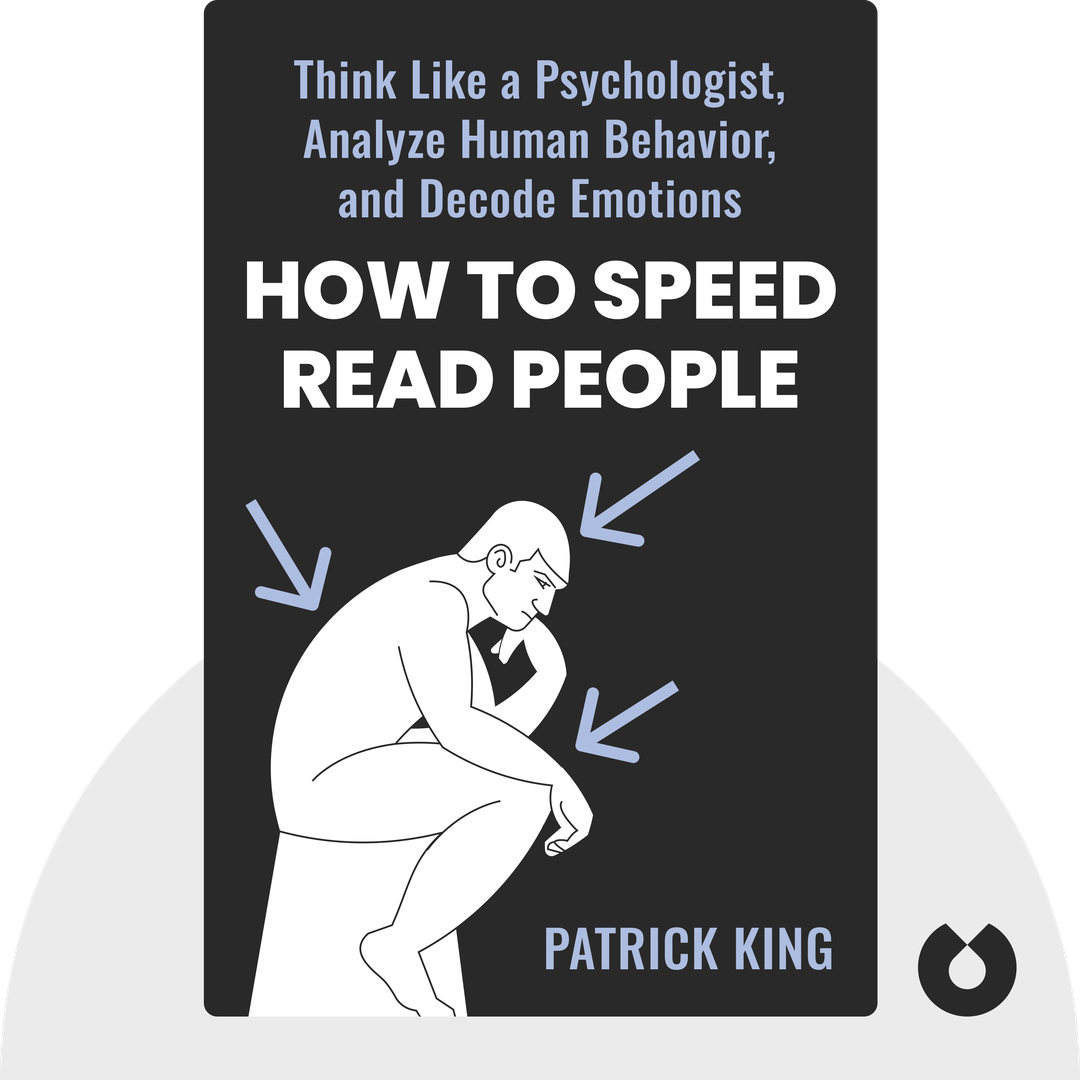
How to Speed Read People
Start ListeningDownload Try free on iPhoneScan to start in 5 seconds
Categories:
If You're Curious About These Questions...
You should listen to this audiobook
- What if you could decode someone's true intentions and emotions without them saying a single word?
- What’s the secret to spotting hidden discomfort or dishonesty through subtle shifts in body language that most people miss?
- Have you ever wondered why some leaders can instantly 'read the room' and adapt their communication to influence anyone they meet?
Listen to How to Speed Read People — Cinematic Audio Edition
Loading player...
Key Takeaways from How to Speed Read People
- Discover how biology shapes the Big Five personality traits, allowing you to align life choices with your natural tendencies and avoid unnecessary stress.
- Understand the nuances of popular frameworks like the MBTI, Keirsey Temperaments, and the Enneagram to accurately decode what motivates the people around you.
- Learn to spot involuntary microexpressions to uncover genuine emotions, even when someone is actively trying to hide their true feelings.
- Master the art of reading body language by analyzing nonverbal patterns and environmental context rather than relying on isolated gestures.
- Develop your emotional intelligence through self-awareness and social awareness to recognize others' unspoken emotional needs and build deeper interpersonal trust.
Learning Tools
Reinforce what you learned from How to Speed Read People
Mind Map
How to Speed Read People
Foundations of Personality+
Personality Frameworks+
Nonverbal Communication+
Emotional Intelligence & Subtext+
Indirect Analysis Tools+
Human Motivation+
Childhood & Past Influences+
Quiz — Test Your Understanding
Question 1 of 9
According to the text, what is a primary criticism of the Myers-Briggs Type Indicator (MBTI)?
Question 2 of 9
How do microexpressions differ from macroexpressions when observing facial cues?
Question 3 of 9
In Daniel Goleman’s emotional intelligence framework, what is considered the foundation upon which the other components are built?
Question 4 of 9
What might an excessive use of self-mocking or dark, cynical humor indicate about a person, according to the book's insights on subtext?
Question 5 of 9
What is the primary purpose of 'The Seven Stories' exercise?
Question 6 of 9
When it comes to the core principle of human motivation regarding pleasure and pain, what does the text emphasize?
Question 7 of 9
Why do people often turn to defense mechanisms like denial, rationalization, or projection?
Question 8 of 9
A person who craves deep connection but shies away from intimacy due to past trauma most likely exhibits which attachment style?
Question 9 of 9
According to the text, what is a potential outcome of over-praise and inconsistency during childhood?
How to Speed Read People — Full Chapter Overview
- 1Recommendation
- 2Keys to unlocking personality and understanding others
- 3Reading people through expressions and body movements
- 4Decoding emotions to better understand people
- 5Uncovering deeper truths through indirect questions and reflection
- 6The forces that drive human behavior
- 7How the past shapes relationships, self-worth, and behavior
- 8Final summary
How to Speed Read People Summary & Overview
How to Speed Read People (2020) teaches you how to interpret the body language and emotions of others quickly, enabling you to understand unspoken cues and enhance your interactions. By mastering these skills, you can build stronger relationships, improve communication, and influence others effectively.
Who Should Listen to How to Speed Read People?
- Professionals seeking stronger communication and interpersonal skills
- Leaders aiming to better understand and motivate their teams
- Learners exploring personality, behavior, and emotional intelligence
Books Similar to How to Speed Read People
Readers who enjoyed this also liked these titles.