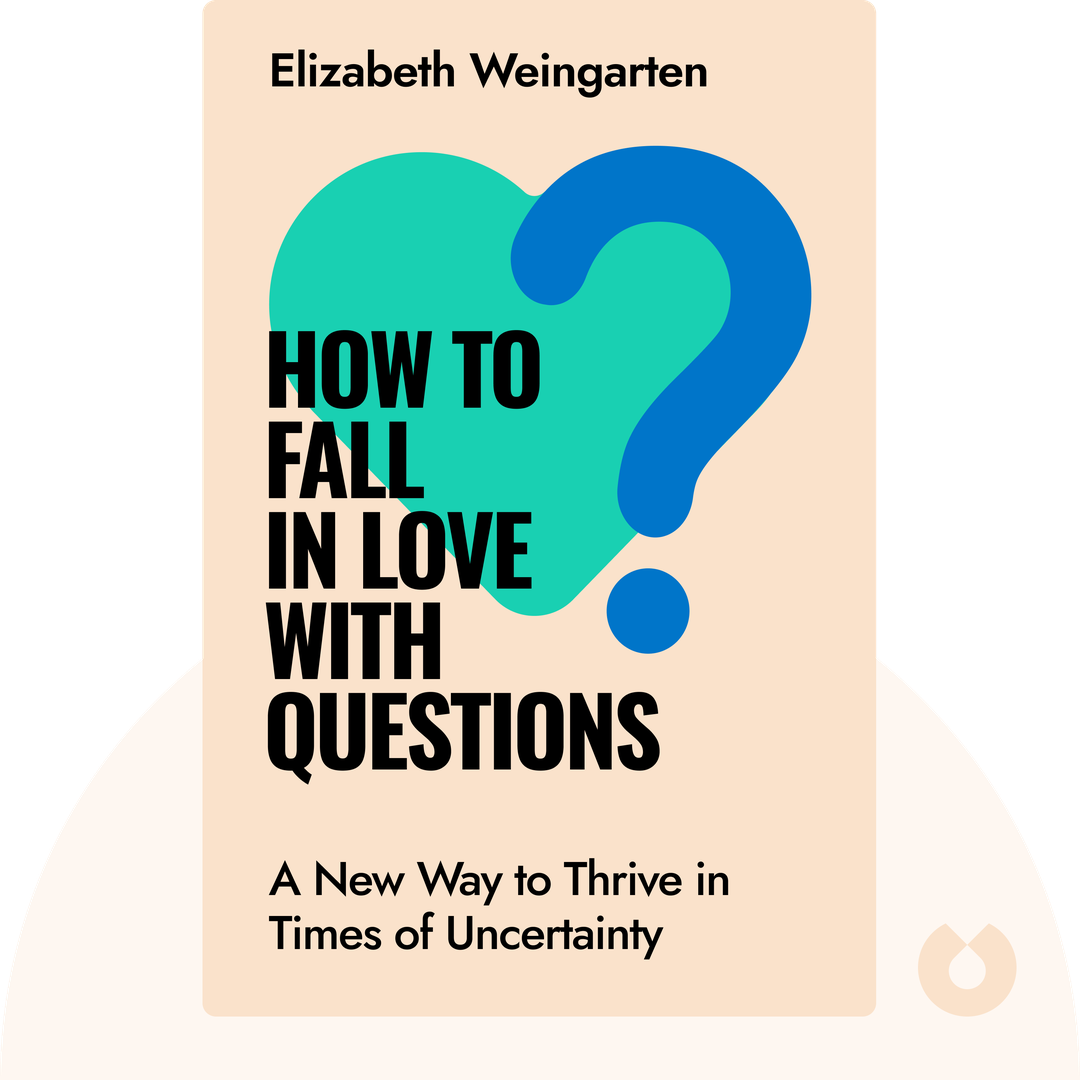
How to Fall in Love with Questions
Start ListeningDownload Try free on iPhoneScan to start in 5 seconds
Categories:
If You're Curious About These Questions...
You should listen to this audiobook
- What if you could transform your fear of uncertainty into a powerful catalyst for growth and innovation?
- Have you ever wondered why the world’s most effective leaders prioritize asking the right questions over having all the answers?
- What’s the secret to building deeper relationships and thinking more clearly by simply changing how you approach curiosity?
Listen to How to Fall in Love with Questions — Free Audiobook
Loading player...
Key Takeaways from How to Fall in Love with Questions
- Discover why embracing uncertainty and patiently living inside your questions, rather than rushing for answers, is the ultimate compass for growth.
- Understand how to overcome your brain's biological bias for certainty by intentionally cultivating curiosity and reflecting on shifting perspectives daily.
- Master the art of 'curious listening' by challenging yourself to ask at least two follow-up questions before sharing your own perspective in conversations.
- Learn how to transform your relationships by replacing unsolicited advice with open-ended 'how' or 'what' questions that invite genuine reflection.
- Uncover the power of turning open questions inward to challenge your assumptions, reveal your blind spots, and align your actions with your core values.
Learning Tools
Reinforce what you learned from How to Fall in Love with Questions
Mind Map
How to Fall in Love with Questions
Embracing Uncertainty+
The Power of Curiosity+
Questions as Relationship Tools+
Questions for Self-Knowledge+
Questions at Work+
Living the Questions+
Quiz — Test Your Understanding
Question 1 of 7
According to the text, how does the human brain's natural tendency toward certainty affect our personal growth?
Question 2 of 7
What approach does the author recommend when a friend shares a personal challenge with you?
Question 3 of 7
How did Eleanor Roosevelt utilize the practice of self-inquiry to transform her life?
Question 4 of 7
Why do many workplace cultures subtly discourage questioning?
Question 5 of 7
What was the key difference in Claude Shannon's approach to engineering at Bell Labs that led to the digital revolution?
Question 6 of 7
What is meant by the concept of 'living the questions'?
Question 7 of 7
How did physicist Richard Feynman view confusion in his scientific work?
How to Fall in Love with Questions — Full Chapter Overview
- 1Recommendation
- 2The strength of curiosity
- 3Questions as tools for connection
- 4Questions as a route to self-knowledge
- 5Questions in the workplace
- 6Learning to live with questions
- 7Final summary
How to Fall in Love with Questions Summary & Overview
How to Fall in Love with Questions (2025), offers a framework for embracing uncertainty as a catalyst for growth. Weaving together research, historical examples, and practical exercises, it crafts a compelling case for making questioning a central practice in relationships, work, self-development, and life.
Who Should Listen to How to Fall in Love with Questions?
- Leaders and managers seeking to boost innovation and team dynamics
- Lifelong learners and self-development enthusiasts
- Anyone wanting to think more clearly and curiously
Books Similar to How to Fall in Love with Questions
Readers who enjoyed this also liked these titles.