If You're Curious About These Questions...
You should listen to this audiobook
- Have you ever wondered why asking yourself the right questions might be more transformative than finding all the right answers?
- What if you could bridge the gap between who you are today and the person you’ve always wanted to become through 40 simple yet profound inquiries?
- Are you curious about the secret to mending your inner self and discovering a clear path forward when you feel stuck or uncertain?
Listen to How Am I Doing? — Free Audiobook
Loading player...
Key Takeaways from How Am I Doing?
- Discover why talking to yourself is a healthy, effective practice for fostering deep self-awareness and building the clarity needed to make better life decisions.
- Learn how to prioritize your own needs without guilt by recognizing that you cannot pour from an empty cup and must care for yourself before caring for others.
- Master the process of achieving your wildest dreams by scaling them into realistic targets and breaking them down into actionable macro and micro goals aligned with your passions.
- Find out how to use a mirror as a powerful tool for self-discovery, allowing you to converse with your reflection to gain a broader perspective on difficult choices.
- Understand why embracing your vulnerabilities and admitting your weaknesses actually liberates you from unnecessary stress and invites supportive people to help you grow.
Learning Tools
Reinforce what you learned from How Am I Doing?
Mind Map
How Am I Doing?
The Power of Self-Talk+
Self-Worth & Prioritization+
Achieving Wild Dreams+
Mirror Work+
Embracing Vulnerability+
Decoding Anger+
Reconciling with the Past+
Processing Mistakes+
Maximizing Micro-Moments+
Final Advice+
Quiz — Test Your Understanding
Question 1 of 10
According to Dr. Corey Yeager, how should we view self-talk?
Question 2 of 10
Why does the author argue that you should be the most important person in your own life?
Question 3 of 10
What is the recommended approach for tackling wild or ambitious dreams?
Question 4 of 10
What psychological benefit does the author associate with looking in the mirror?
Question 5 of 10
How does covering up your weaknesses affect your personal growth?
Question 6 of 10
According to the text, anger is most frequently a 'secondary emotion' that masks which underlying feelings?
Question 7 of 10
If you are struggling with pain and denial from past losses or mistakes, what specific exercise does the author recommend?
Question 8 of 10
What is the final step in properly dealing with a mistake, according to the book?
Question 9 of 10
How does the author suggest you use a brief period of time, such as 23 seconds, before a major task or event?
Question 10 of 10
What practical advice is given at the end of the summary to boost your immune system and lower stress?
How Am I Doing? — Full Chapter Overview
- 1Recommendation
- 2Who matters most in your life?
- 3How would you describe your wildest dreams?
- 4How much time do you spend looking in the mirror?
- 5What freedom can your vulnerabilities offer?
- 6Do you know what triggers your anger?
- 7Which past experience would you change, and why?
- 8What mistake has taught you the most?
- 9What can you accomplish in 23 seconds?
- 10Final summary
How Am I Doing? Summary & Overview
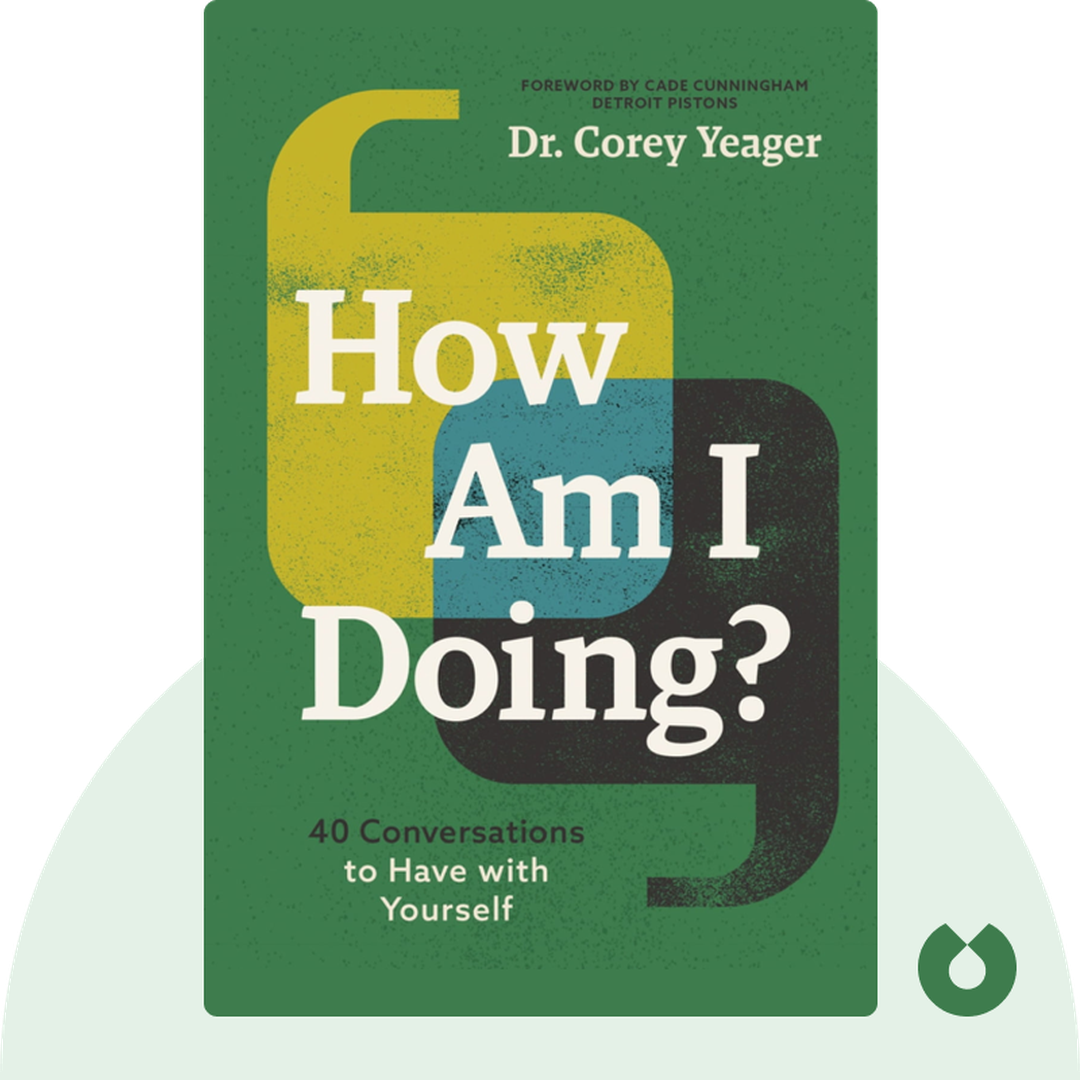
How Am I Doing? (2022) helps you dive deep into your thoughts and find yourself. It features 40 introspective questions designed to prompt you to mend yourself and discover the path to the person you want to become.
Who Should Listen to How Am I Doing??
- People who want to gain a better understanding of themselves
- High school or college graduates looking for their next path
- Anyone interested in personal growth and self-improvement
Books Similar to How Am I Doing?
Readers who enjoyed this also liked these titles.