If You're Curious About These Questions...
You should listen to this audiobook
- Did you know that the complex calculations required to send the first Americans into space were performed by hand by a group of women who were legally barred from using the same bathrooms as their colleagues?
- Have you ever wondered who John Glenn trusted more than the world’s most advanced electronic computers to guarantee his safety during his historic orbit?
- Are you curious about how a group of brilliant mathematicians turned the challenges of the segregated South into a launchpad for the greatest technological achievements in human history?
Listen to Hidden Figures — Free Audiobook
Loading player...
Key Takeaways from Hidden Figures
- Discover how quiet brilliance and consistent work can profoundly shape history, even when essential contributors aren't immediately recognized by society.
- Understand how the massive logistical pressures of World War II forced a segregated system to prioritize analytical talent over prejudice, opening unprecedented doors for Black women mathematicians.
- Learn how true leadership often takes the form of advocacy, mentorship, and calm persistence when navigating deeply entrenched biases and unequal opportunities in the workplace.
- Find out why the foundational contributions of Black female 'human computers' began long before the space race and how their actual numbers were vastly undercounted by historical records.
- Recognize the stark difference between legal rights on paper and lived realities by exploring how systemic discrimination forced brilliant minds to make difficult sacrifices for family stability.
Learning Tools
Reinforce what you learned from Hidden Figures
Mind Map
Hidden Figures
Historical Context+
The West Computers+
Overcoming Discrimination+
Breaking Gender Barriers+
Scientific Legacy+
Quiz — Test Your Understanding
Question 1 of 6
Why did NACA initially begin hiring black women as mathematicians in the 1940s?
Question 2 of 6
How did workplace segregation specifically manifest for the black female mathematicians at Langley?
Question 3 of 6
How did Miriam Mann actively resist the degrading segregated conditions at Langley?
Question 4 of 6
What significant milestone did Dorothy Vaughan achieve at Langley in 1951?
Question 5 of 6
In addition to racial prejudice, the West Computers faced severe gender discrimination. How did Christine Darden overcome this to advance her career?
Question 6 of 6
What crucial role did Katherine Johnson play in John Glenn's 1962 spaceflight?
Hidden Figures — Full Chapter Overview
- 1Recommendation
- 2The story of Langley’s black women mathematicians began in the 1940s.
- 3World War II opened doors for the pioneering West Computers.
- 4Facing discrimination, the West Computers showed courage and resilience.
- 5The West Computers helped advance racial and gender equality at Langley.
- 6Langley was more than a science and engineering lab; it was also a testing ground for race and gender relations.
- 7Final summary
Hidden Figures Summary & Overview
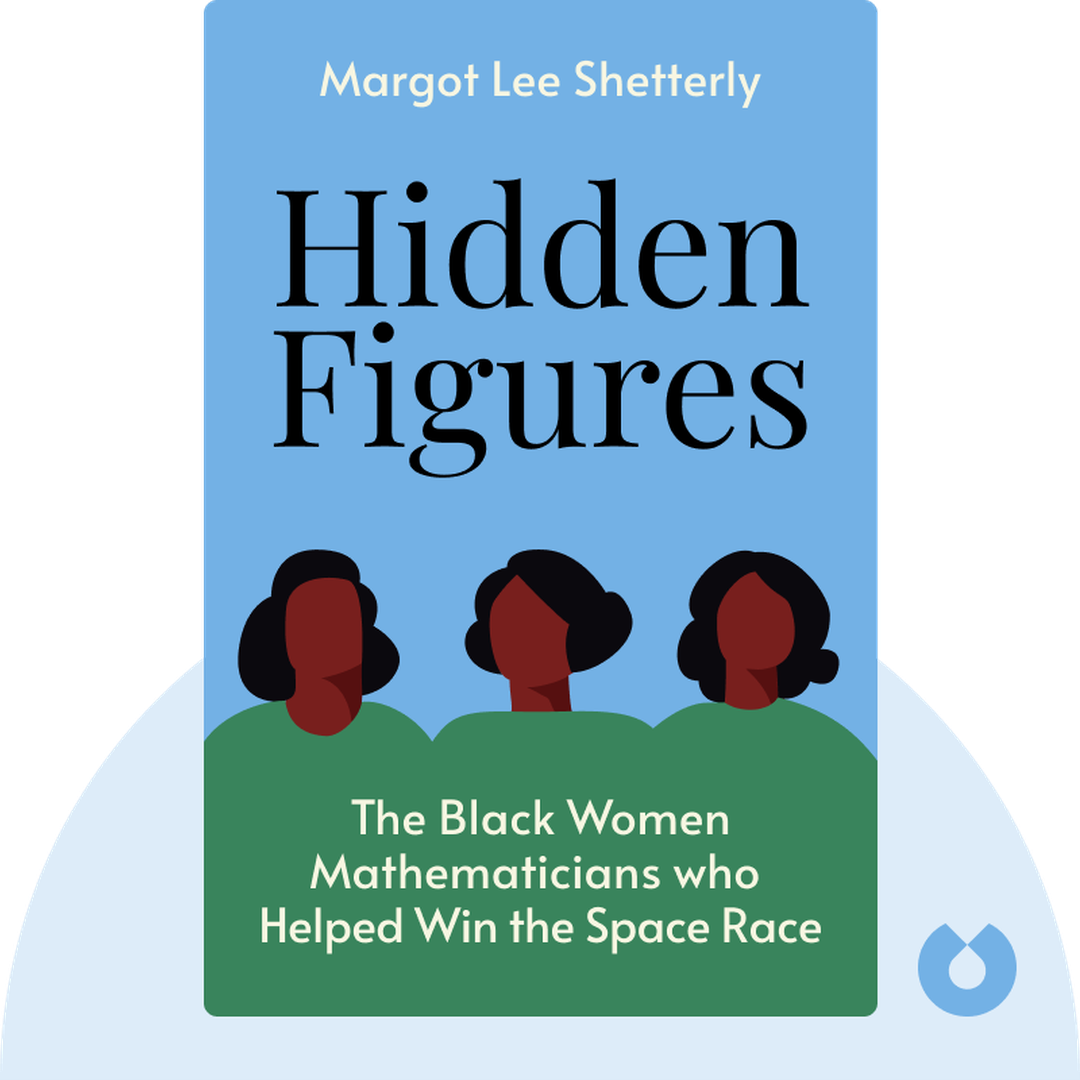
Hidden Figures (2016) reveals the untold story of the black female mathematicians who helped send John Glenn on his first orbit around the Earth and Neil Armstrong to the moon. These courageous, trailblazing women answered the call of duty by leaving their teaching jobs in segregated Southern schools behind and helping to shape the modern space program.
Who Should Listen to Hidden Figures?
- Women in engineering
- Those interested in the true history of the space program
- Students of politics, science and history
Books Similar to Hidden Figures
Readers who enjoyed this also liked these titles.