Theme Song
If You're Curious About These Questions...
You should listen to this audiobook
- Did you know that the real-life inspiration for Clarice Starling actually spent her career sitting face-to-face with history’s most notorious serial killers?
- Have you ever wondered what it takes for a woman to survive and thrive in the high-stakes, male-dominated world of the FBI’s elite profiling unit?
- Are you curious about the hidden psychological toll of spending a lifetime peering into the darkest corners of the human mind?
Listen to Hearts of Darkness — Free Audiobook
Loading player...
Key Takeaways from Hearts of Darkness
- Discover the intense psychological realities of working inside the FBI’s Behavioral Science Unit, and learn how agents build the inner resilience needed to confront unimaginable evil.
- Understand the deep-rooted psychology behind youth violence and gang affiliation by exploring how a desire for belonging drives neglected children toward crime.
- Learn why slowing down to strategically assess a situation is a far more effective law enforcement tool than relying on brash, trigger-happy reactions.
- Find out how challenging basic assumptions can solve cold cases, just as Monroe’s brilliant insight to reexamine a handwritten note led to the capture of a serial killer.
- Recognize the critical value of female perspectives in criminal justice, and see how Monroe used her unique viewpoint to fill major analytical gaps within the FBI.
Learning Tools
Reinforce what you learned from Hearts of Darkness
Mind Map
Hearts of Darkness
Early Career & Challenges+
FBI Academy Training+
Breaking into the BSU+
Inside the Criminal Mind+
High-Profile Cases & Pop Culture+
The Psychological Toll+
Quiz — Test Your Understanding
Question 1 of 7
What did Monroe learn about the psychology of youth gang involvement during her early career as a community school police officer?
Question 2 of 7
How did Monroe's approach to field exercises differ from the male recruits she later observed at the FBI Academy?
Question 3 of 7
What crucial insight did Monroe have that led to a breakthrough in the Rogers' triple murder case?
Question 4 of 7
How did Monroe demonstrate the value of having a female perspective during her Behavioral Science Unit interview process?
Question 5 of 7
Based on Monroe's studies of serial killers, what distinguished Aileen Wuornos from typical male serial killers?
Question 6 of 7
While Monroe helped Jodie Foster prepare for 'The Silence of the Lambs', what did she note was a major discrepancy between the film and real-life FBI protocol?
Question 7 of 7
What ultimately drove Monroe's decision to leave the Behavioral Science Unit?
Hearts of Darkness — Full Chapter Overview
- 1Recommendation
- 2Early beginnings
- 3Training at the Academy
- 4The Rogers case
- 5Starting at the BSU
- 6A grim gallery
- 7The Silence of the Lambs
- 8Leaving the BSU behind
- 9Final summary
Hearts of Darkness Summary & Overview
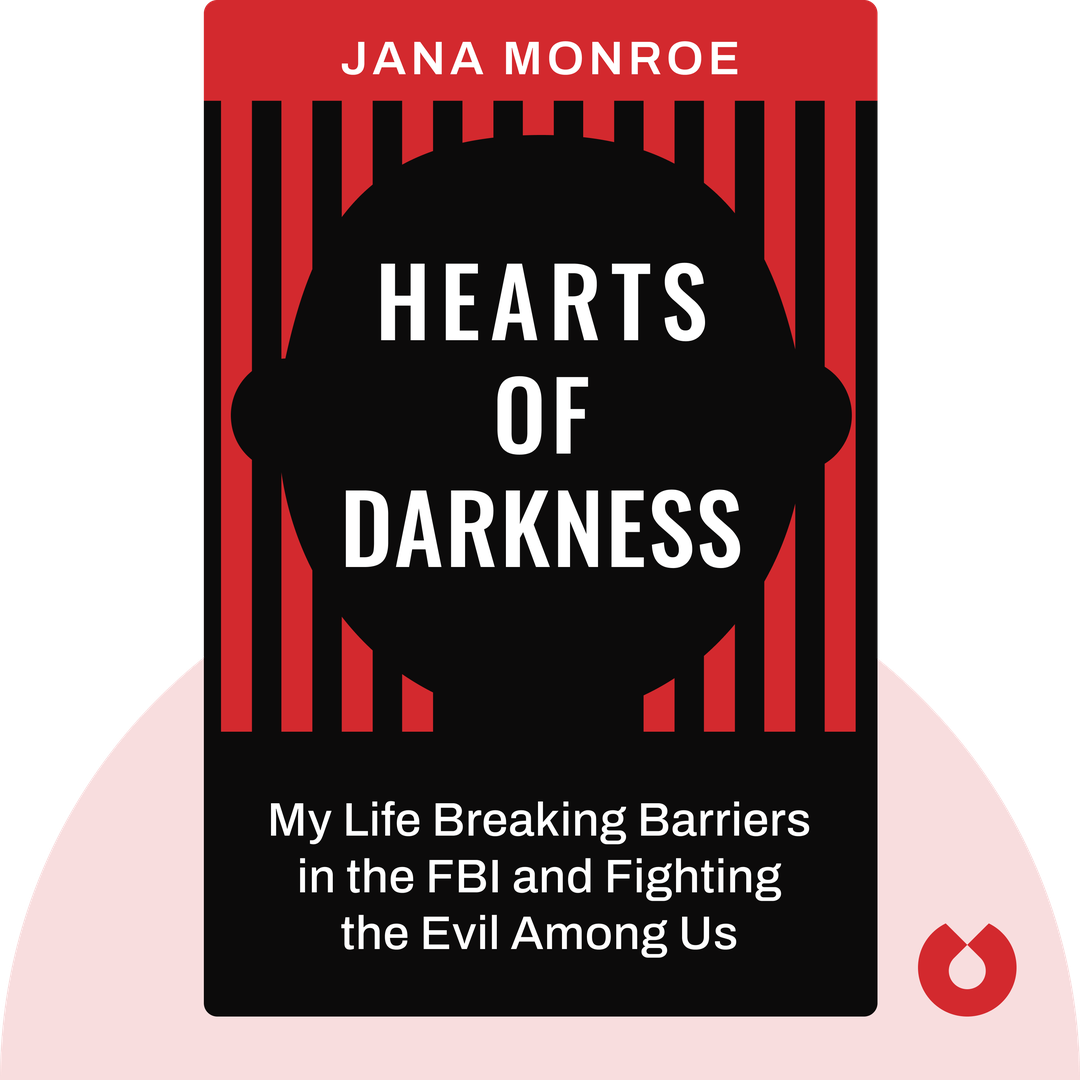
Hearts of Darkness (2023) is a gripping memoir that details Jana Monroe’s career as one of the first female profilers in the FBI’s Behavioral Sciences Unit. It provides a riveting account of her encounters with some of history’s most notorious criminals and her explorations into their dark psychology. Far from just a chronicle of her professional achievements, it also delves into the psychological toll of her job and the challenges she faced as a woman in a male-dominated field.
Who Should Listen to Hearts of Darkness?
- True-crime enthusiasts
- Women pursuing or working in law enforcement
- Fans of The Silence of the Lambs interested in the inspiration for Clarice Starling
Books Similar to Hearts of Darkness
Readers who enjoyed this also liked these titles.