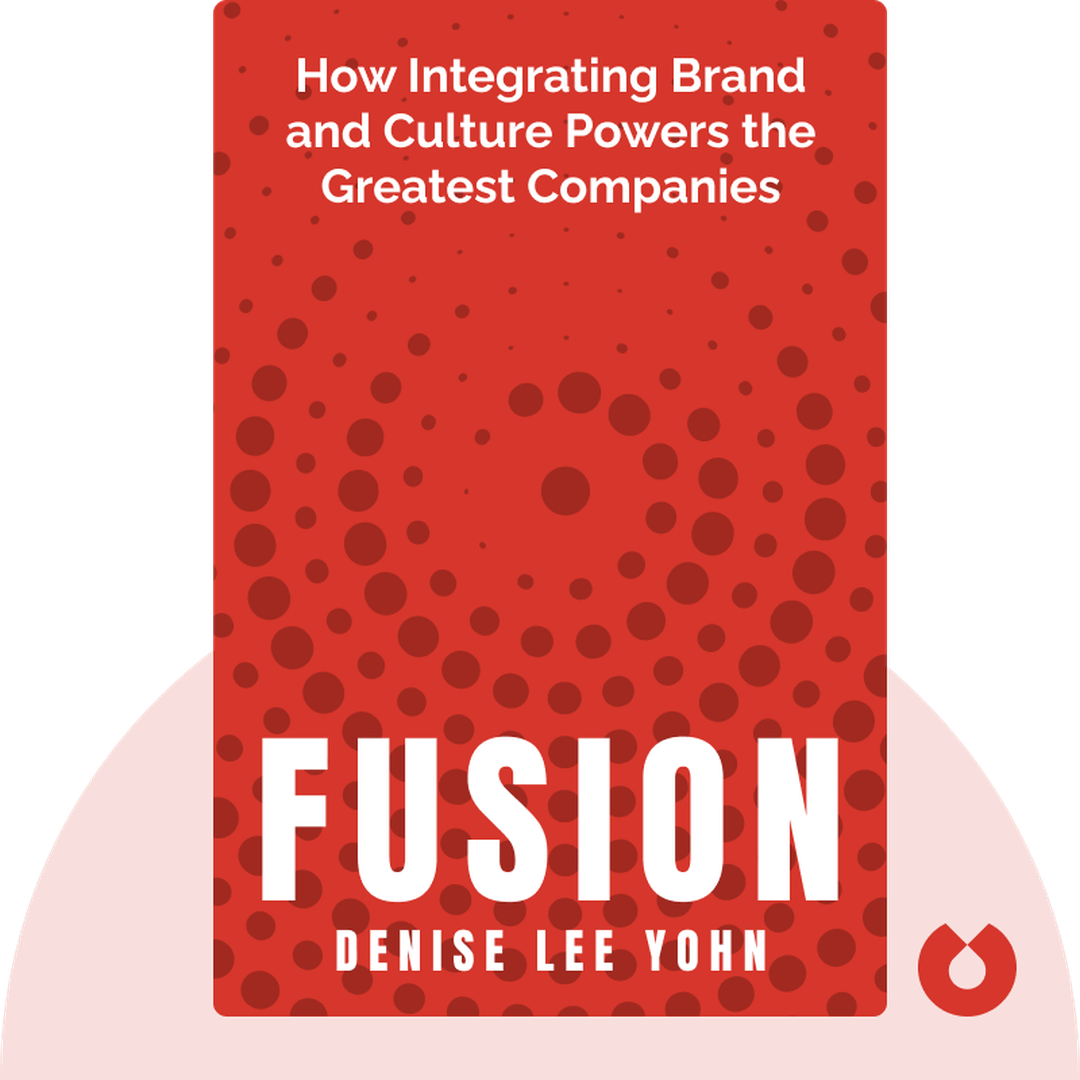
If You're Curious About These Questions...
You should listen to this audiobook
- Did you know that the secret to a high-performing business isn't just a great brand or a strong culture, but the powerful point where the two collide?
- Have you ever wondered why some companies achieve effortless growth while others struggle to align their internal values with their external brand promise?
- What if you could stop treating HR and Marketing as separate silos and instead unite them to create an unstoppable driving force for your business?
Listen to Fusion — Free Audiobook
Loading player...
Key Takeaways from Fusion
- Understand why choosing between brand and company culture is a false dilemma, and how fusing the two unlocks unprecedented organizational power.
- Discover how industry giants like Amazon align their internal culture with their external brand promises to create an inimitable competitive edge.
- Learn how to pinpoint your company's true purpose by utilizing the simple but effective 'Five Whys' exercise.
- Master the art of articulating concrete core values that act as a seamless bridge between your internal operations and external messaging.
- Find out how to identify your organization's specific brand type from nine distinct categories to easily define and align your core values.
Learning Tools
Reinforce what you learned from Fusion
Mind Map
Fusion
The Concept of Fusion+
Purpose and Core Values+
Brand Types and Culture Audits+
The Role of Leadership+
Organizational Structure+
Aligning EX and CX+
Rituals and Artifacts+
Employee Brand Engagement+
Building Brand via Culture+
Quiz — Test Your Understanding
Question 1 of 10
What is the primary benefit of achieving 'brand-culture fusion' according to the text?
Question 2 of 10
How does Amazon's internal culture align with its external brand?
Question 3 of 10
According to the book, what is the key difference between a company's purpose and its core values?
Question 4 of 10
If a company identifies as an 'innovative' brand type (like Apple or Nike), what does the text suggest about its core values?
Question 5 of 10
What contrasting leadership examples are used to demonstrate the importance of leaders in brand-culture fusion?
Question 6 of 10
How did Adobe structurally change its organization to support a new customer-focused culture?
Question 7 of 10
How does Airbnb align its employee experience (EX) with its customer experience (CX)?
Question 8 of 10
At Salesforce, the use of Hawaiian greetings, Hawaiian-shirt days, and Hawaiian-themed conference rooms are examples of using:
Question 9 of 10
What technique did Mitchell International use to deeply engage its employees with its brand and culture?
Question 10 of 10
How does Patagonia use its internal culture to fuel its external brand identity?
Fusion — Full Chapter Overview
- 1Recommendation
- 2Fusion happens when a company’s external brand and internal culture come together.
- 3Fusion starts by identifying your company’s purpose and defining its core values.
- 4Discover your core values by identifying your brand type and tracking them with a culture audit.
- 5Leadership is essential to brand–culture fusion.
- 6Create the culture you want by structuring your company wisely.
- 7Move closer to brand–culture fusion by aligning employee experience with customer experience.
- 8Strengthen company culture through rituals and artifacts.
- 9Connect employees with your brand until brand and culture become one.
- 10Develop brand identity by drawing on company culture.
- 11Final summary
Fusion Summary & Overview
Fusion (2018) advises businesses to bring together two corporate realms that are often regarded as separate: brand and culture. If fused into one, these two areas can create a new and powerful driving force in any business.
Who Should Listen to Fusion?
- Managers, business experts and consultants
- Branding and human-resources employees
- Leaders curious to know how strong culture can propel a business to new heights
Books Similar to Fusion
Readers who enjoyed this also liked these titles.