If You're Curious About These Questions...
You should listen to this audiobook
- Did you know that the average human lifespan is only about four thousand weeks, and how does that realization change everything you thought you knew about productivity?
- Have you ever wondered why the more "efficient" you become, the more overwhelmed and rushed you actually feel?
- What if the secret to a truly fulfilling life isn't about mastering your time, but about finally accepting your limitations?
Listen to Four Thousand Weeks — Cinematic Audio Edition
Loading player...
Key Takeaways from Four Thousand Weeks
- Discover why obsessing over productivity hacks leaves you feeling stressed, and how the 'paradox of limitation' prevents you from focusing on what truly matters.
- Learn why you will never be able to fully master your schedule, and how surrendering to this reality frees you to prioritize meaningful goals over endless busywork.
- Understand how the Industrial Revolution transformed time from a natural rhythm of life into an exploitable resource, creating our modern anxiety over productivity.
- Find out how acknowledging your finitude—the reality that you only have about 4,000 weeks to live—can help you stop avoiding reality and start living authentically.
- Realize why accepting your absolute limitations is not a morbid thought, but a profound perspective shift that allows you to appreciate the sheer miracle of having time at all.
Learning Tools
Reinforce what you learned from Four Thousand Weeks
Mind Map
Four Thousand Weeks
The Illusion of Time Mastery+
The History of Time Anxiety+
Embracing Finitude+
Strategic Procrastination+
The Truth About Distraction+
Letting Go of the Future+
Reclaiming Leisure+
Cosmic Insignificance Therapy+
Actionable Advice+
Quiz — Test Your Understanding
Question 1 of 9
What does the author mean by the 'paradox of limitation' regarding time management?
Question 2 of 9
How did the premodern understanding of time differ from our modern perspective?
Question 3 of 9
Drawing on philosopher Martin Heidegger, the author suggests that living an authentic life requires us to do what?
Question 4 of 9
What is one of the author's key strategies for becoming a 'better procrastinator'?
Question 5 of 9
According to the text, what is the deeper, psychological reason we often succumb to distractions when working on important projects?
Question 6 of 9
What is the danger of the 'when-I-finally' mindset described in the book?
Question 7 of 9
Why does the author argue that we should take up hobbies and allow ourselves to be mediocre at them?
Question 8 of 9
What is the primary benefit of practicing 'cosmic insignificance therapy'?
Question 9 of 9
What actionable advice does the author give to combat the seduction of digital distractions?
Four Thousand Weeks — Full Chapter Overview
- 1Recommendation
- 2You’ll never fully master your time.
- 3Our view of time is distinctly modern.
- 4Facing our finitude can help us build a fulfilling life.
- 5Become a better procrastinator by focusing on fewer goals.
- 6Your distractions are more complex than they seem.
- 7Live in the present instead of always for the future.
- 8Choose hobbies, family, and friends to enjoy the rewards of leisure time.
- 9Try cosmic insignificance therapy instead of worrying about your life’s purpose.
- 10Final summary
Four Thousand Weeks Summary & Overview
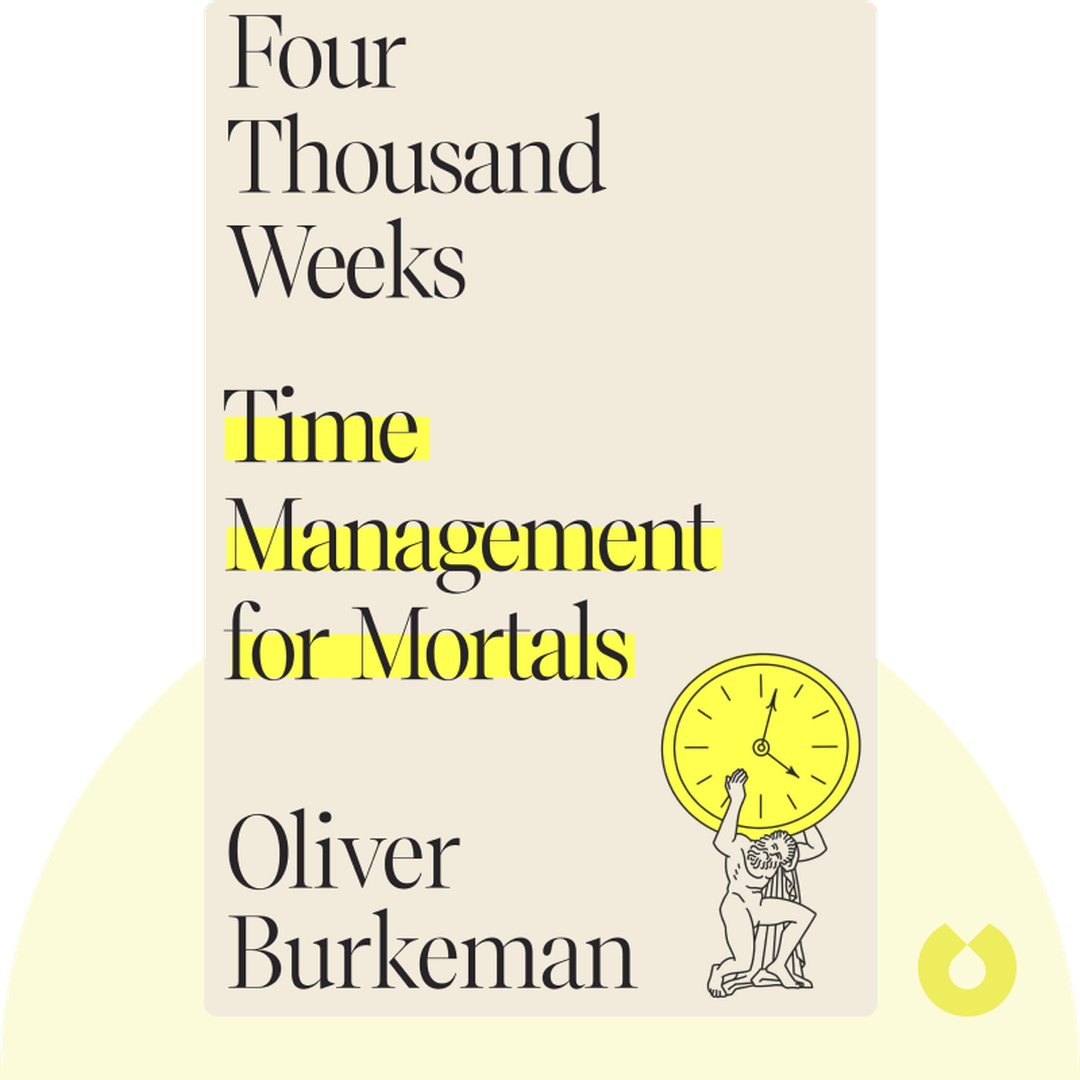
Four Thousand Weeks (2021) explores concepts of time and time management, arguing that our modern attempts to optimize our time leave us stressed and unhappy. Drawing upon the work of ancient and contemporary philosophers, psychologists, and spiritual leaders, this book proposes a path to cultivating a fulfilling life through embracing our limitations.
Who Should Listen to Four Thousand Weeks?
- Time management gurus
- Philosophy students
- Aspiring creatives and entrepreneurs
Books Similar to Four Thousand Weeks
Readers who enjoyed this also liked these titles.