If You're Curious About These Questions...
You should listen to this audiobook
- Did you know that cutting costs isn't just a survival tactic, but can actually be the most powerful engine for your company’s long-term growth?
- What’s the secret to restructuring your organization so that it sheds dead weight while simultaneously supercharging its most productive departments?
- Have you ever wondered why some companies emerge stronger after a major budget cut while others simply shrink into irrelevance?
Listen to Fit for Growth — Free Audiobook
Loading player...
Key Takeaways from Fit for Growth
- Learn how to identify and invest in your company's differentiating capabilities while strategically cutting costs in areas outside your core strengths.
- Discover why trying to make every department 'best in class' is a critical mistake that drains resources away from your true competitive advantage.
- Understand why waiting for a crisis to cut costs leads to damaging budget 'crash diets,' and how to proactively streamline your organization instead.
- Find out why CEOs should lead restructuring efforts with a compelling vision rather than a highly detailed roadmap to encourage employee buy-in and ownership.
- Master sustainable cost reduction by flattening your management hierarchy to speed up decision-making and leveraging the strategic benefits of outsourcing.
Learning Tools
Reinforce what you learned from Fit for Growth
Mind Map
Fit for Growth
Core Strategy+
Timing & Structure+
Leadership & Vision+
Outsourcing Strategies+
Footprint Optimization+
Managing Transition+
Quiz — Test Your Understanding
Question 1 of 7
According to the authors, how should a company allocate its financial resources to promote sustainable growth?
Question 2 of 7
Why do the authors advise against waiting for a financial crisis to implement cost-cutting measures?
Question 3 of 7
When a CEO pitches an organizational restructuring to their senior-executive team, why should they avoid presenting a fully fleshed-out, detailed roadmap right away?
Question 4 of 7
How does the primary benefit of outsourcing differ between large corporations and smaller businesses?
Question 5 of 7
When considering relocating operations to a low-cost country (LCC), what two crucial factors must a company evaluate alongside local labor rates?
Question 6 of 7
During a period of organizational restructuring, what is recommended as the best course of action for middle managers?
Question 7 of 7
According to the actionable advice in the text, which type of business process is the most appropriate candidate for outsourcing?
Fit for Growth — Full Chapter Overview
- 1Recommendation
- 2Successful companies invest in the areas where they already excel and cut costs everywhere else.
- 3Start cutting costs and streamlining your organization now — don’t wait for a crisis.
- 4CEOs should offer a compelling vision for change instead of getting lost in the details.
- 5Outsourcing can help companies of every size save money.
- 6Move operations to low-wage countries with the right talent and infrastructure.
- 7Middle managers often struggle during restructuring, but keeping their teams focused can help.
- 8Final summary
Fit for Growth Summary & Overview
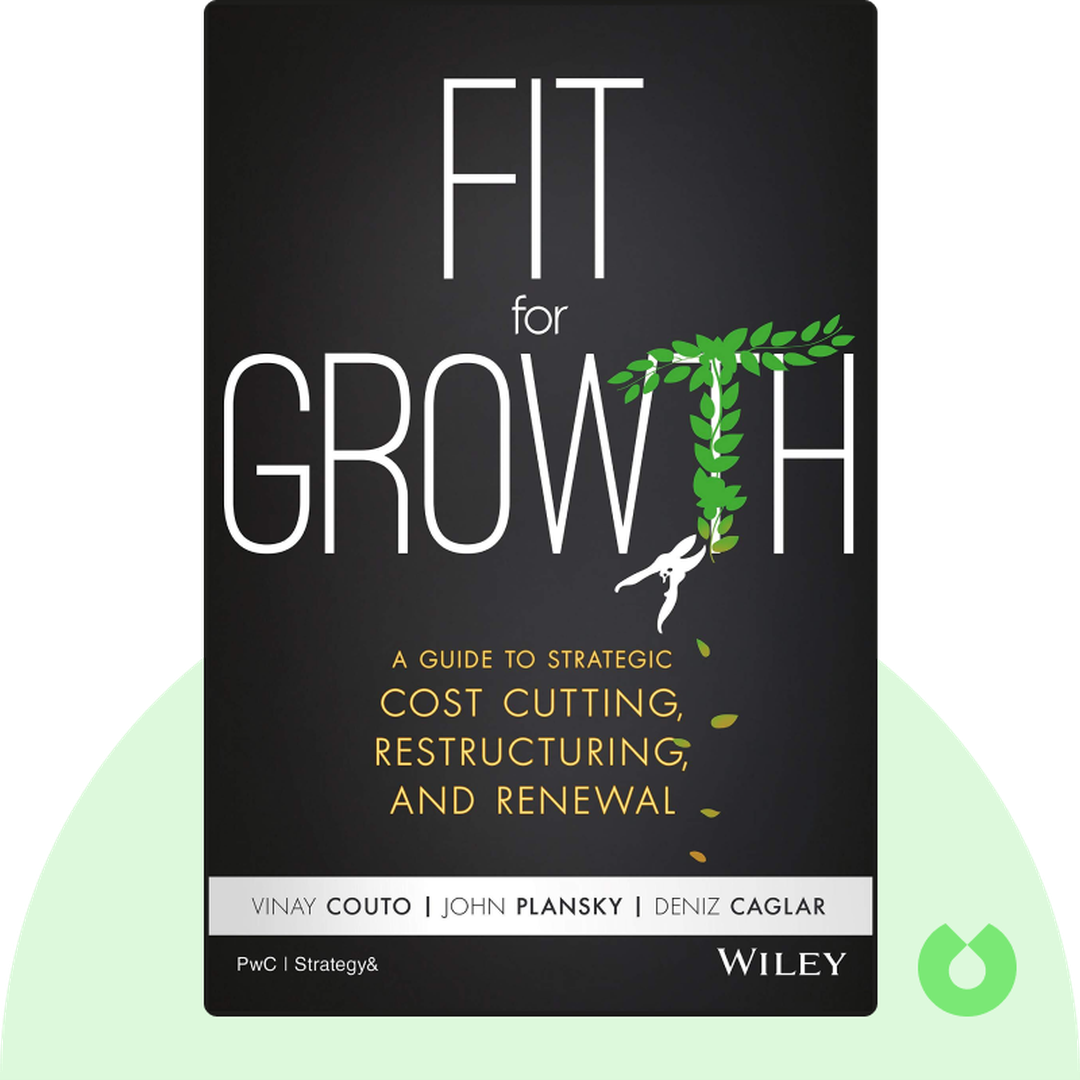
Fit for Growth (2017) explains why cost cutting is crucial to a company’s growth. The authors cover a range of how-tos, from restructuring your organizational model to cutting superfluous business departments and achieving sustainable growth for your company.
Who Should Listen to Fit for Growth?
- Managers looking to cut business costs
- Anyone interested in change-management skills
- Students wishing to pursue a career in management consulting
Books Similar to Fit for Growth
Readers who enjoyed this also liked these titles.