If You're Curious About These Questions...
You should listen to this audiobook
- What’s the secret to building a business that stays "Evergreen" while your competitors struggle with stagnation and declining sales?
- Did you know that most traditional marketing strategies actually sabotage your long-term profitability by focusing on the wrong type of customer growth?
- What if you could transform your customer relationships from simple transactions into a powerful engine for sustainable, long-term success?
Listen to Evergreen — Free Audiobook
Loading player...
Key Takeaways from Evergreen
- Discover how the three Cs—Character, Community, and Content—work together to help your business stay fresh and grow into a truly evergreen company.
- Understand why clearly defining your company's character means communicating why you do what you do, rather than just what you sell.
- Learn how fostering a passionate customer community transforms simple transactions into deep relationships that skyrocket your brand through word of mouth.
- Find out how engaging directly with your audience helps you understand their true needs and builds the kind of loyalty that sustains companies over the long haul.
- Master the art of delivering great 'content' by recognizing that your true offering is the entire, customizable customer experience, not just the physical products on the shelf.
Learning Tools
Reinforce what you learned from Evergreen
Mind Map
Evergreen
The Three Cs Framework+
Customer Intelligence+
Loyalty & Customer Service+
Retention Over Acquisition+
Quiz — Test Your Understanding
Question 1 of 9
What are the 'three Cs' that power an evergreen business according to the book?
Question 2 of 9
When defining a company's 'Character', what question should a business primarily ask itself?
Question 3 of 9
How does the book define the 'Content' of a company?
Question 4 of 9
Instead of viewing customers in terms of averages, the book recommends using the RFM system. What does RFM stand for?
Question 5 of 9
According to the text, which group of customers should an effective loyalty program focus on the most?
Question 6 of 9
Why do companies like Amazon and Sprint occasionally 'fire' their customers?
Question 7 of 9
What is a key insight the book provides regarding lost customers?
Question 8 of 9
What lesson is illustrated by the 'Need a Cake' bakery's Groupon promotion?
Question 9 of 9
How does the author suggest a company handle criticism within its online customer community?
Evergreen — Full Chapter Overview
- 1Recommendation
- 2Character, community, and content are the three Cs behind an evergreen business.
- 3A company’s motivation, values, and beliefs shape its character.
- 4Create deeper customer relationships by building community.
- 5Content includes everything the company does and the value it delivers.
- 6Don’t define customers by averages — learn who they really are.
- 7Design loyalty programs strategically to strengthen customer-company bonds.
- 8Customer service means encouraging loyalty and identifying unprofitable customers.
- 9An evergreen business works to reduce attrition and win back lost customers.
- 10Winning new customers matters less than strengthening relationships with existing ones.
- 11Final summary
Evergreen Summary & Overview
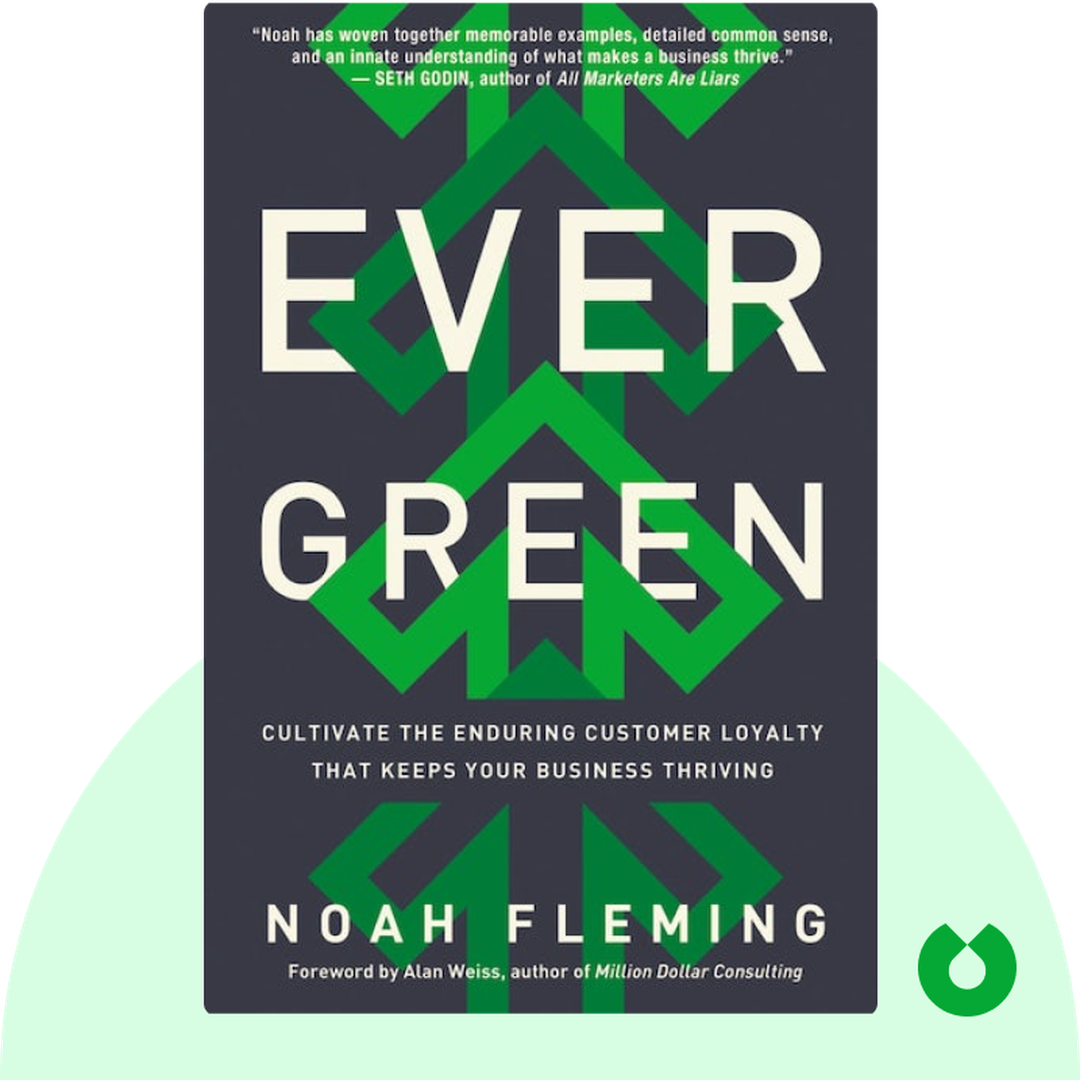
Evergreen (2015) is about keeping your business fresh and staving off stagnation that threatens its survival. Fleming outlines a philosophy that puts customers at the center of a company’s strategy, challenges conventional business wisdom and offers concrete advice for building long-term profitability.
Who Should Listen to Evergreen?
- CEOs and marketing executives at small- and medium-sized businesses who want to rethink their customer relationships
- Sales directors seeking new ideas
- Start-up founders who want to build their business right
Books Similar to Evergreen
Readers who enjoyed this also liked these titles.