If You're Curious About These Questions...
You should listen to this audiobook
- Have you ever wondered how a case of mistaken identity could unlock the secrets of our deeply polarized 'mirror world'?
- Are you curious about the hidden psychological forces that drive us toward conspiracy thinking and political tribalism in the age of social media?
- Did you know that the digital version of yourself might be contributing to a fragmented culture that makes finding common ground feel nearly impossible?
Listen to Doppelganger — Free Audiobook
Loading player...
Key Takeaways from Doppelganger
- Learn how author Naomi Klein’s experience with her conspiracy-theorist doppelganger exposes the dark, chaotic shadow side of personal branding and modern media culture.
- Discover how profit-driven social media algorithms incentivize extreme, polarizing content, turning public discourse into a tribal performance art that destroys nuance.
- Understand the formula behind the modern right-wing meltdown, where social media addiction, narcissism, and public shaming push once-thoughtful figures into dangerous political alliances.
- Explore how contemporary politics has devolved into an uncanny mirror world, where extreme rhetoric from both ends of the spectrum divides society precisely when unity is needed most.
- Find out how mapping these chaotic societal doppelgangers can help us escape the vertigo of a polarized world, recognize hidden threats, and reclaim our collective power.
Learning Tools
Reinforce what you learned from Doppelganger
Mind Map
Doppelganger
The Personal Doppelganger+
Media & Political Mirror World+
Societal Costs of Splintering+
Exiting the Hall of Mirrors+
Quiz — Test Your Understanding
Question 1 of 7
What does Naomi Klein argue is the broader societal significance of her personal experience with a 'doppelganger'?
Question 2 of 7
How did Naomi Wolf appropriate Klein’s concept of 'disaster capitalism' (The Shock Doctrine) during the COVID-19 pandemic?
Question 3 of 7
According to the text, how do social media platforms contribute to the 'hall of mirrors' in contemporary political discourse?
Question 4 of 7
How does Klein humorously summarize the forces that draw figures like her doppelganger into alignment with far-right provocateurs?
Question 5 of 7
What does Klein identify as a damaging trend on the political left that mirrors the polarization seen on the right?
Question 6 of 7
What does Klein mean by the emergence of 'diagonal alliances' in today's political landscape?
Question 7 of 7
Which of the following is a practical step Klein recommends for individuals to help society 'exit the hall of mirrors'?
Doppelganger — Full Chapter Overview
- 1Recommendation
- 2An Uncanny Pair
- 3Through a Dark Mirror
- 4More Shadows and Shades
- 5New Alliances
- 6Leaving the Hall of Mirrors
- 7Final summary
Doppelganger Summary & Overview
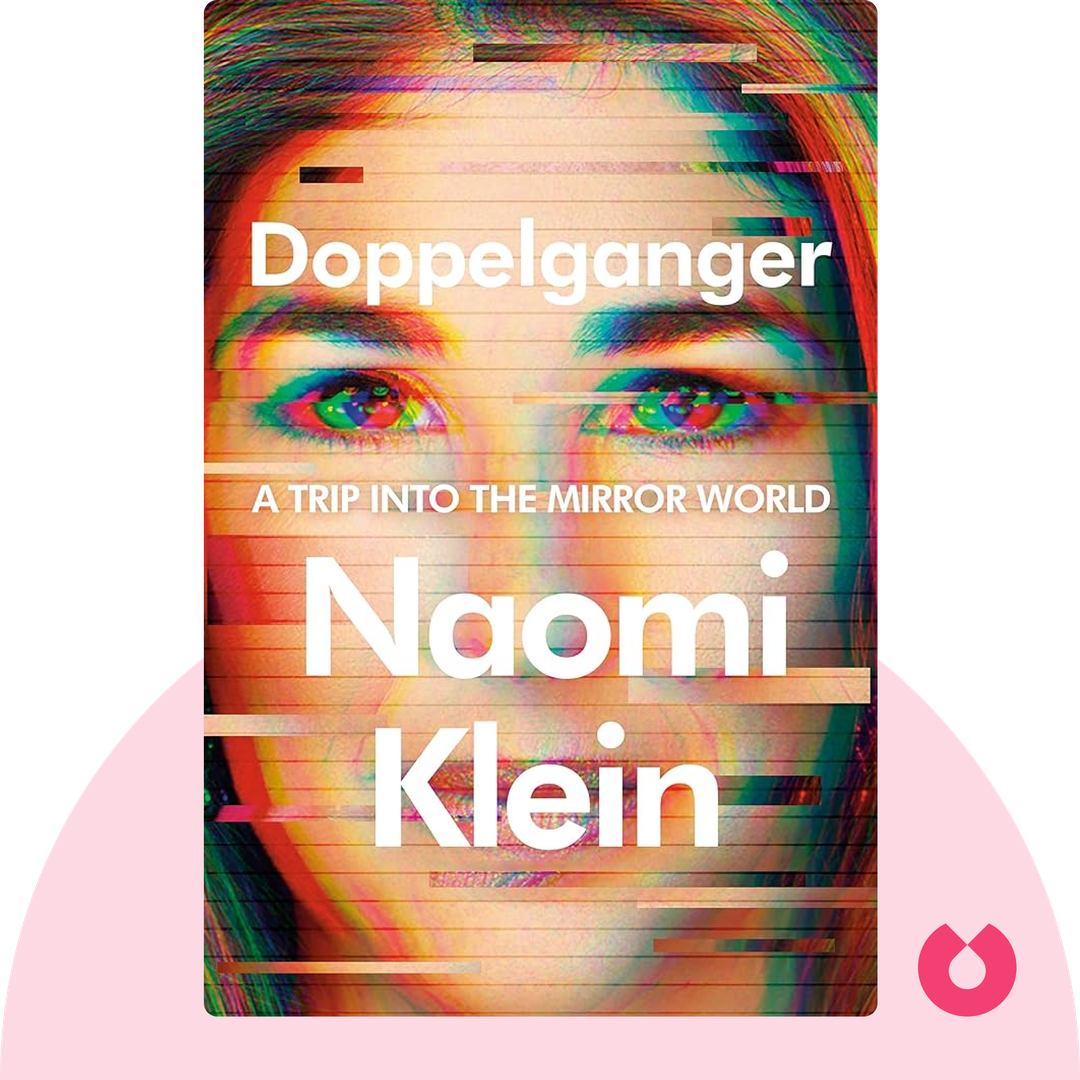
Doppelganger (2023) explores what happened after the author, Naomi Klein, spent years being mistaken for media personality Naomi Wolf, her ideological opposite, and how this bizarre situation provided insight into our polarized era. Blending memoir, analysis, and doppelganger mythology, Klein uses her uncanny experience to investigate the fragmented culture of social media avatars, conspiracy thinking, and political tribalism threatening modern democracies.
Who Should Listen to Doppelganger?
- Those curious about the impacts of social media on society and politics
- Political thinkers concerned with increasing polarization and conspiracy theories
- Anyone seeking insights on how to bridge divides and find common ground in a divided culture
Books Similar to Doppelganger
Readers who enjoyed this also liked these titles.