Theme Song
If You're Curious About These Questions...
You should listen to this audiobook
- How did the UK government weaponize the myth of the 'scrounger' to justify stripping £28 billion from disabled citizens, despite the actual welfare fraud rate being just 0.5 percent?
- What were the fatal flaws in the notorious 'fit-for-work' tests, and how did these assessments paradoxically push vulnerable individuals toward tragedy rather than employment?
- In what ways have severe cuts to social care and a chronic lack of accessible housing forced young disabled Britons into elderly care homes or left them severely trapped in their own apartments?
Listen to Crippled — Free Audiobook
Loading player...
Key Takeaways from Crippled
- The UK's post-2008 austerity policies were a calculated political choice that disproportionately punished disabled people, who faced up to 19 times more financial cuts than average citizens.
- The government justified slashing £28 billion from social welfare by falsely stereotyping disabled people as 'scroungers,' ignoring the reality that disabled individuals face significantly higher daily living costs.
- Punitive 'fit-for-work' tests and unfair benefit sanctions have erroneously stripped vital income from disabled Britons, forcing them into severe poverty, debt, and life-threatening mental health crises.
- Drastic cuts to the NHS and adult social care have robbed disabled people of their independence, denying them essential mobility equipment and even forcing some young adults into elderly care homes.
- A chronic shortage of accessible housing and targeted benefit cuts have left disabled women and children exceptionally vulnerable to homelessness, domestic abuse, and educational exclusion.
Learning Tools
Reinforce what you learned from Crippled
Mind Map
Crippled
The Austerity Agenda+
Poverty and Financial Ruin+
Employment and Sanctions+
Loss of Independence+
The Housing Crisis+
Vulnerable Demographics+
Society's Humanity+
Quiz — Test Your Understanding
Question 1 of 8
How did the UK government primarily justify the severe cuts to disability benefits under the austerity program?
Question 2 of 8
According to the charity Scope, what financial reality contradicts the government's narrative that disabled people are taking advantage of the welfare system?
Question 3 of 8
What was a major consequence of the government's 'fit-for-work' tests?
Question 4 of 8
How have cuts to adult social care affected younger disabled people who require daily support?
Question 5 of 8
Why does the shift toward private rental housing disproportionately harm disabled people in the UK?
Question 6 of 8
What specific challenge do disabled women facing domestic violence frequently encounter in the UK?
Question 7 of 8
How has the austerity program impacted disabled children in the education system?
Question 8 of 8
What does the author conclude about the government's decision to cut billions from social welfare?
Crippled — Full Chapter Overview
- 1Recommendation
- 2The British government’s austerity program has been devastating for disabled people.
- 3Austerity is pushing disabled people in Britain into poverty.
- 4Disabled people face major barriers to finding and keeping work.
- 5Cuts to wheelchair access and social care are stripping disabled people of independence.
- 6The United Kingdom’s severe shortage of accessible housing is costing disabled people dearly.
- 7Disabled women face a range of specific challenges.
- 8Disabled children are being denied the same life chances as their non-disabled peers.
- 9Society risks losing its humanity. Now is the time for change.
- 10Final summary
Crippled Summary & Overview
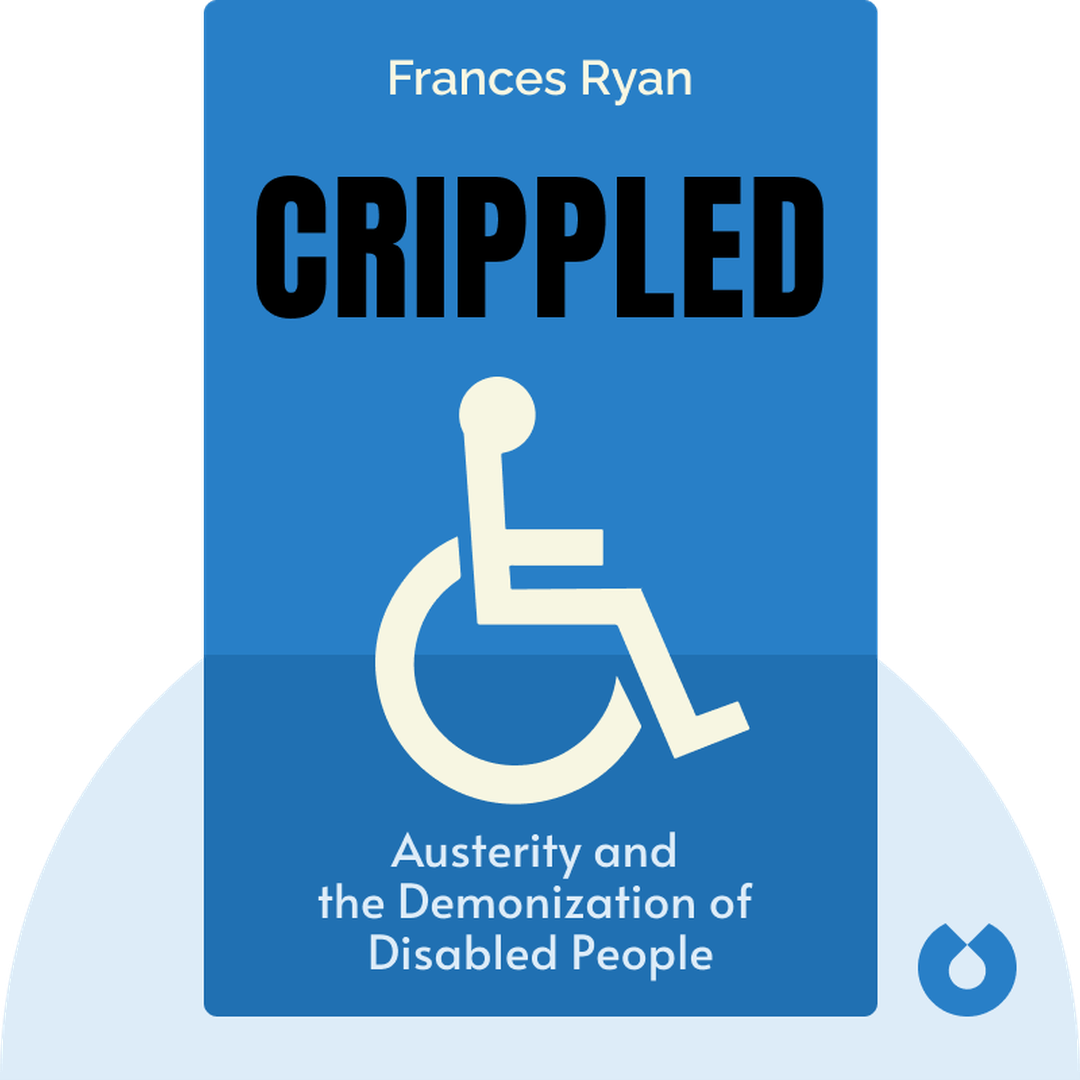
Crippled (2019) examines the treatment of disabled people in Britain’s “age of austerity,” which began in 2010 during David Cameron’s time as prime minister. Journalist Frances Ryan combines devastating case studies with grim statistics as she explains the effects the government’s policies and cuts have had on the people most in need of support.
Who Should Listen to Crippled?
- Equality-minded people interested in disability rights
- Concerned citizens interested in government policy
- Political campaigners
Books Similar to Crippled
Readers who enjoyed this also liked these titles.