If You're Curious About These Questions...
You should listen to this audiobook
- How did a routine opposition research project funded by a Republican billionaire evolve into one of the most explosive national security investigations in modern US history?
- Why did the media initially struggle to verify and publish the shocking claims of the Steele Dossier prior to the 2016 election, while other controversies dominated the headlines?
- Despite the narrow scope of the Mueller report, how did its findings ultimately validate the core warnings of the Fusion GPS investigation regarding foreign election interference?
Listen to Crime in Progress — Free Audiobook
Loading player...
Key Takeaways from Crime in Progress
- Discover how a routine piece of opposition research funded by a conservative publication snowballed into one of the biggest political scandals in modern history.
- Understand why Trump's long history of failed real estate developments, lawsuits, and suspicious financial ties to convicted felons raised massive red flags for private investigators.
- Learn how the investigation shifted to the Democratic Party, leading to the recruitment of former British spy Christopher Steele to uncover overseas intelligence.
- Find out the shocking claims inside the 'Steele Dossier,' which alleged that the Russian government possessed compromising blackmail material, known as kompromat, on the future president.
- Explore the startling geopolitical implications behind the intelligence report, which suggested Putin intentionally cultivated Trump for years to deliberately weaken Western alliances.
Learning Tools
Reinforce what you learned from Crime in Progress
Mind Map
Crime in Progress
Origins of the Investigation+
The Steele Dossier+
The 2016 Election & Media Battle+
The Dossier Goes Public+
Deepening the Investigations+
Retaliation and Legal Troubles+
The Mueller Report and Legacy+
Quiz — Test Your Understanding
Question 1 of 10
Who was Fusion GPS's initial client that funded the opposition research into Donald Trump?
Question 2 of 10
What suspicious business pattern did Fusion GPS uncover early in their investigation of Donald Trump's real estate projects?
Question 3 of 10
Why did Christopher Steele feel compelled to share his initial intelligence findings with the FBI?
Question 4 of 10
How did Trump publicly react to the missing emails from Hillary Clinton's private server during the 2016 campaign?
Question 5 of 10
What event effectively took the media's focus away from the release of the 'Access Hollywood' tape on October 7, 2016?
Question 6 of 10
How did the contents of the Steele Dossier finally reach the general public in January 2017?
Question 7 of 10
After Trump was elected and Fusion GPS lost its political funding, how did the firm manage to continue its investigation?
Question 8 of 10
What remarkable coincidence made Fusion GPS look highly suspicious to Republican investigators Grassley and Nunes?
Question 9 of 10
According to the authors, why didn't the Mueller report recommend criminal charges against President Trump?
Question 10 of 10
What was the ultimate status of the core claims made in the Steele dossier, according to the authors?
Crime in Progress — Full Chapter Overview
- 1Recommendation
- 2One of today’s biggest political stories started as a small opposition research report.
- 3Once Fusion began investigating Trump, they uncovered troubling material.
- 4Working for the Democrats, Fusion brought in former spy Christopher Steele, who soon found shocking intelligence.
- 5Trump and Putin’s mutual admiration grew increasingly obvious, and the FBI began its work.
- 6Despite Fusion’s efforts, the Trump-Russia story failed to catch on in the media, unlike James Comey’s intervention.
- 7When the Trump-Russia story finally drew media attention, it came in a form no one wanted.
- 8In the Trump presidency’s early days, Fusion found a way to keep investigating, and so did the FBI.
- 9Fusion faced serious legal challenges as Trump’s supporters went on the defensive.
- 10As damning as Mueller’s report was, nothing seemed likely to stop a repeat of the alleged 2016 election interference.
- 11Final summary
Crime in Progress Summary & Overview
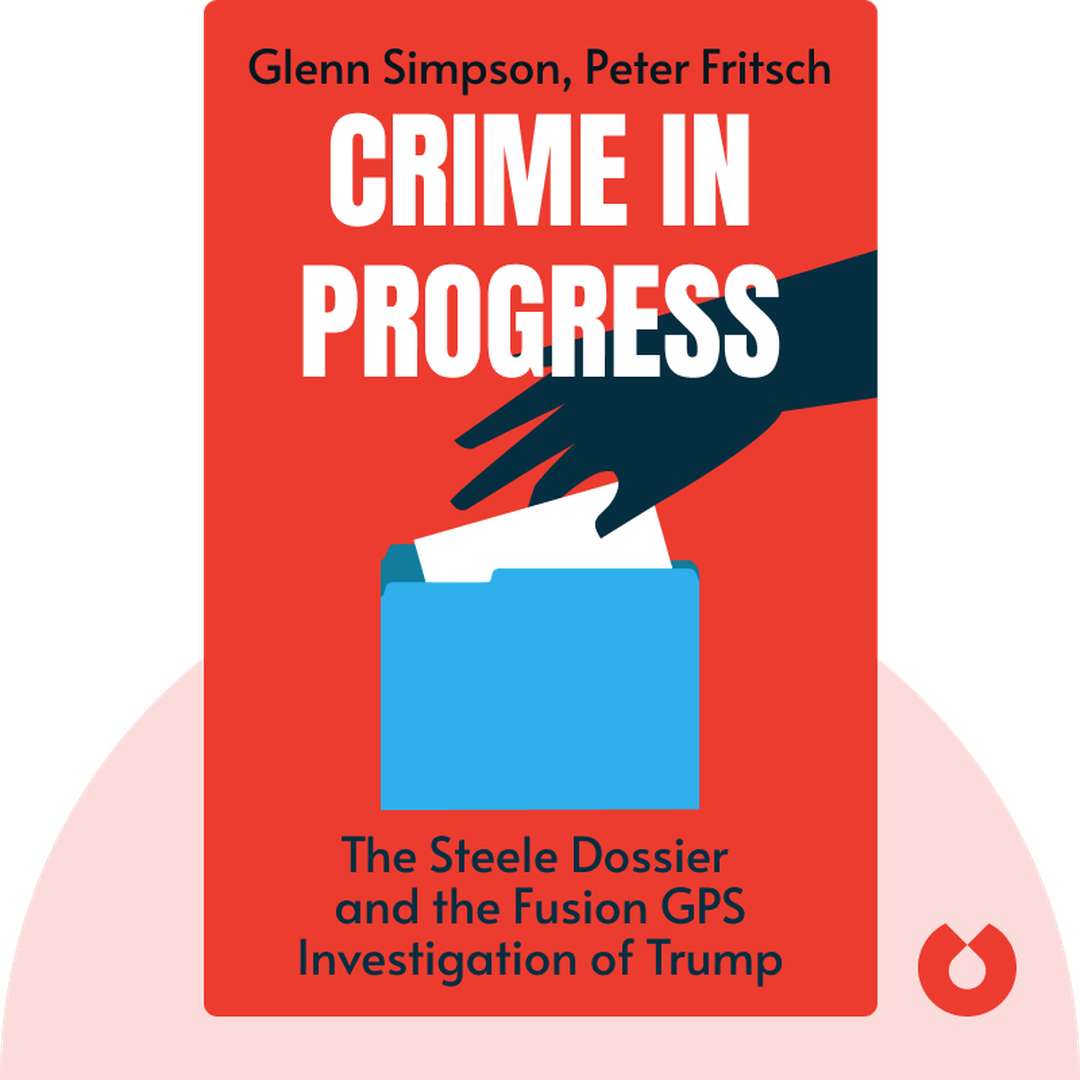
Crime in Progress (2019) is the thrilling inside story of the intelligence agency that first started investigating the links between Donald Trump and Russia. Glenn Simpson and Peter Fritsch of Fusion GPS relate how they commissioned the infamous Steele Dossier, which alleged that the Russians had leverage over Trump, and the astonishing series of events to which this led.
Who Should Listen to Crime in Progress?
- Fans of American politics
- Readers who enjoy a political thriller
- Anyone who’s been glued to the news for the past several years
Books Similar to Crime in Progress
Readers who enjoyed this also liked these titles.