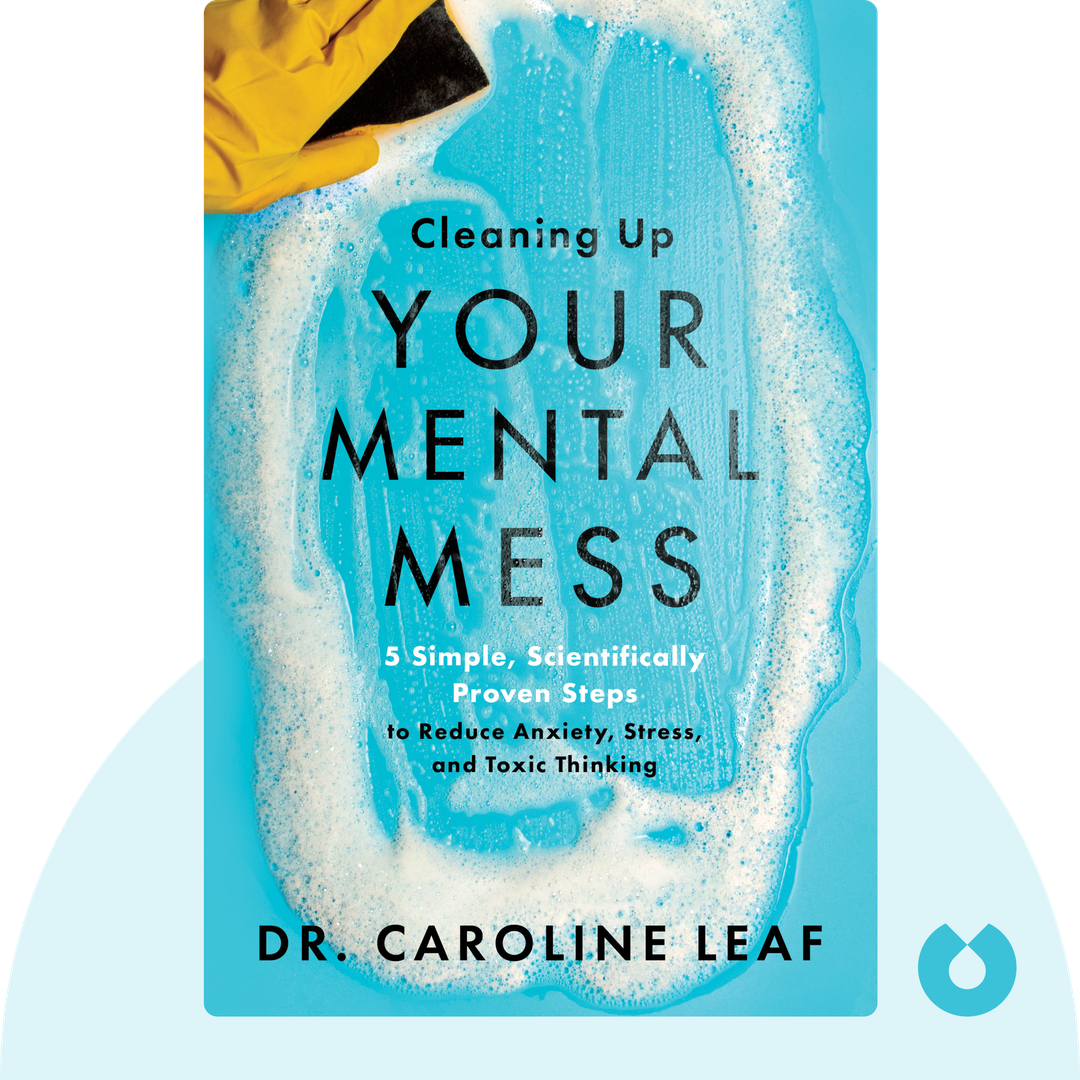
Cleaning Up Your Mental Mess
Start ListeningDownload Try free on iPhoneScan to start in 5 seconds
Categories:
If You're Curious About These Questions...
You should listen to this audiobook
- Did you know that your mind actually has the power to physically rewire your brain and root out the toxic thoughts that hold you back?
- What if you could master a simple five-step process to transform your daily anxiety into a source of peace and mental clarity?
- Have you ever wondered why some negative thoughts seem impossible to shake, and what’s the secret to truly taking control of your mental state for good?
Listen to Cleaning Up Your Mental Mess — Free Audiobook
Loading player...
Key Takeaways from Cleaning Up Your Mental Mess
- Understand how a messy mind filled with toxic stress impacts not just your mental well-being, but your physical health, immunity, and even the gene structure you pass down.
- Discover why true behavioral change requires accessing your nonconscious mind, the powerhouse where concrete thoughts are stored before they influence your subconscious and conscious actions.
- Learn how to use the Neurocycle, a research-backed mind-management tool that reduces depression and anxiety by bringing toxic thoughts into your conscious awareness so you can alter them.
- Master the five foundational steps of the Neurocycle—Gather, Reflect, Write, Recheck, and Active Reach—to effectively embrace, process, and reconceptualize negative emotions into positive actions.
- Find out exactly how to build long-lasting mental resilience by using the Neurocycle method to turn new, positive thoughts into automatic habits over the course of 63 days.
Learning Tools
Reinforce what you learned from Cleaning Up Your Mental Mess
Mind Map
Cleaning Up Your Mental Mess
Impact of a Messy Mind+
How the Mind Works+
The Neurocycle Method+
The 63-Day Habit Timeline+
Brain-Building for Resilience+
Healing from Trauma+
Lifestyle & Daily Habits+
Quiz — Test Your Understanding
Question 1 of 10
According to the book, what is a significant consequence of the toxic stress caused by a 'messy mind'?
Question 2 of 10
In the context of the mind's structure, where are thoughts and memories primarily stored before they trigger physical and emotional signals?
Question 3 of 10
What are the three foundational principles of the Neurocycle?
Question 4 of 10
During the 'Reflect' step of the Neurocycle, what specific technique is recommended to help drill down to the root of your thoughts and feelings?
Question 5 of 10
According to the author's research and a 2010 University College London study, how long does it actually take to form a new habit and move a thought into the nonconscious mind?
Question 6 of 10
What is the recommended protocol for the Neurocycle from day 22 to day 63 of the habit-formation process?
Question 7 of 10
How does the author suggest applying the final step of the Neurocycle (Active Reach) when using the method for 'brain-building' or learning new information?
Question 8 of 10
When using the Neurocycle to heal from trauma, what approach does the author recommend instead of getting stuck wondering *why* the traumatic event happened?
Question 9 of 10
What practice does the author recommend taking during the day to improve blood flow to the brain, clarify thoughts, and ultimately promote better sleep?
Question 10 of 10
What actionable advice does the book give for the very beginning of your day to prevent a negative mindset?
Cleaning Up Your Mental Mess — Full Chapter Overview
- 1Recommendation
- 2Managing your mind is essential for a healthy lifestyle.
- 3You can change your thoughts by tapping into the nonconscious mind.
- 4Embracing, processing, and reconceptualizing form the foundation of the Neurocycle.
- 5The Neurocycle method turns new thoughts into habits over 63 days.
- 6Use mind management to strengthen the brain and build resilience.
- 7The Neurocycle can help us recover from trauma.
- 8You can use mind management to improve your sleep, eating, and exercise habits.
- 9Final summary
Cleaning Up Your Mental Mess Summary & Overview
Cleaning Up Your Mental Mess (2021) presents a scientifically backed strategy for rooting out toxic thoughts. It breaks down the principles and tools of the Neurocycle – a mind-management process that changes toxic thoughts and their related behaviors into positive thinking and habits.
Who Should Listen to Cleaning Up Your Mental Mess?
- Those looking to take control of their mental state
- People grappling with the effects of trauma
- Anyone curious about how the mind and brain are connected
Books Similar to Cleaning Up Your Mental Mess
Readers who enjoyed this also liked these titles.