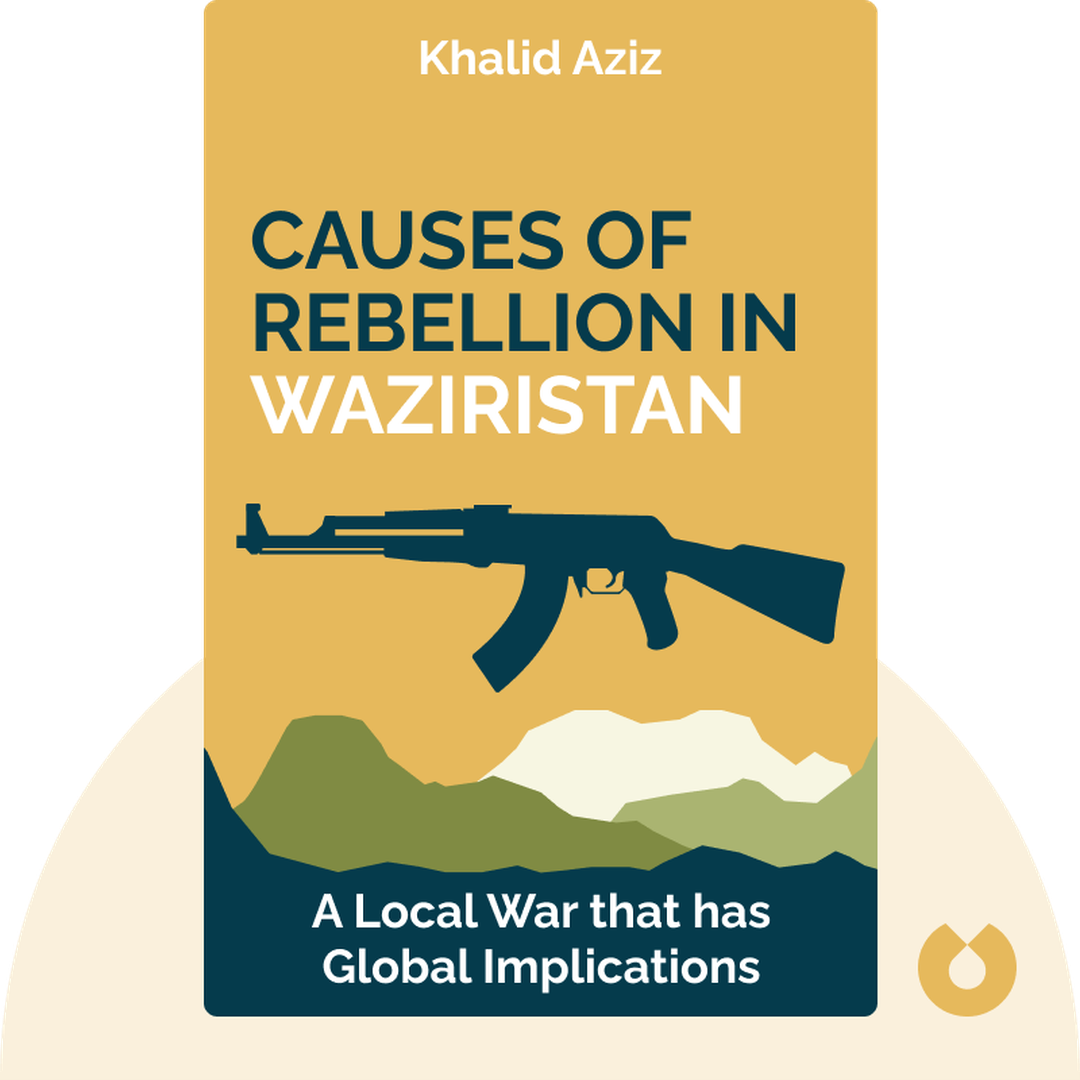
Causes of Rebellion in Waziristan
Start ListeningDownload Try free on iPhoneScan to start in 5 seconds
Categories:
If You're Curious About These Questions...
You should listen to this audiobook
- Have you ever wondered why a tiny, rugged region like Waziristan holds such a massive geopolitical influence over the entire global stage?
- Did you know that specific, overlooked political factors are what truly transformed this territory into a notorious hotbed of international insurrection?
- Are you curious about what it would actually take to stabilize one of the most volatile regions in South Asia and end the cycle of rebellion forever?
Listen to Causes of Rebellion in Waziristan — Free Audiobook
Loading player...
Key Takeaways from Causes of Rebellion in Waziristan
- Discover why the 5,000-square-mile tribal region of Waziristan serves as a critical geopolitical stronghold and safe haven for Taliban forces attacking Afghanistan.
- Understand the debated motives behind US-led interventions in South Asia and how foreign presence inadvertently fuels insurgent recruitment among the Wazir tribes.
- Learn how the Pakistani military's refusal to admit its early shortcomings led to a disastrous 2006 power-ceding deal that tripled terrorist attacks on US forces.
- Grasp the complex dynamics of asymmetrical warfare, where local insurgents leverage unconventional tactics and deep territorial knowledge to outmaneuver traditional armies.
- Explore how insurgents violently enforce strict religious rules on local citizens, proving that this conflict is ultimately an ideological battle for the minds of the public.
Learning Tools
Reinforce what you learned from Causes of Rebellion in Waziristan
Mind Map
Causes of Rebellion in Waziristan
Strategic Geopolitics+
Impact of Regional Conflicts+
Pakistani Military Failures+
The Asymmetrical War of Belief+
Solutions and Social Reforms+
Quiz — Test Your Understanding
Question 1 of 6
Why is Waziristan considered a key geopolitical territory for groups like the Taliban?
Question 2 of 6
According to the text, what alternative theory is often proposed regarding the United States' motivation for attacking Afghanistan?
Question 3 of 6
What was the direct consequence of the Pakistani military cutting deals with the Taliban and Wazir tribes in 2006?
Question 4 of 6
Why does the author describe the conflict in Waziristan as an 'asymmetrical' war?
Question 5 of 6
According to the book, what is the ultimate goal of the Taliban's strict enforcement of rules and sharia law in Waziristan?
Question 6 of 6
Which of the following is proposed as a necessary step toward stabilizing Waziristan's social and political issues?
Causes of Rebellion in Waziristan — Full Chapter Overview
- 1Recommendation
- 2The little-known region of Waziristan is a strategic hub for the Taliban and jihadists.
- 3The many wars and conflicts in South Asia have pulled in numerous nations.
- 4The Pakistani military failed to admit its shortcomings in Waziristan until it was too late.
- 5The war in Waziristan is a battle of belief, with religious rules imposed on the region’s citizens.
- 6Waziristan’s social problems and tensions with Afghanistan must be addressed.
- 7Final summary
Causes of Rebellion in Waziristan Summary & Overview
Causes of Rebellion in Waziristan (2015) takes the reader on a journey into the rocky terrain of this tiny South Asian region whose geopolitical influence reaches far beyond Afghanistan and Pakistan. These blinks explore how the region became such a hotbed of insurrection and what can be done about it.
Who Should Listen to Causes of Rebellion in Waziristan?
- Anyone interested in international politics
- Those looking for more background about the conflicts and wars in South and Central Asia
Books Similar to Causes of Rebellion in Waziristan
Readers who enjoyed this also liked these titles.