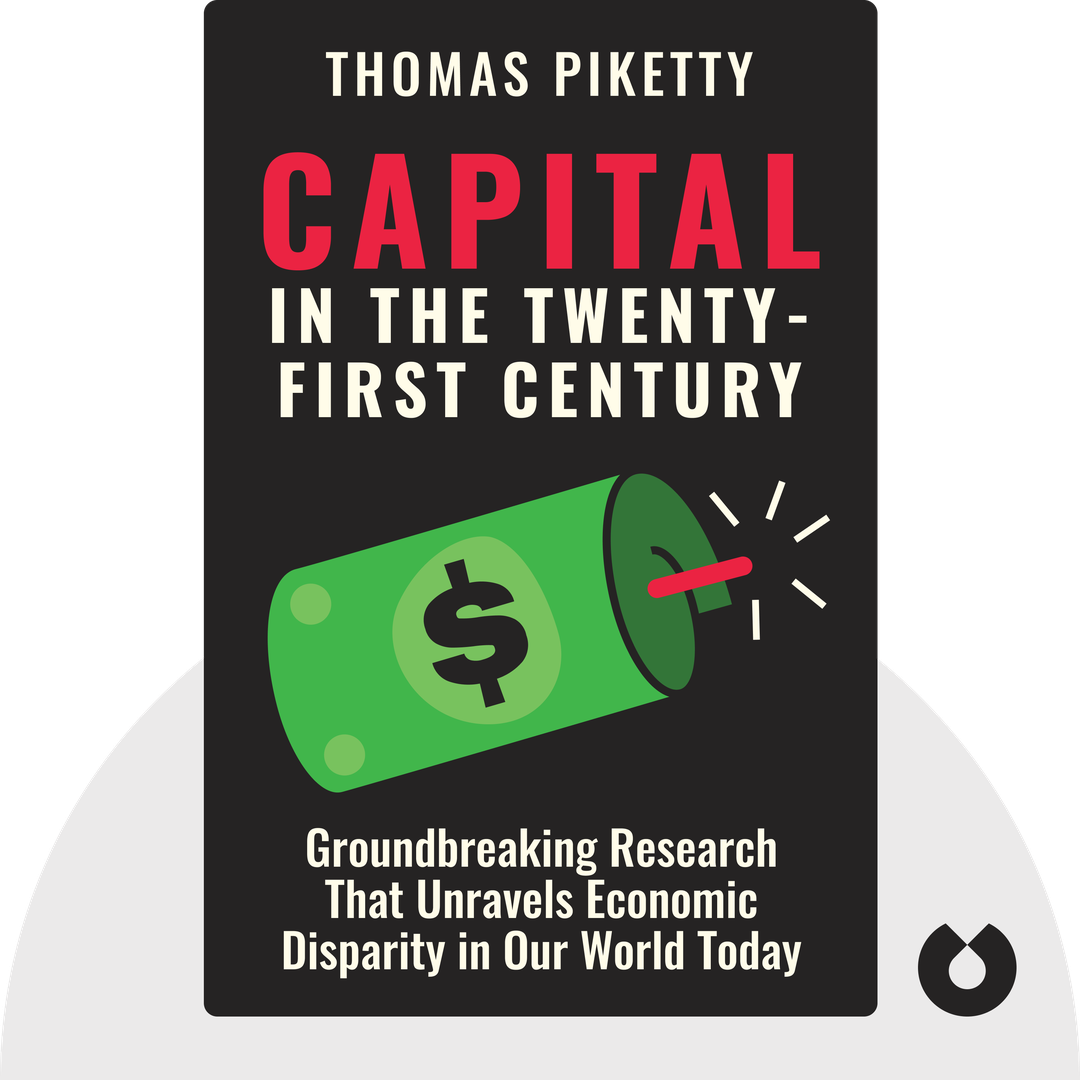
Capital in the Twenty-First Century
Start ListeningDownload Try free on iPhoneScan to start in 5 seconds
Categories:
If You're Curious About These Questions...
You should listen to this audiobook
- Did you know there is a fundamental mathematical law that explains why wealth inequality is almost guaranteed to grow in a capitalist system?
- Have you ever wondered if we are returning to an era where inherited fortune matters far more than individual talent and hard work?
- Are you curious about why the relatively equal economy of the mid-20th century may have been a historical fluke rather than the new normal?
Listen to Capital in the Twenty-First Century — Free Audiobook
Loading player...
Key Takeaways from Capital in the Twenty-First Century
- Understand the fundamental economic principle of r > g to see exactly why the rate of return on capital historically outpaces general economic growth.
- Learn why assets that yield income without labor compound faster than the broader economy, giving initial capital owners a drastic advantage over those relying solely on hard work.
- Discover how the continuous concentration of inherited wealth threatens our modern ideals of meritocracy. Find out why inherited capital frequently overshadows individual talent and innovation in determining economic success.
- Grasp the profound societal implications of the widening wealth gap. Understand how unchecked capital concentration dictates political influence, restricts opportunities, and alters our fundamental social contract.
- Explore the proposed solution of implementing a progressive global tax on capital to rebalance the economic scales. Learn how redistributing resources from the largest wealth holders can pave the way for a fairer, more equitable future.
Learning Tools
Reinforce what you learned from Capital in the Twenty-First Century
Mind Map
Capital in the Twenty-First Century
Core Principle: r > g+
Inheritance vs. Meritocracy+
The Orchard Allegory+
Corrective Measures+
Quiz — Test Your Understanding
Question 1 of 4
According to Thomas Piketty's findings, what is the primary driver of increasing wealth inequality in the long run?
Question 2 of 4
In the book's allegory of the apple orchard, what does Alice’s mature, high-yielding tree represent compared to Bob's younger tree?
Question 3 of 4
According to the text, what is a major societal consequence when inherited wealth continuously compounds over generations?
Question 4 of 4
What potential solution does Piketty propose to ensure a more equitable economic landscape and recalibrate the balance of wealth?
Capital in the Twenty-First Century — Full Chapter Overview
- 1Recommendation
- 2When capital grows faster than the economy
- 3Inheritance versus talent
- 4Final summary
Capital in the Twenty-First Century Summary & Overview
Capital in the Twenty-First Century (2013) offers a deep dive into the historical trends and dynamics of income and wealth inequality. Drawing from centuries of data, it examines how capital concentration perpetuates inequality and proposes bold solutions to address this growing divide.
Who Should Listen to Capital in the Twenty-First Century?
- Economists studying wealth dynamics
- Those who would like to contextualize modern economic issues with historical data
- Advocates for social justice and economic equality
Books Similar to Capital in the Twenty-First Century
Readers who enjoyed this also liked these titles.