If You're Curious About These Questions...
You should listen to this audiobook
- Have you ever wondered why some people thrive under intense pressure while others crumble, and how you can train your brain to be one of the elite performers?
- Did you know that the same psychological "boost" used by world-class athletes can be the secret weapon for success in the corporate boardroom?
- What if you could master the hidden mental habits that allow top-tier athletes to maintain focus and confidence even when the stakes are at their highest?
Listen to Boost! — Free Audiobook
Loading player...
Key Takeaways from Boost!
- Discover how setting highly specific, incremental short-term goals can dramatically improve your motivation and help you conquer massive long-term objectives.
- Learn how leaders can elevate a team's overall performance and create a 'self-fulfilling prophecy' by strategically boosting their expectations and self-confidence.
- Understand how to conquer performance anxiety by systematically building self-confidence through vicarious observation and low-pressure, firsthand experiences.
- Master a four-step process for breakthrough innovation by experimenting with unorthodox, counterintuitive ideas rather than relying strictly on conventional rationality.
- Find out how the proven, high-performance techniques of Olympic sports psychology can be seamlessly applied to boost morale and productivity in your everyday workplace.
Learning Tools
Reinforce what you learned from Boost!
Mind Map
Boost!
Goal Setting+
Confidence & Expectations+
Innovation Process+
Team Cohesion+
Team Hierarchy+
Effective Leadership+
Mental Techniques+
Quiz — Test Your Understanding
Question 1 of 7
How did Olympic swimmer John Naber successfully use goal-setting to win gold and set a world record?
Question 2 of 7
According to the book, what is the most powerful method for a leader to boost a team member's self-confidence?
Question 3 of 7
What does Richard Douglas Fosbury’s creation of the 'Fosbury Flop' demonstrate about the nature of innovation?
Question 4 of 7
The success of the 1970s Bayern Munich soccer team illustrates which important concept about team dynamics?
Question 5 of 7
When is a 'flat' hierarchical structure most appropriate for a team?
Question 6 of 7
How should an effective leader adapt their communication style based on the environment, according to the basketball coach example?
Question 7 of 7
When using visualization to improve performance, what should be the primary focus of your mental imagery?
Boost! — Full Chapter Overview
- 1Recommendation
- 2Boost motivation and productivity by setting specific goals.
- 3Leaders can achieve better results by raising players’ confidence and expectations.
- 4Innovation is a process of testing unconventional and unusual ideas.
- 5The most successful teams are tightly cohesive.
- 6Effective teams have a clear hierarchy.
- 7Effective leaders are humble, constantly improving, and flexible in their methods.
- 8Visualizing a task in vivid detail can improve your performance.
- 9Final summary
Boost! Summary & Overview
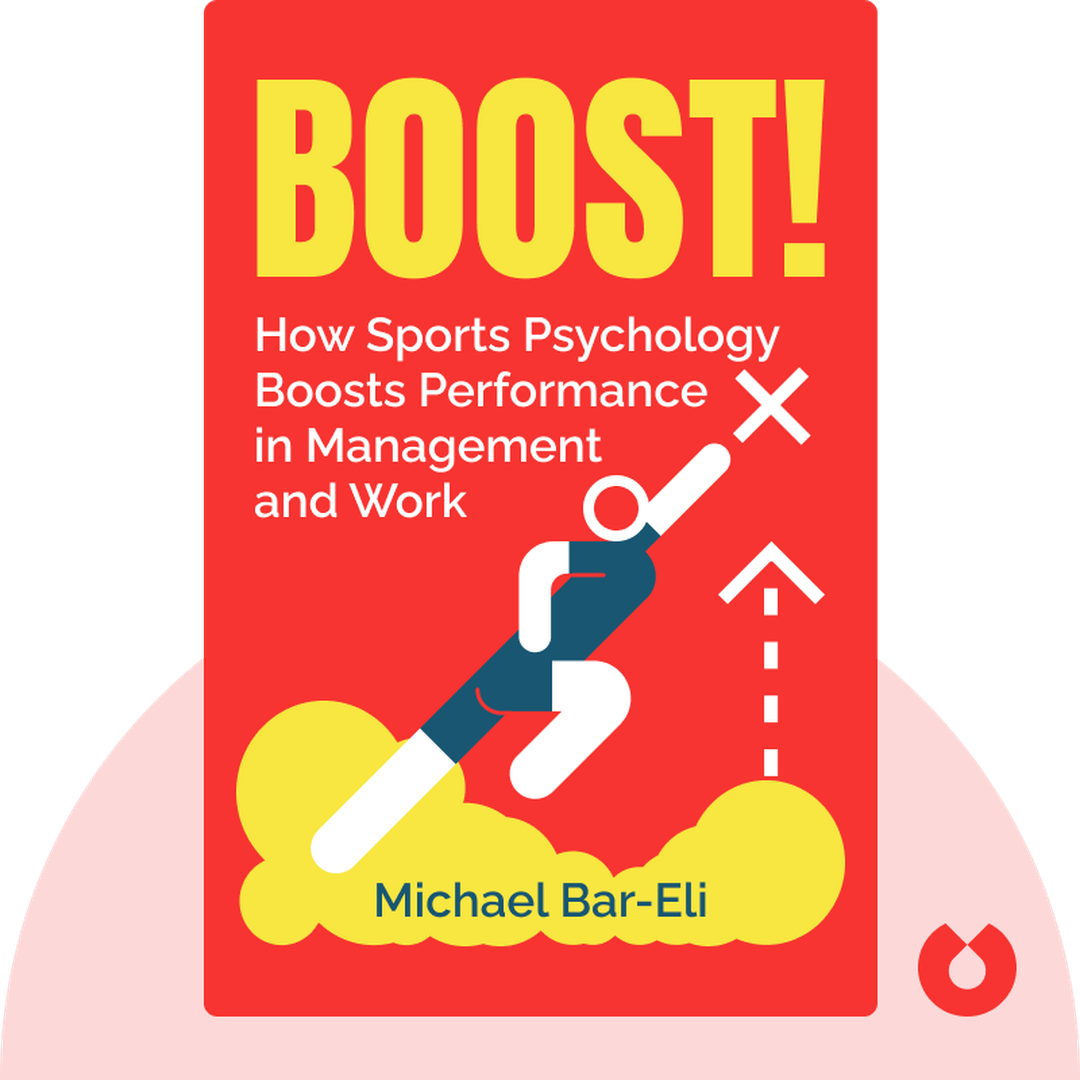
In his book Boost! (2017), author Michael Bar-Eli uses decades of experience with world-class athletes, and the many hard-won lessons he’s learned along the way, to explain the dynamic power of sports psychology. The author not only shows how athletes can use psychology to their advantage, but how this element can be used to improve the performance of any team player, whether on the court or in the office.
Who Should Listen to Boost!?
- Leaders and aspiring leaders
- Readers interested in how psychology can improve performance
- Athletes and former athletes
Books Similar to Boost!
Readers who enjoyed this also liked these titles.