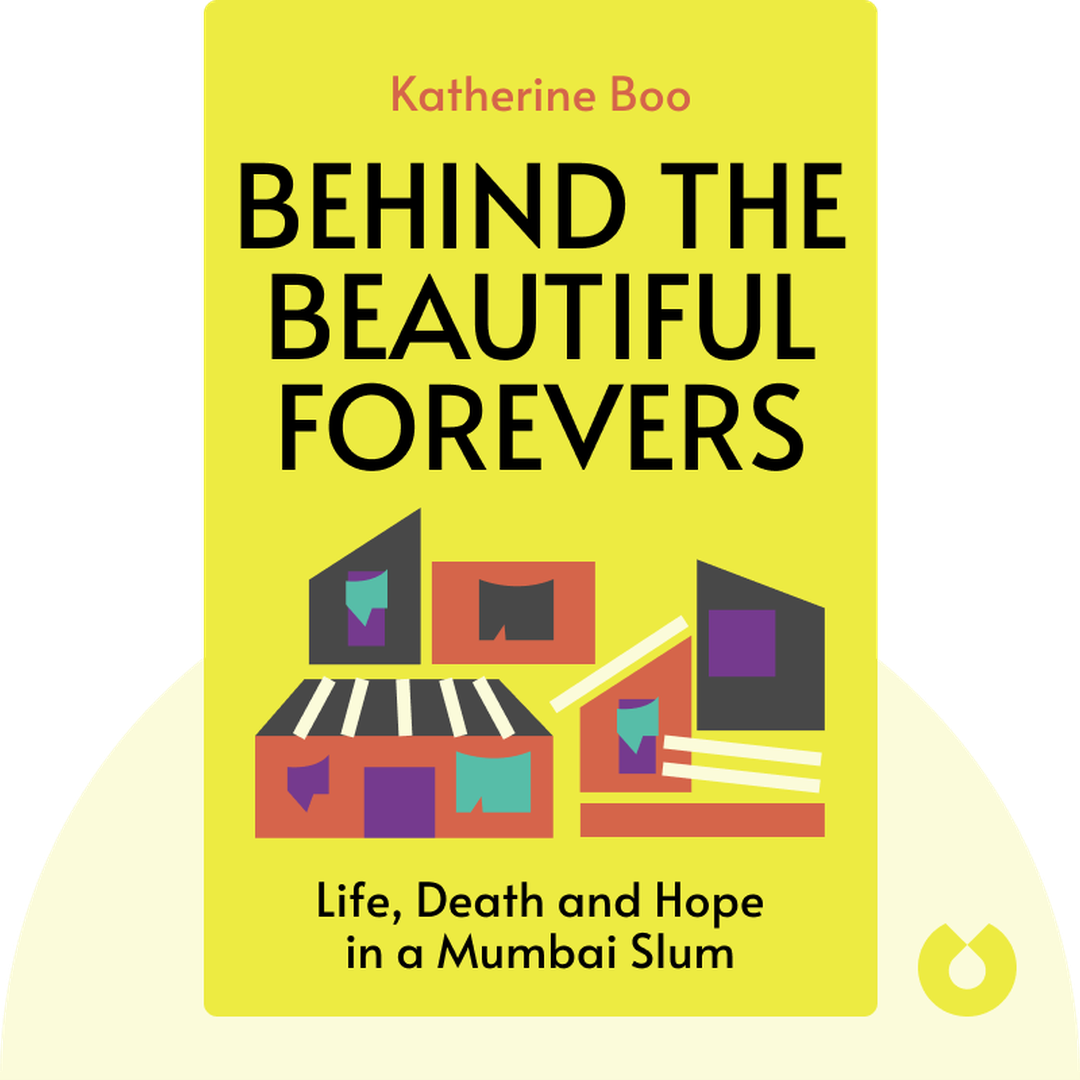
Behind the Beautiful Forevers
Start ListeningDownload Try free on iPhoneScan to start in 5 seconds
Categories:
If You're Curious About These Questions...
You should listen to this audiobook
- Have you ever wondered what life is really like just steps away from the luxury hotels of Mumbai’s international airport?
- Did you know that in the world’s most crowded slums, the difference between a future and a tragedy often rests on a pile of recycled trash?
- Are you curious about the hidden cost of corruption and how it shapes the survival of those dreaming of a way out?
Listen to Behind the Beautiful Forevers — Free Audiobook
Loading player...
Key Takeaways from Behind the Beautiful Forevers
- Discover how the smallest coincidence, like a minor neighborhood dispute, can completely destroy a family's hard-earned savings and dreams of escaping poverty.
- Understand the devastating health impact of Annawadi's unsanitary conditions, where sewage lakes, rampant rat bites, and toxic dust breed deadly diseases.
- Learn why marginalized slum dwellers lack basic human rights, driving severely injured child workers to apologize to employers and leaving residents vulnerable to police extortion.
- See how systemic corruption exploits the poor at every turn, transforming charitable programs into scams and forcing residents to pay bribes just to exercise their right to vote.
- Find out how public healthcare systems fail the most vulnerable, with corrupt medical staff stealing state-provided medicine only to extort desperate and dying patients.
Learning Tools
Reinforce what you learned from Behind the Beautiful Forevers
Mind Map
Behind the Beautiful Forevers
Fragility of Dreams+
Disease & Environment+
Absence of Human Rights+
Systemic Corruption+
Perils of Childhood+
Exploitation & Apathy+
Illusion of Education+
Despair & Suicide+
Quiz — Test Your Understanding
Question 1 of 10
What triggers the sequence of events that ruins the Husain family's dream of moving to a legal settlement?
Question 2 of 10
According to the text, what is a major cause of the spread of tuberculosis among the residents of Annawadi?
Question 3 of 10
Why does the young boy who loses his hand in a garbage shredder apologize to his employer?
Question 4 of 10
Why do the residents of Annawadi place such a high value on voting in elections?
Question 5 of 10
How do medical staff at the public hospital financially exploit patients like Fatima?
Question 6 of 10
Why does the doctor change Fatima's medical records to show she had 95 percent burns instead of 35 percent?
Question 7 of 10
How does Devo's mother react when he is hit by a car and returns home covered in blood?
Question 8 of 10
What is Asha's primary motivation for running the Bridge School and engaging with government officials?
Question 9 of 10
Which of the following best describes the outcome of Manju's efforts to get a college education?
Question 10 of 10
What drives the orphan Sanjay to commit suicide by drinking rat poison?
Behind the Beautiful Forevers — Full Chapter Overview
- 1Recommendation
- 2In Annawadi, even the smallest coincidence can derail your attempt to build a better life.
- 3Disease and illness plague the slum because of unsanitary conditions.
- 4Slum residents have few, if any, basic human rights.
- 5In the slum, corruption is widespread and bribes are required for everything.
- 6Even health-care workers demand bribes and deliver inadequate treatment.
- 7The slum is an especially unsafe place for children.
- 8Many slum residents either exploit others or turn away from their suffering.
- 9Many slum residents strive for an education, but it often leads nowhere.
- 10For some, suicide seems like the only escape from the misery of the slums.
- 11Final summary
Behind the Beautiful Forevers Summary & Overview
Behind the Beautiful Forevers describes life in the Annawadi slum in India, close to Mumbai’s international airport. These blinks tell the story of families who live in squalid conditions but still dream of a better life, even though the odds are overwhelmingly against them.
Who Should Listen to Behind the Beautiful Forevers?
- Anyone who wants to know about life in the slums of Mumbai
- Anyone who liked the movie Slumdog Millionaire
- Anyone who wants to understand the damage caused by corruption
Books Similar to Behind the Beautiful Forevers
Readers who enjoyed this also liked these titles.