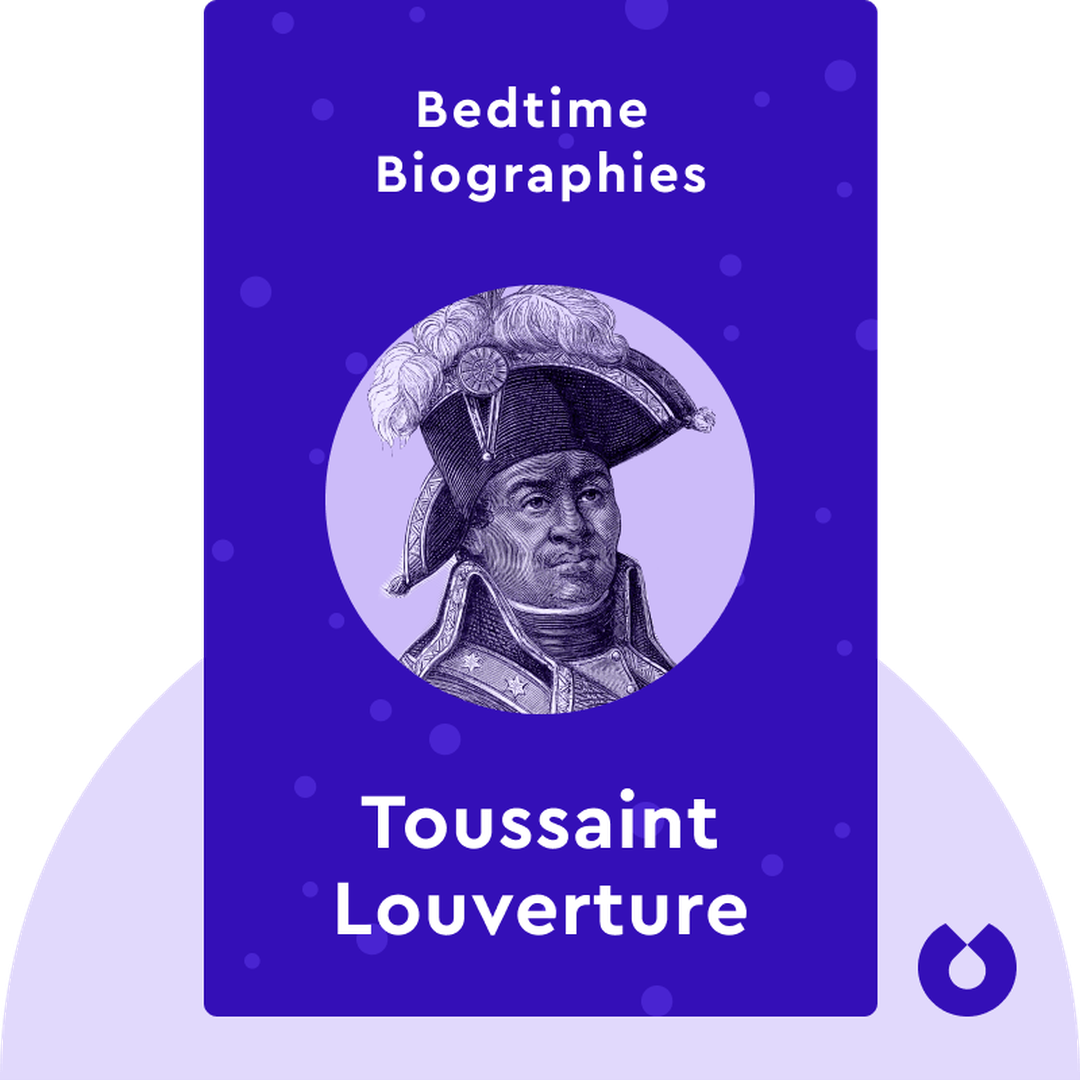
Bedtime Biography: Black Spartacus
Start ListeningDownload Try free on iPhoneScan to start in 5 seconds
Categories:
If You're Curious About These Questions...
You should listen to this audiobook
- Did you know that a man born into slavery managed to outmaneuver the most powerful empires of the 18th century to lead the first successful slave rebellion in history?
- Have you ever wondered what secret strategies allowed Toussaint Louverture to transform an oppressed population into a revolutionary force that could challenge the mighty French army?
- Are you curious about how one visionary leader defied every social boundary of his time to rise from a plantation and change the course of global history forever?
Listen to Bedtime Biography: Black Spartacus — Free Audiobook
Loading player...
Key Takeaways from Bedtime Biography: Black Spartacus
- Discover how Toussaint Louverture defied history by leading the first and only slave revolt to successfully overthrow a ruling regime and maintain its freedom.
- Learn how Toussaint overcame severe childhood sickness through sheer determination, transforming from a fragile boy into an exceptionally strong and confident leader.
- Understand the unique blend of Catholic teachings, Enlightenment philosophies, and African heritage that shaped Toussaint's resolute personality and profound sense of self-worth.
- Find out how Toussaint leveraged his rare status as a free Black man to protect his enslaved family while quietly nurturing a deep resolve to dismantle the institution of slavery.
- Explore how Toussaint strategically allied with the Spanish to secure military aid, fueling his uncompromising crusade for the complete emancipation of all enslaved people in Saint-Domingue.
Learning Tools
Reinforce what you learned from Bedtime Biography: Black Spartacus
Mind Map
Bedtime Biography: Black Spartacus
Early Life & Slavery+
The Revolution+
Statesmanship & Unification+
Invasion, Capture & Legacy+
Quiz — Test Your Understanding
Question 1 of 8
What made Toussaint Louverture's rebellion historically unique compared to other slave revolts throughout history?
Question 2 of 8
Despite gaining his own freedom in 1776, why did Toussaint choose to remain working at the Bréda plantation?
Question 3 of 8
Why did Toussaint eventually cut ties with his Spanish allies and join forces with the French republicans in 1794?
Question 4 of 8
Which of the following best describes Toussaint's military leadership style during the conflicts of the 1790s?
Question 5 of 8
How did Toussaint attempt to rebuild Saint-Domingue's damaged economy in 1799?
Question 6 of 8
What was Toussaint's primary motivation for invading the eastern half of the island (Santo Domingo) in 1800?
Question 7 of 8
What was Toussaint's initial military strategy when Napoleon's forces, led by General Leclerc, invaded the island in 1802?
Question 8 of 8
What ultimately happened to Toussaint Louverture at the end of his life?
Bedtime Biography: Black Spartacus — Full Chapter Overview
- 1Recommendation
- 2Chapter One
- 3Chapter Two
- 4Chapter Three
- 5Chapter Four
- 6The Conclusion
Bedtime Biography: Black Spartacus Summary & Overview
Narrated Valeri Ross
Music by Federico Coderoni
Black Spartacus (2020) tells the story of Toussaint Louverture, one of the leading figures in the Haitian Revolution in the late eighteenth century. It explores how Louverture, a man born into slavery, managed to overcome his position in society to lead the enslaved people of Haiti to first their freedom and then their independence from France. It was the first successful slave rebellion in history.
Who Should Listen to Bedtime Biography: Black Spartacus?
- Students of postcolonial history
- People who want to be inspired by figures in history
- Anyone interested in the history of Haiti or the Americas
Books Similar to Bedtime Biography: Black Spartacus
Readers who enjoyed this also liked these titles.