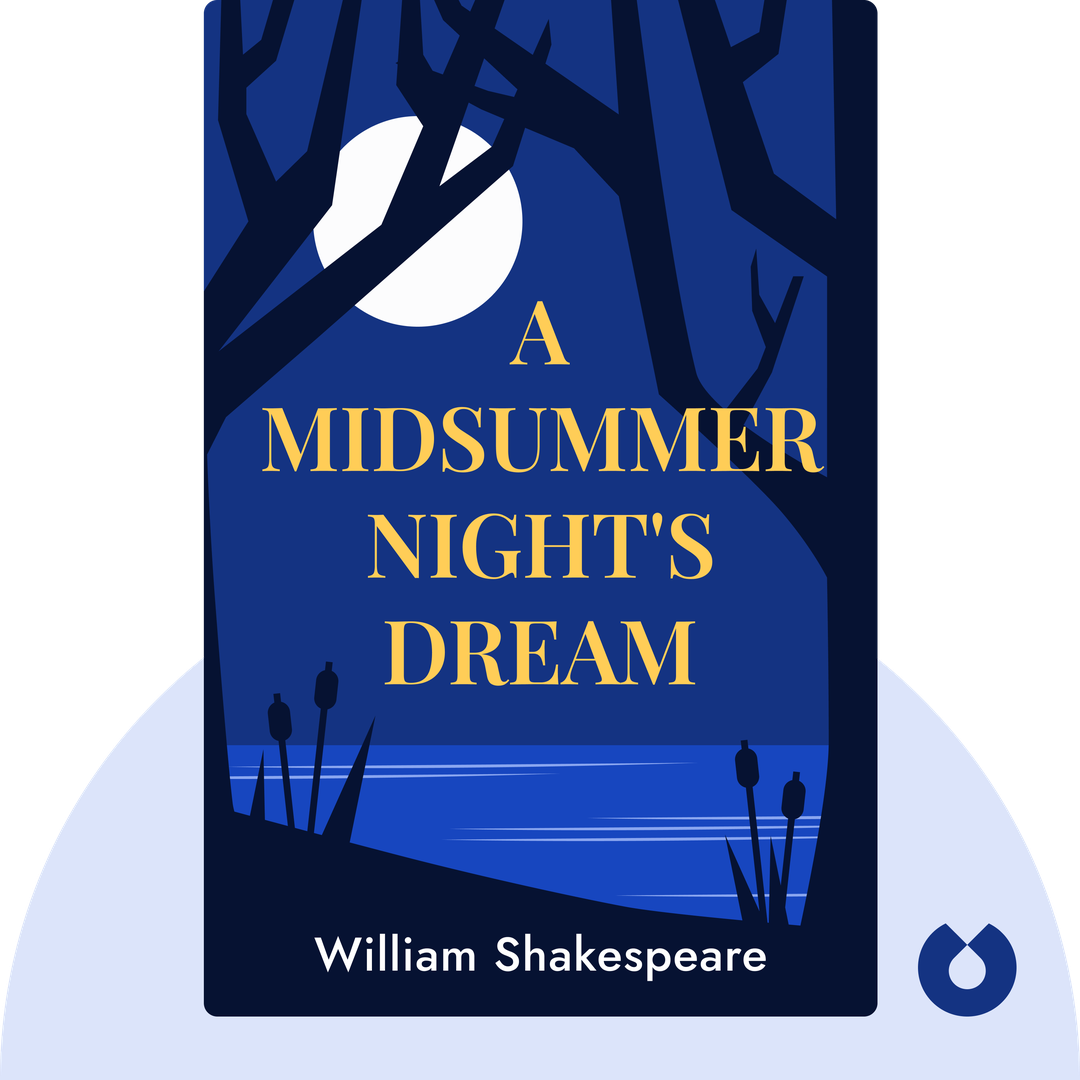
Theme Song
A Midsummer Night's Dream
Start ListeningDownload Try free on iPhoneScan to start in 5 seconds
Categories:
If You're Curious About These Questions...
You should listen to this audiobook
- Have you ever wondered why love so often defies logic, and what a moonlit forest full of mischief can teach us about the unpredictable nature of our own hearts?
- What's the secret to understanding the complex dance of human desire that Shakespeare hid within a world of magical fairies and romantic confusion?
- What if you could finally crack the code of Shakespeare’s most whimsical masterpiece and discover why its insights into human behavior are still so relevant today?
Listen to A Midsummer Night's Dream — Free Audiobook
Loading player...
Key Takeaways from A Midsummer Night's Dream
- Understand how Shakespeare structures his comedic world by expertly contrasting the noble Athenians, the working-class laborers, and the magical fairies.
- Discover how the harsh, life-or-death stakes of Athenian law force the young lovers to flee, transforming a simple romance into a desperate escape.
- Explore how Shakespeare uses a comical play-within-a-play to mirror the main plot and foreshadow his tragic masterpiece, Romeo and Juliet.
- Learn how a magical, Cupid-struck flower becomes the ultimate agent of chaos, turning unrequited love into a tangled love quadrangle through Puck's mistaken identity.
- Appreciate the lyrical brilliance of Shakespeare's early career, where rhyming verse and lighthearted farce combine to create his most accessible and widely appealing comedy.
Learning Tools
Reinforce what you learned from A Midsummer Night's Dream
Mind Map
A Midsummer Night's Dream
Story & Structure+
Key Themes & Insights+
Quiz — Test Your Understanding
Question 1 of 8
Why is 'A Midsummer Night's Dream' often considered one of Shakespeare's most accessible works?
Question 2 of 8
What ultimatum does Duke Theseus give Hermia regarding her refusal to marry Demetrius?
Question 3 of 8
The amateur actors, such as Nick Bottom, represent which distinct societal group in the play's layered world?
Question 4 of 8
What is the root cause of the initial conflict between the fairy king Oberon and the fairy queen Titania?
Question 5 of 8
How does Puck's misuse of the magical flower juice complicate the lovers' situation in the woods?
Question 6 of 8
How is the conflict of the four young lovers finally resolved by the authorities in Act Four?
Question 7 of 8
Why does Theseus choose to watch the laborers' poorly rehearsed play, 'Pyramus and Thisbe'?
Question 8 of 8
According to the final summary, how does the character of Nick Bottom uniquely bridge the play's different worlds?
A Midsummer Night's Dream — Full Chapter Overview
- 1Recommendation
- 2Act One: True love’s course never did run smooth
- 3Act Two: Love looks not with the eyes, but with the mind
- 4Act Three: Lord, what fools these mortals be!
- 5Act Four: I have had a dream, beyond man’s wit to describe
- 6Act Five: So shall all three couples ever be true in love
- 7Final summary
A Midsummer Night's Dream Summary & Overview
A Midsummer Night’s Dream (c. 1595 - 1596) showcases the more whimsical and lighthearted side of William Shakespeare. The play follows four young aristocrats who become entangled in romantic confusion after wandering into a moonlit forest, where mischievous fairies delight in toying with their hearts. While it may not carry the tragic weight of Shakespeare’s better-known dramas, it remains a cherished work that playfully explores the unpredictable nature of love and desire.
Who Should Listen to A Midsummer Night's Dream?
- Anyone unfamiliar with A Midsummer Night’s Dream
- Poetry and drama fans
- People who find it hard to crack the Shakespearean language
Books Similar to A Midsummer Night's Dream
Readers who enjoyed this also liked these titles.